Rooms 051 ("Scener fra livet", Scenes from life), 052 ("Blant kunstnerne", Among the artists) and 058 ("Nordisk lys", Nordic light) · Two hours
Asta Nørregaard has one work in the permanent display: a signature on the collective Artists' Fan (1898, room 052). But she is in room 051 as a sitter. The woman in Harriet Backer's Blue Interior (1883) is Nørregaard, painted in the Paris flat the two shared. This visit follows her circle instead of her pictures: who she lived with, who taught her, and who she argued with by painting the way she did. The visit grows out of the Nørregaard exhibition (Second look).
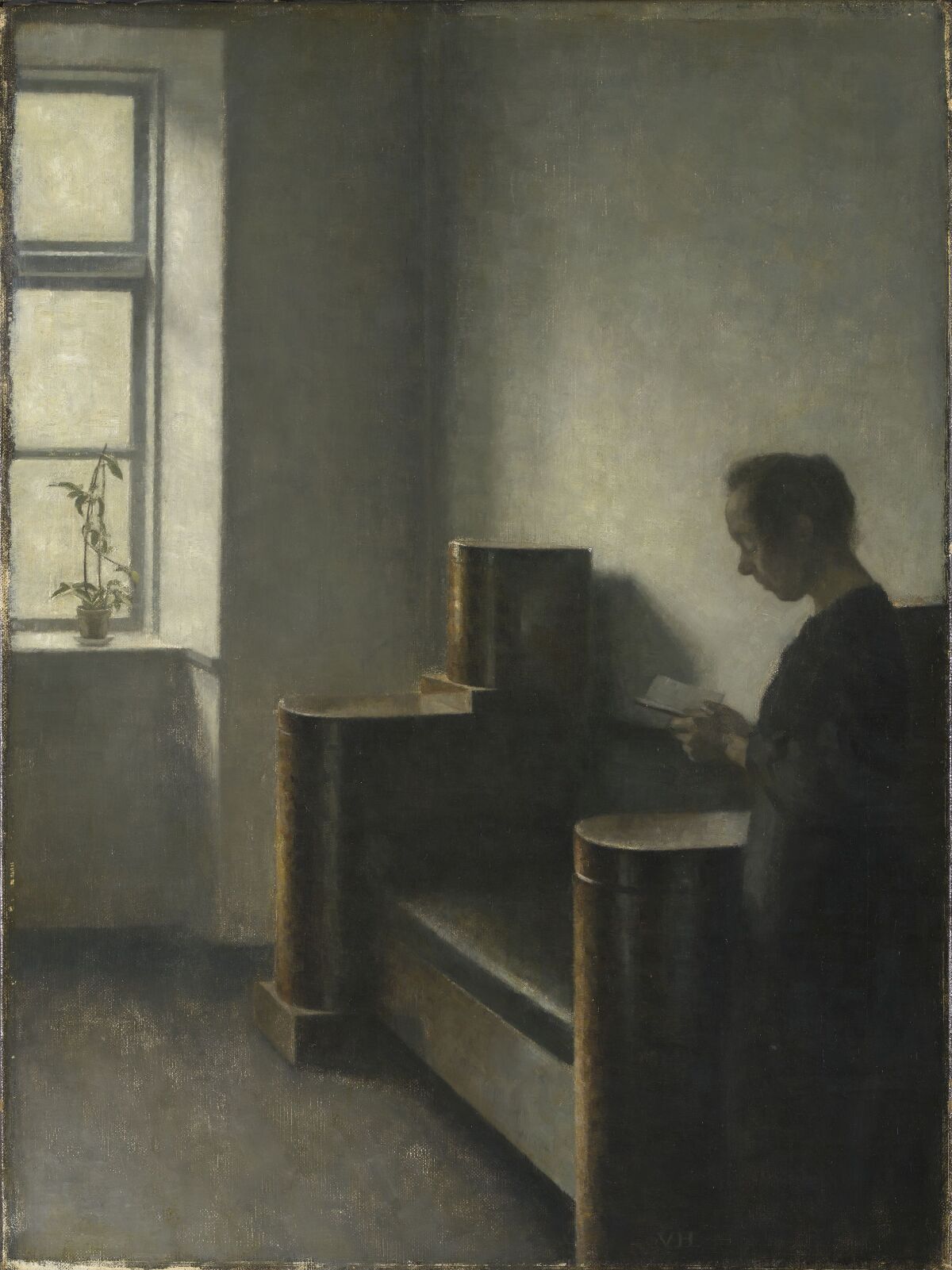
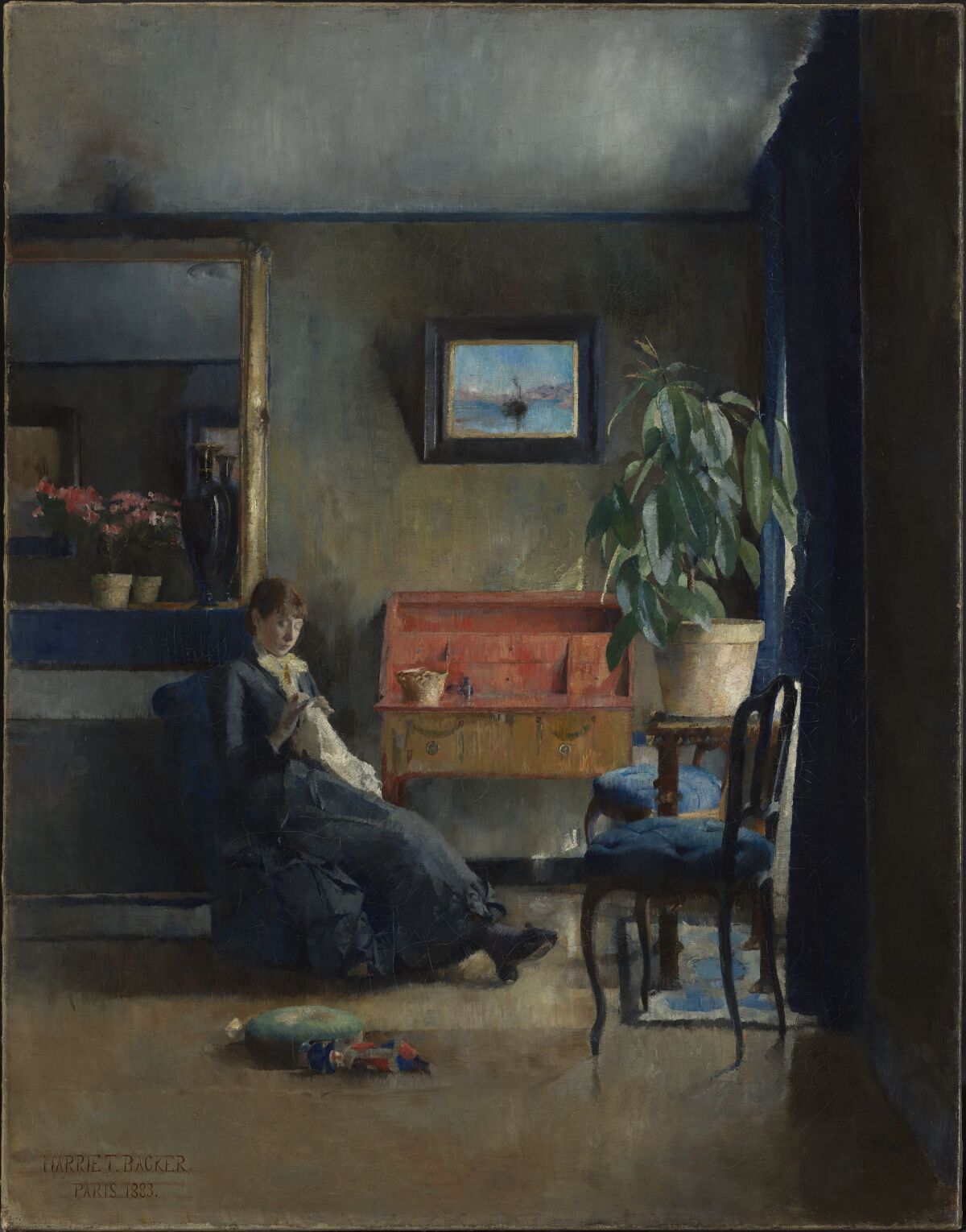
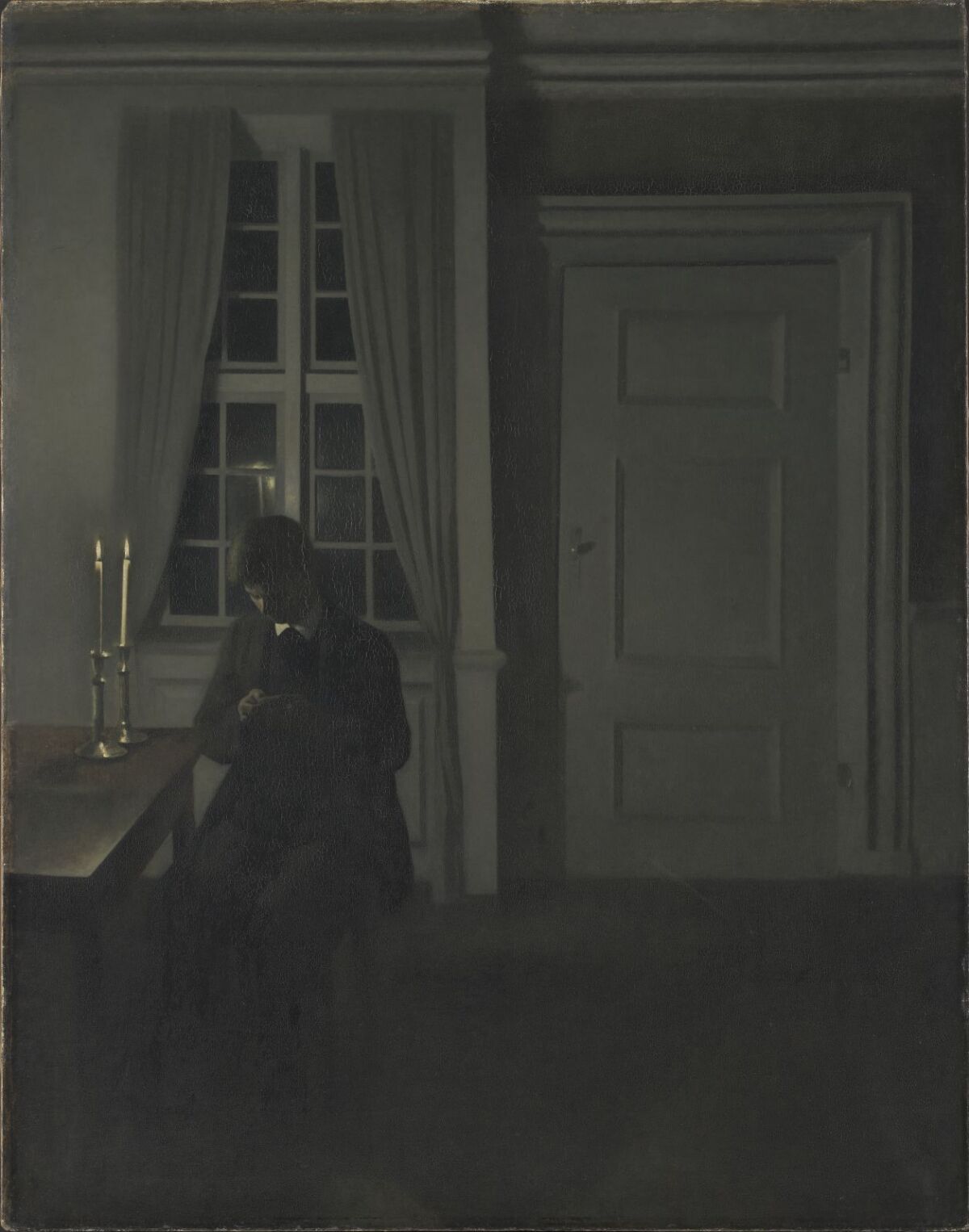
Harriet Backer Blue Interior (Blått interiør), 1883Vilhelm Hammershøi Interior with the Artist's Wife, 1910
Backer's Blue Interior against Hammershøi's Interior with the Artist's Wife. The same genre, 27 years between the pictures. One is about colour, the other about its absence. Where in each picture is the painter's own body?
The pictures
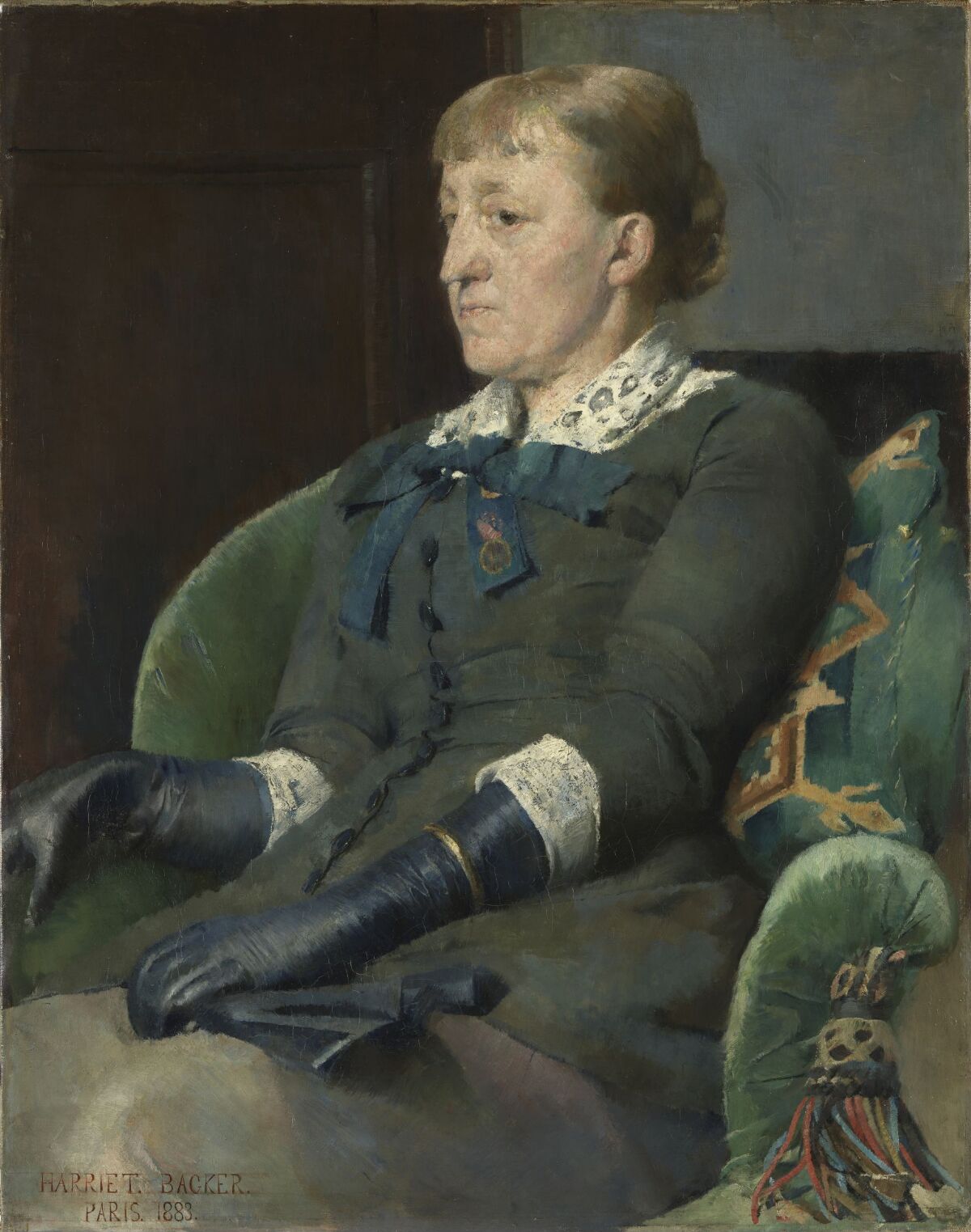
Harriet Backer Blue Interior (Blått interiør), 1883
Gigapixel image. The model is Asta Nørregaard, and the picture was painted in Paris, where they both lived. "It is not the room itself that is blue", says the museum's text; daylight makes it so. Spend the ten minutes on how a sleeve, a wall and a floor are all the same blue and all different. Then remember Nørregaard's own portraits from the exhibition. She painted faces as if light were a fact; Backer paints light as if the face were incidental. Both lived in that room.
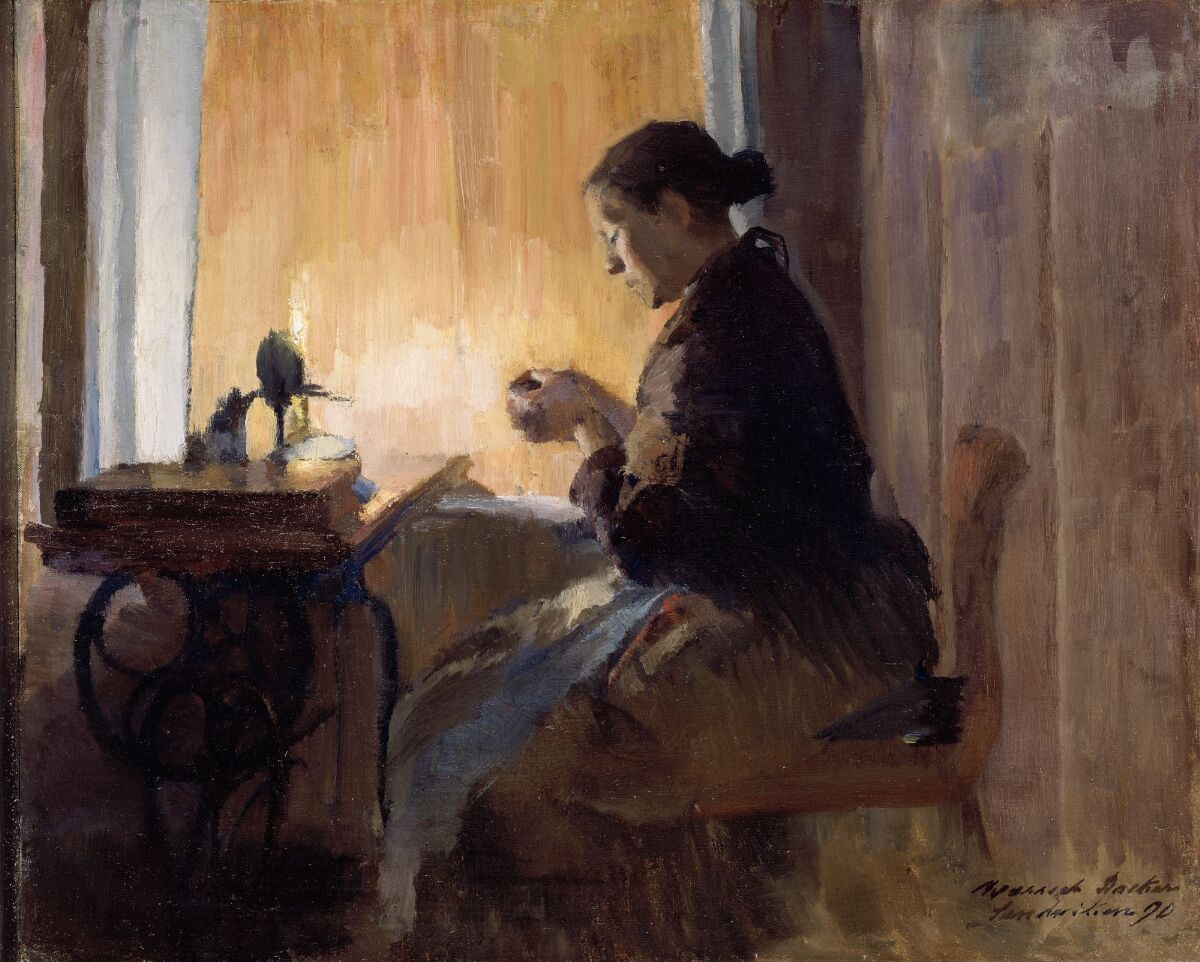
Harriet Backer Woman Sewing by Lamplight (Syende kvinne ved lampelys), 1890
Harriet BackerWoman Sewing by Lamplight (Syende kvinne ved lampelys), 1890
Backer's pictures in rooms 051 and 058 have different light sources: lamp, window and church door. Woman Sewing by Lamplight belongs with Evening, Interior (1896), Communion in Stange Church (1903) and Christening in Tanum Church (1892).
Gigapixel image. One of the four Backer pictures with a light source each; see Woman Sewing by Lamplight.
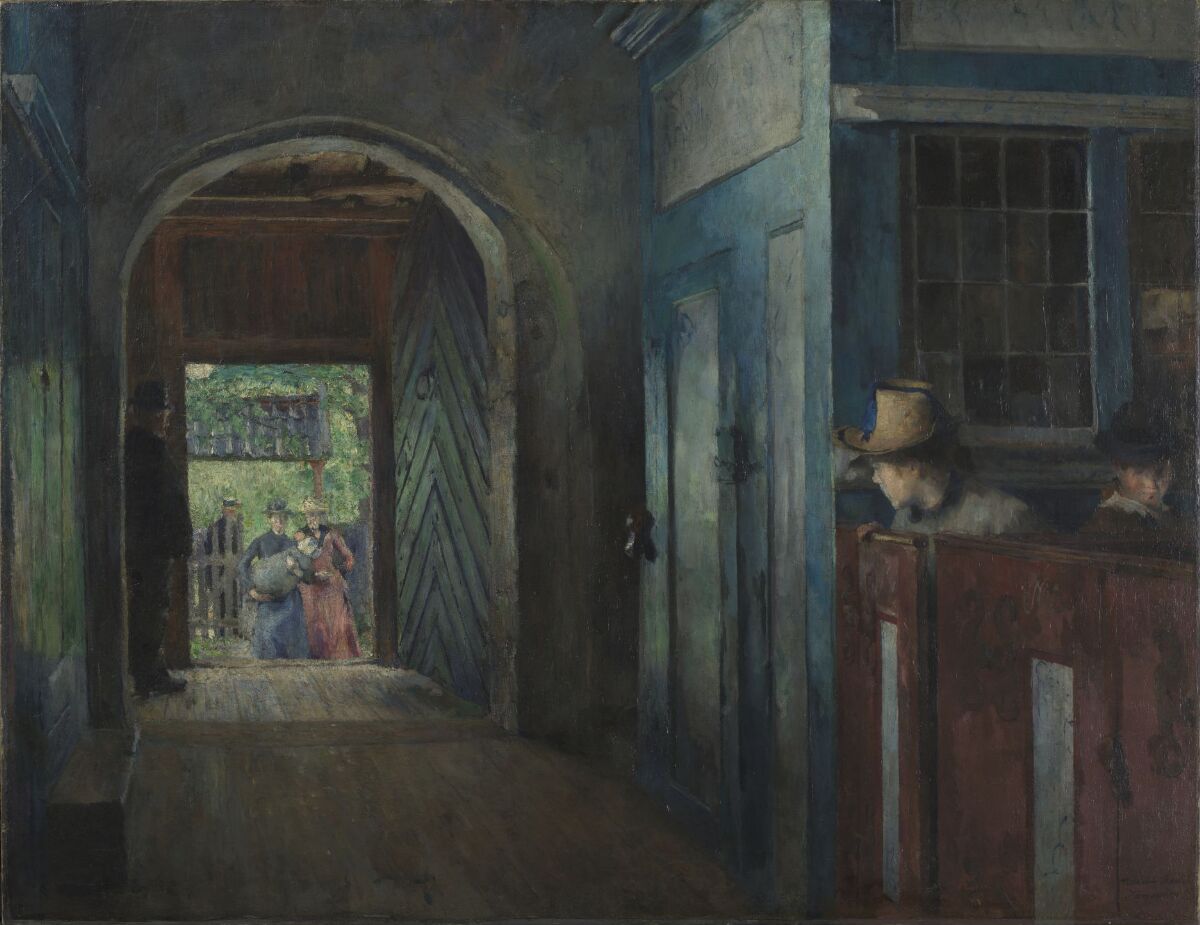
Harriet Backer Christening in Tanum Church (Barnedåp i Tanum kirke), 1892
Harriet BackerChristening in Tanum Church (Barnedåp i Tanum kirke), 1892
The light comes through the church door. The museum's text points to a shift inside one canvas, "from the academically trained realism of the foreground to the vividly pastose impressionism of the open-air scene framed by the doorway".
Harriet Backer The Artist Kitty Kielland (Kunstneren Kitty Kielland), 1883
Harriet BackerThe Artist Kitty Kielland (Kunstneren Kitty Kielland), 1883
Backer and Kielland shared a household for decades: a network that has painted itself. See also Kitty Kielland's Arne Garborg in the Artist's Studio in Paris (1887, room 052) and Summer Night (1886, room 058).
Eighteen painters, among them Asta Nørregaard The Artists' Fan (Kunstnerviften), 1898
Eighteen painters, among them Asta NørregaardThe Artists' Fan (Kunstnerviften), 1898
Room 052 is the network itself. Krohg paints Thaulow, Oda Krohg and Munthe; Werenskiold paints Ibsen; Peterssen paints Grieg; Munch paints Hans Jæger; Kielland paints Garborg. Eighteen painters have signed one fan, and Nørregaard is among them. Stand in the middle of the room and draw the graph.
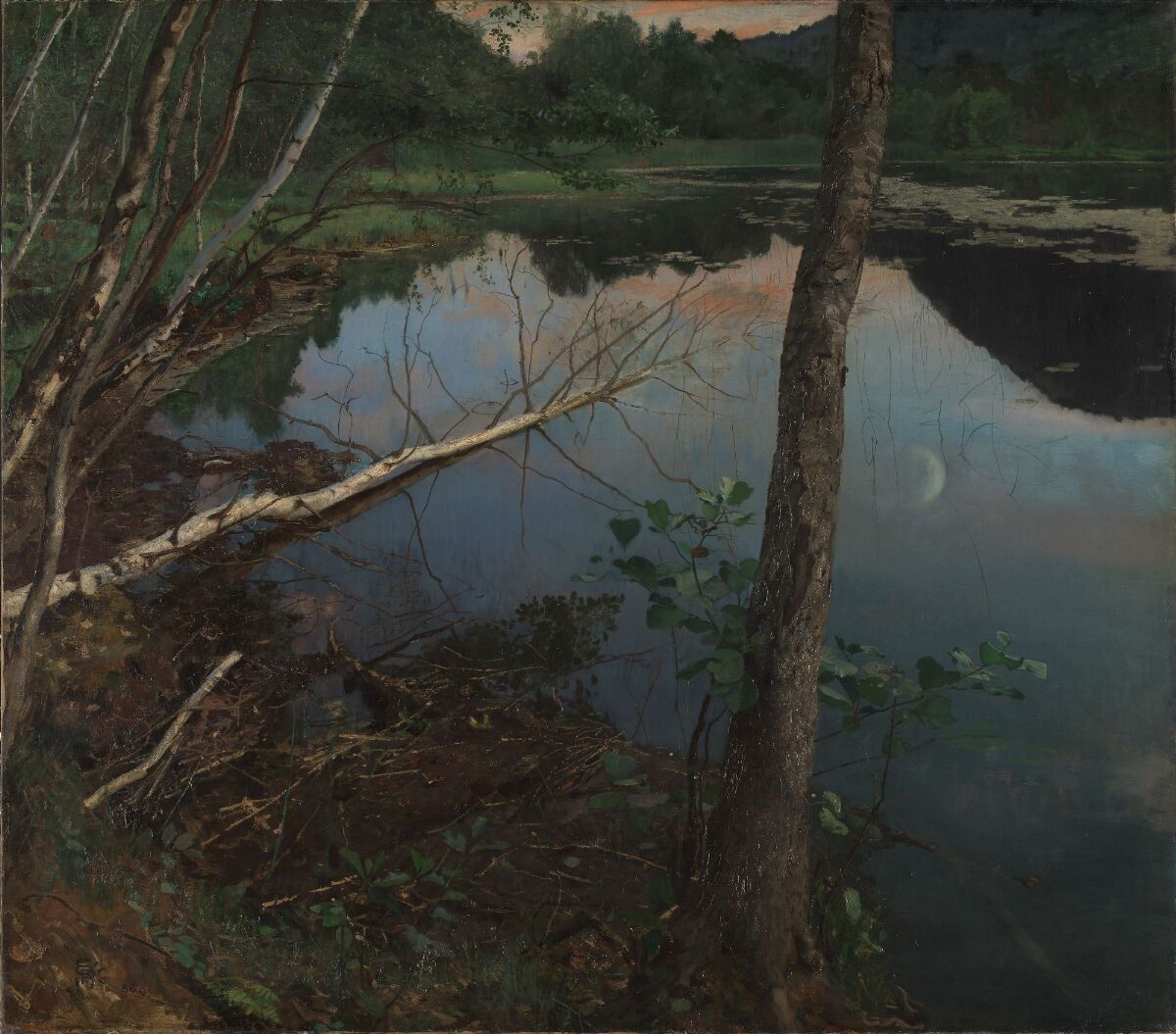
Eilif Peterssen Summer Night (Sommernatt), 1886
Eilif PeterssenSummer Night (Sommernatt), 1886
Room 058, the Fleskum summer of 1886. Together with Kitty Kielland's Summer Night (1886), Gerhard Munthe's Farm Garden, Ulvin (1889) and Christian Skredsvig's Vinje's Childhood Home (1887), it shows six friends, one farm in Bærum outside Oslo and one summer. The museum's text calls it the dawn of neo-romanticism. Nørregaard was not there. Her refusal of this turn is what made her a "traditionalist".
Vilhelm Hammershøi The Coin Collector, 1904
Vilhelm HammershøiThe Coin Collector, 1904
Room 058. Together with Interior with the Artist's Wife (1910), this is the Danish answer to Backer: grey, silent, a woman turned away. Hammershøi is the painter most likely to carry you into the twentieth century without your noticing. He died in 1916.
Vilhelm Hammershøi Interior with the Artist's Wife, 1910
Vilhelm HammershøiInterior with the Artist's Wife, 1910
Room 058. The other half of the pair below.
Around the pictures
Why did these women go to Paris, and why in 1878–83 specifically? The academies were closed to women, the private ateliers were open, and the money came from home.
What did "traditional" mean for Nørregaard in 1890, when the alternative was Fleskum, and what did it cost her after 1900? The exhibition book has the answer. Check it against the hang.
In room 052: Whose portrait is Nørregaard not in, and why?
Before you go
Kirk Varnedoe, Northern Light (1988) The entries on Krohg, Backer and Hammershøi: the generation's international reception, written by the man who later defended abstraction (The eye).
Patricia Berman, In Another Light (2007) For the Danish line that ends in Hammershøi.
The book on Nørregaard (in Norwegian) Re-read the chapter on the Paris years, and note the names of her teachers and the people she shared a flat with before you go.
The museum's own Backer material The catalogue of the Backer exhibition 2023–24 is in libraries.
The Great Women Artists Has episodes on Hammershøi's circle and on Nordic women painters.
Afterwards
Describe the pictures from memory, without looking at them, and record a voice note.
Draw the network out: every painter in room 052 and who painted whom, with dates. It is the start of the picture you asked for, of intellectuals and how their lives crossed. The same method works later for the Pallas generation at Kumu in Tallinn.