Floor 1, galleries 1 and 2 (the exhibition Asta Nørregaard. Sannhet og skjønnhet, truth and beauty), then rooms 051 and 052 · An hour and a half
You had seen the exhibition twice and read the book on Nørregaard. The last visit was the only chance to test the book against the walls, and to record what you knew you would not be able to check again. The exhibition closed on 18 October 2026.
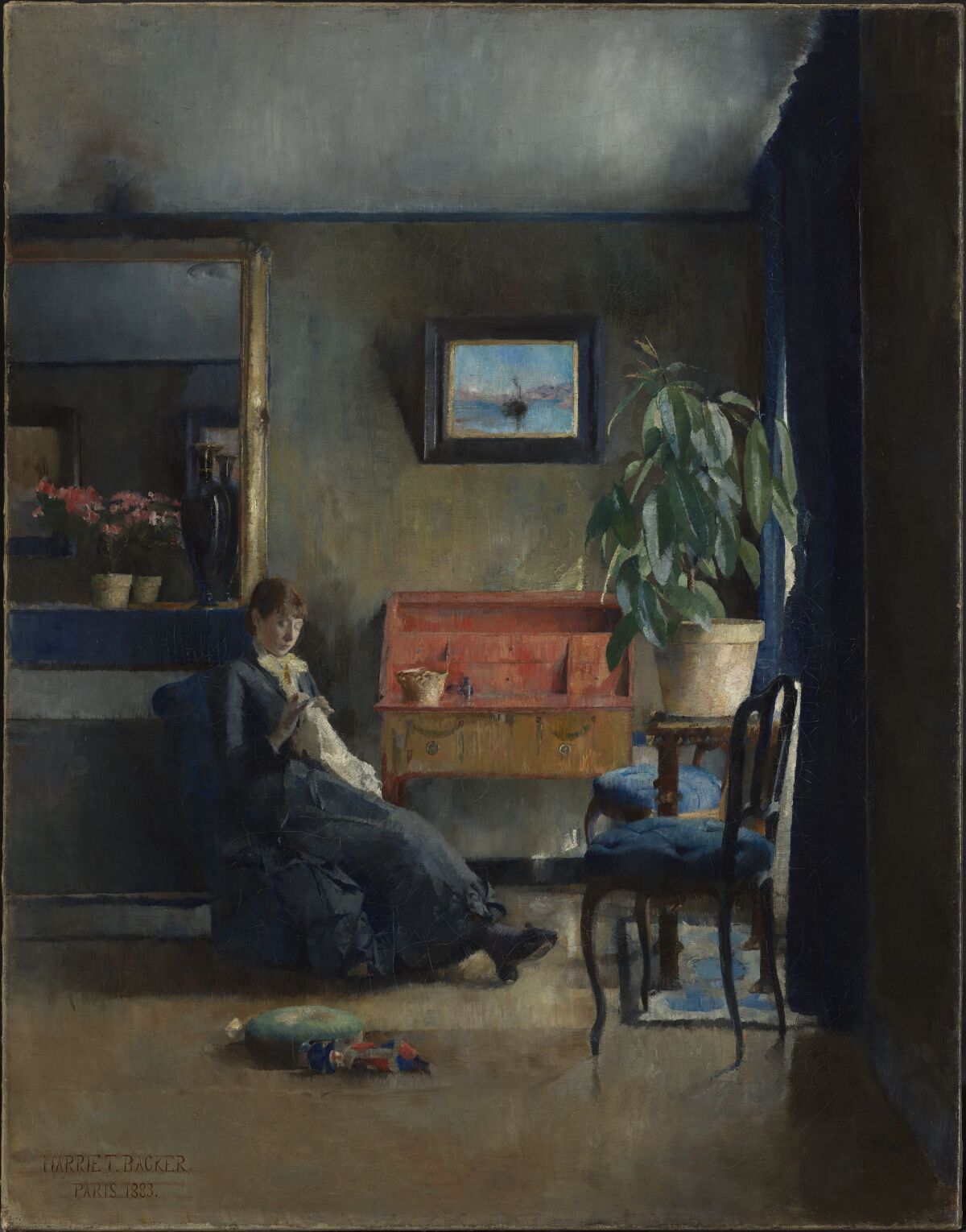
Harriet Backer Blue Interior (Blått interiør), 1883
Blue Interior, with Nørregaard as sitter and Backer as painter, against a Nørregaard portrait of the same decade. Two friends and one flat, but two ideas of what a picture is.
The pictures
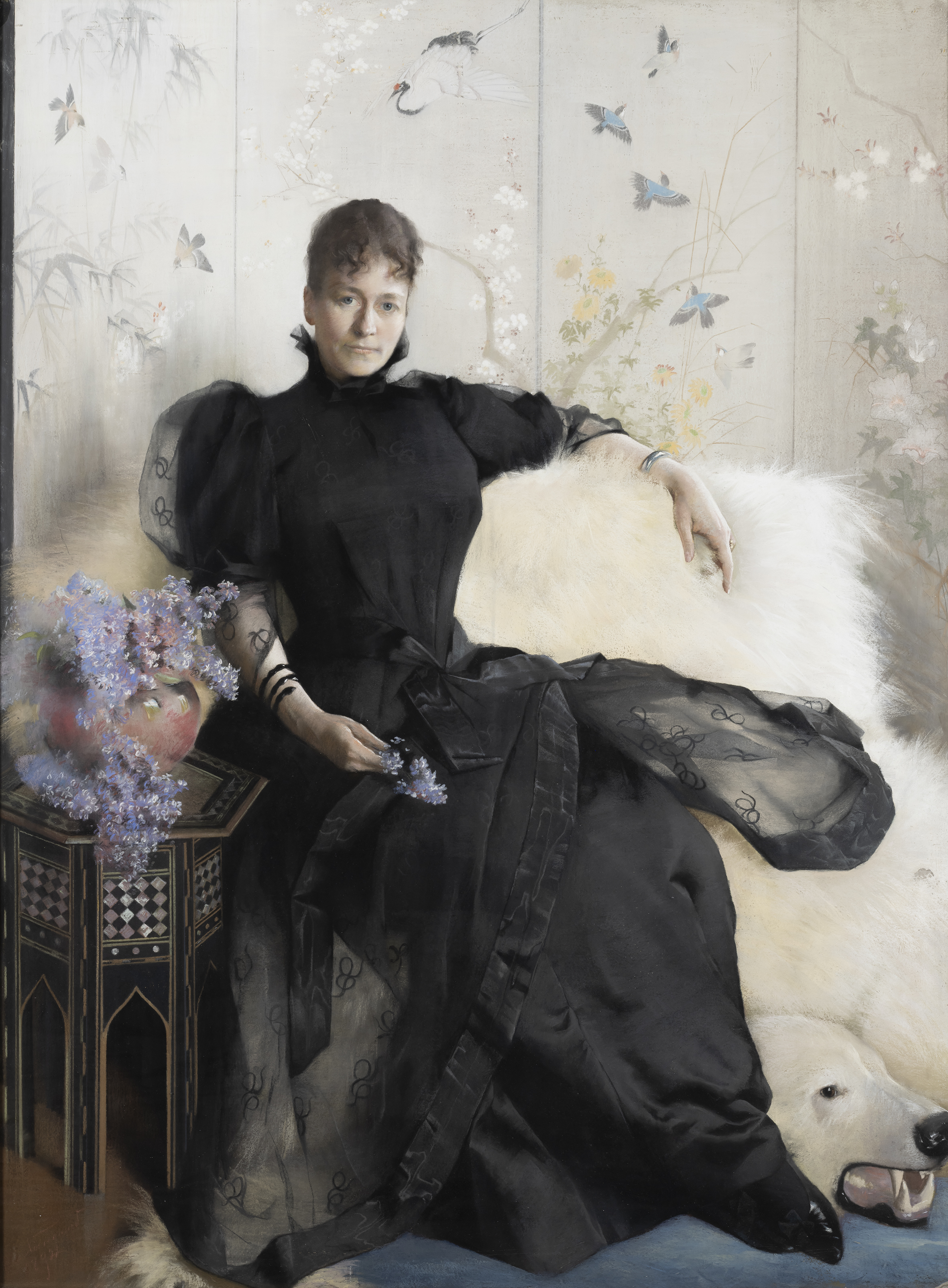
Asta Nørregaard Elisabeth Fearnley, 1892
Asta NørregaardElisabeth Fearnley, 1892
The portrait you had named, and one of the three pictures that were to get the full time. The answers from the book are written down before the visit and checked against the paint; the questions are under Around the pictures.
Asta Nørregaard At a Spring with an Antique Ruin, Italy (Ved en vannkilde med antikk ruin, Italia), c. 1889
Asta NørregaardAt a Spring with an Antique Ruin, Italy (Ved en vannkilde med antikk ruin, Italia), c. 1889
The small woman at the water under the big ruin. Warmth, smells and sounds are what the picture makes you think of.
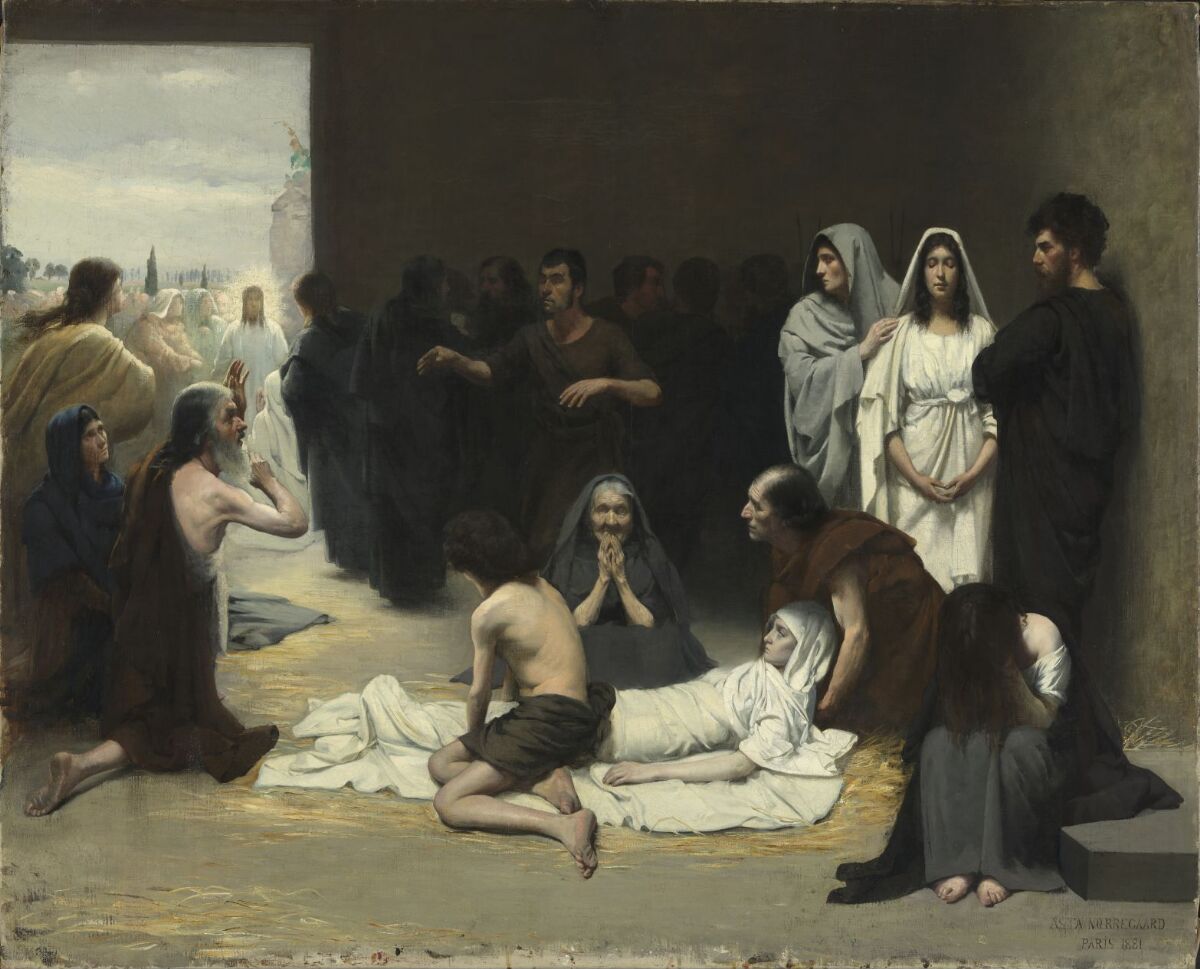
Asta Nørregaard Waiting for Christ (Kristus kommer), 1881
Asta NørregaardWaiting for Christ (Kristus kommer), 1881
The third of the three pictures, the one that belongs to the chapter on the religious commissions. Same procedure as for the portraits.
Harriet Backer Blue Interior (Blått interiør), 1883
Nørregaard as sitter, Backer as painter, Paris 1883. The picture hangs in room 051 on the floor above. Ten minutes here, then down again to one Nørregaard portrait of the same decade if there is time. Two friends, one flat, and two ideas of what a picture is.
Hans Heyerdahl, Thorolf Holmboe, Fredrik Kolstø, Otto Sinding, Gustav Lærum, Gerhard Munthe, Hans Gude, Jacob Bratland, Axel Ender, Asta Nørregaard, Eilif Peterssen, Elisabeth Sinding, Karl Uchermann, Severin Segelcke, Christian Skredsvig, Amaldus Nielsen, Carl Fredrik Sundt-Hansen and Christian Krohg The Artists' Fan (Kunstnerviften), 1898
Hans Heyerdahl, Thorolf Holmboe, Fredrik Kolstø, Otto Sinding, Gustav Lærum, Gerhard Munthe, Hans Gude, Jacob Bratland, Axel Ender, Asta Nørregaard, Eilif Peterssen, Elisabeth Sinding, Karl Uchermann, Severin Segelcke, Christian Skredsvig, Amaldus Nielsen, Carl Fredrik Sundt-Hansen and Christian KrohgThe Artists' Fan (Kunstnerviften), 1898
Room 052. Eighteen signatures, and Nørregaard's stands among Krohg's, Munthe's and Peterssen's. Note which of the eighteen have portraits in the room, and which do not. The network begins here.
Around the pictures
Three pictures with the full time each, chosen before you go in: Elisabeth Fearnley, one more portrait and Waiting for Christ. For each of them, only the period-eye questions: Who commissioned the picture? Where did it hang? What did the sitter want it to say? What did training in Bonnat's atelier in Paris in the 1880s give her that a painter trained in Christiania (as Oslo was then called) would not have had? Write the answers from the book down before the visit, and check them against the paint.
The traditionalist's choice: Find the earliest-dated and the latest-dated picture in the exhibition. What did she refuse to change over forty years, and what changed anyway? That is the exhibition's thesis, truth and beauty. Decide whether you believe it.
Before you go
The book on Asta Nørregaard (in Norwegian), the chapters on the Paris years and on the religious commissions Note the names of her teachers, the people she shared a flat with and her sitters before you go.
Book: Baxandall, Painting and Experience; Mørstad on Nørregaard (in Norwegian)
Afterwards
Describe the pictures from memory, without looking at them, and record a voice note.
Start an overview of the network around Nørregaard: who painted, taught and lived with whom.