Rooms 037 ("Skape lys av mørke", Creating light in darkness) and 038 ("Samleren Christian Langgaard", The collector Christian Langgaard). The walk between Catholic and Protestant also takes in room 033 ("Bilder for tro og tanke", Images for faith and devotion) · An hour and a half
Oslo has no Caravaggio, but room 037 is hung as a Caravaggio room. Here are painters who were in Rome in the decade after his death in 1610, and who carried the dark ground, the single raking light and the half-length figures home to Utrecht, Lorraine, Naples and Bologna. You already know what this light does from Sicily. The exercise here is to watch five painters decide how much of it to keep. The rooms can also be walked as a route between Catholic and Protestant uses of the image, in the order 033, 038 and 037.
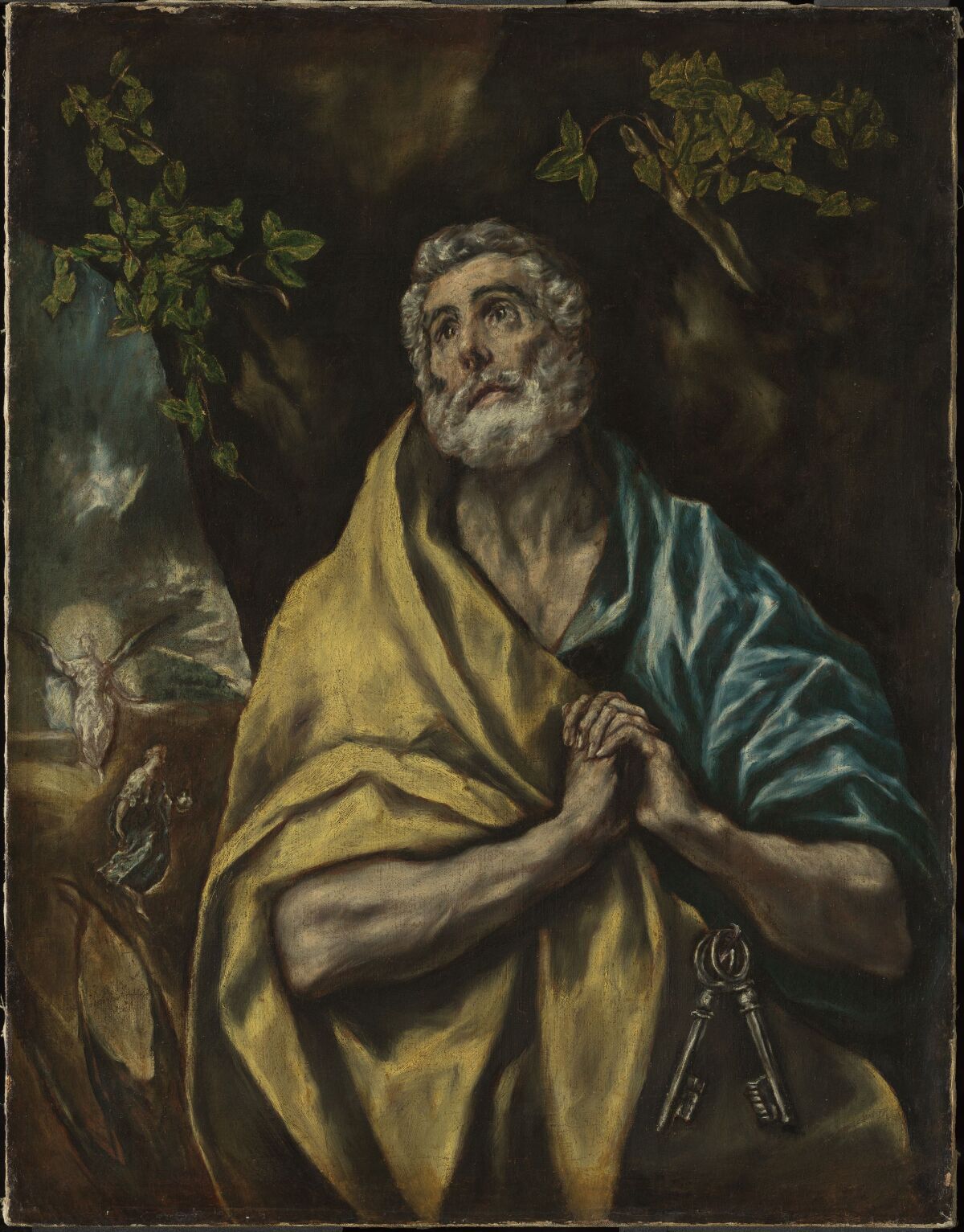
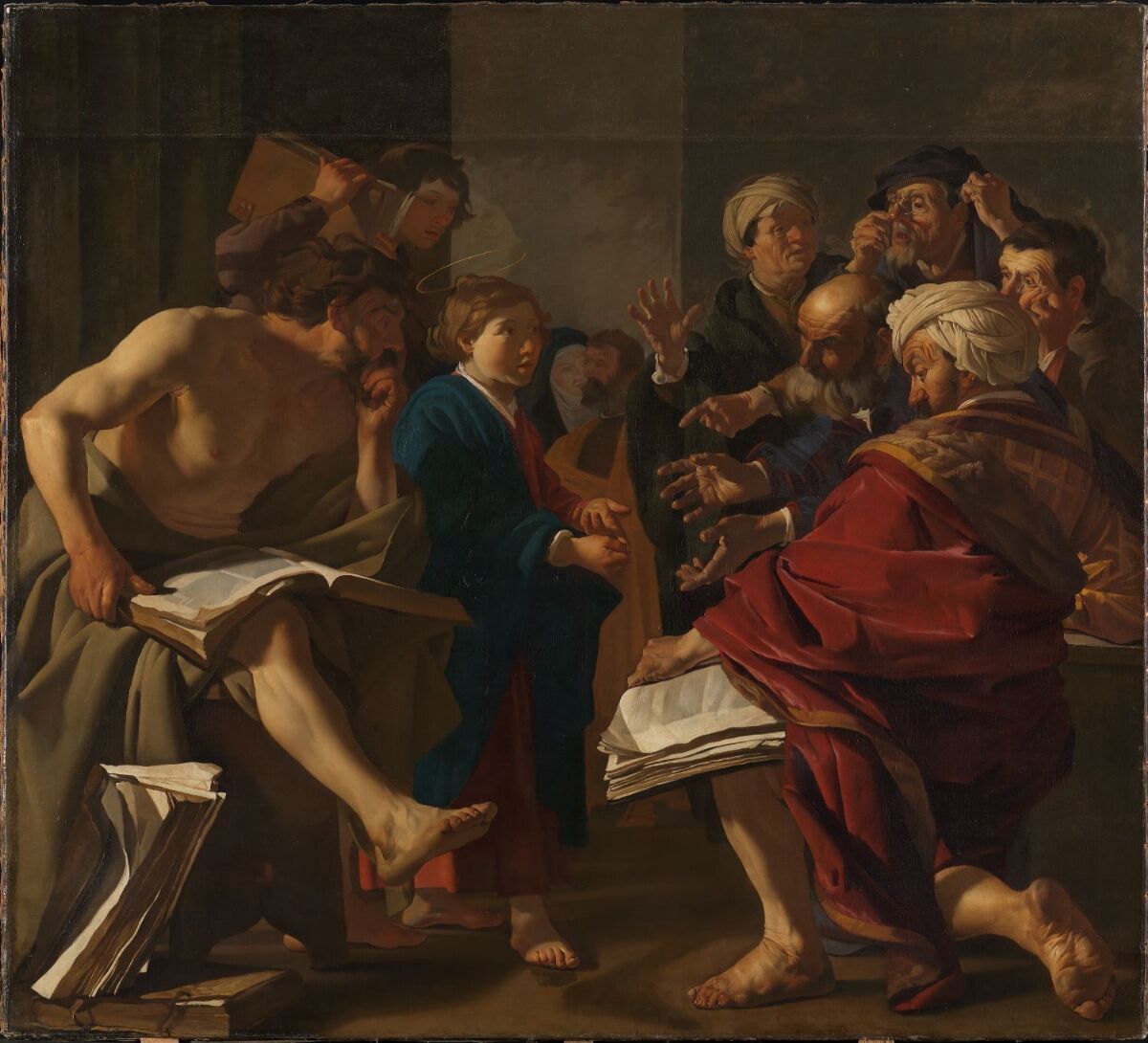
Dirck van Baburen Christ among the Doctors, 1622El Greco Tears of St Peter, 1590s
Baburen's temple against El Greco's Peter. Both are about a man and a truth he cannot hold. One answers with crowd, flesh and lamp; the other with a column of colour and a sky. Which of the two painters trusts you more?
The pictures
Dirck van Baburen Christ among the Doctors, 1622
Dirck van BaburenChrist among the Doctors, 1622
Baburen belonged to the Utrecht school and was in Rome in the 1610s. The museum's text describes "a densely packed group of elders" portrayed "through their arm gestures, draped garb, and puzzled gazes". The gallery bought the picture from J.C. Dahl in 1843, so the man who painted Stalheim was the one who got it to Norway. It was painted in 1622, the year the Church set up the Congregation for the Propagation of the Faith. Count the light sources. Find the one face that is not reacting.
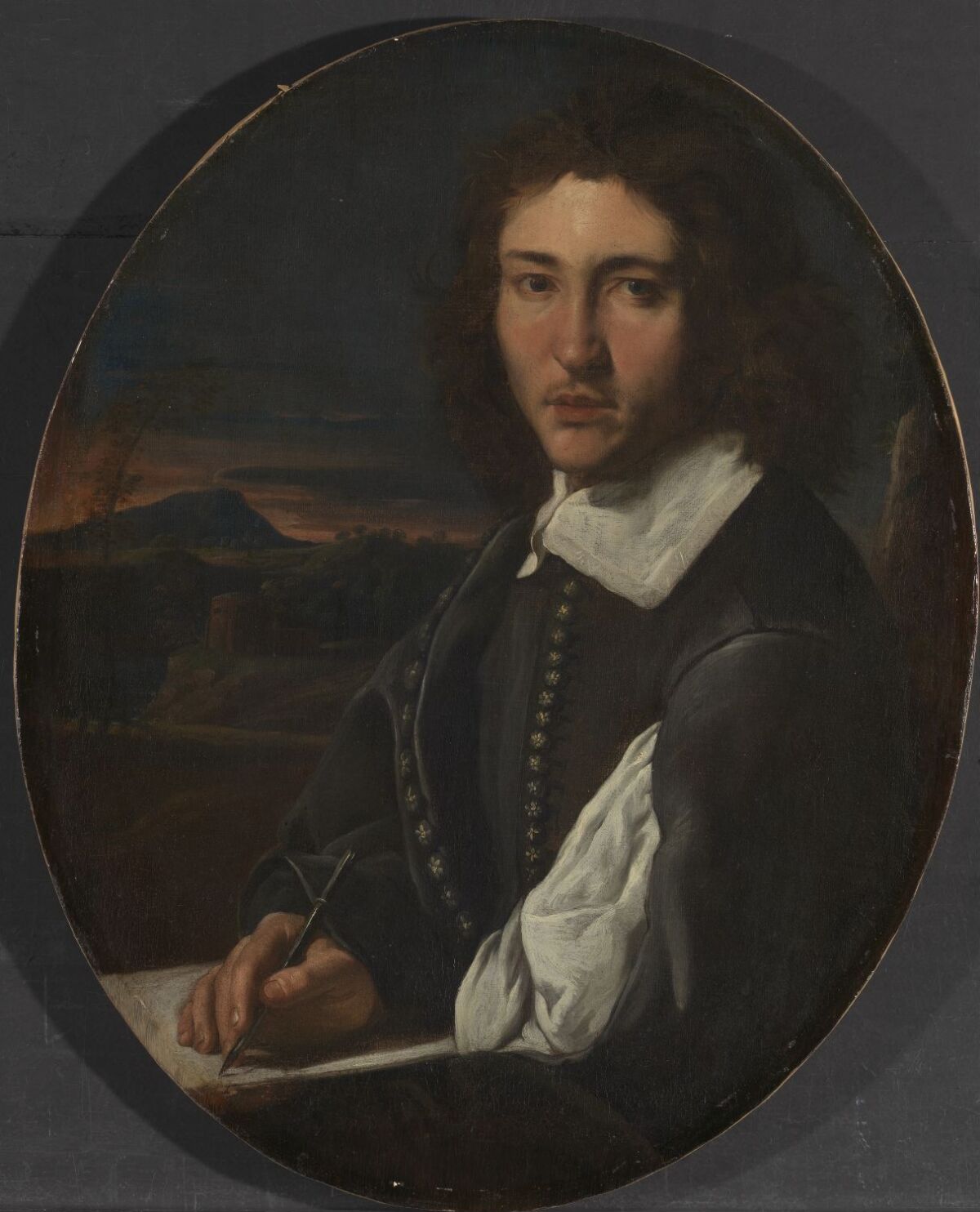
Valentin de Boulogne Portrait of a Young Artist, 1620–32
Valentin de BoulognePortrait of a Young Artist, 1620–32
A Frenchman in Rome, and Caravaggio's closest heir in temperament. Half-length against nothing. Bought at auction in 1837, the year the gallery was founded, and so one of its first pictures.
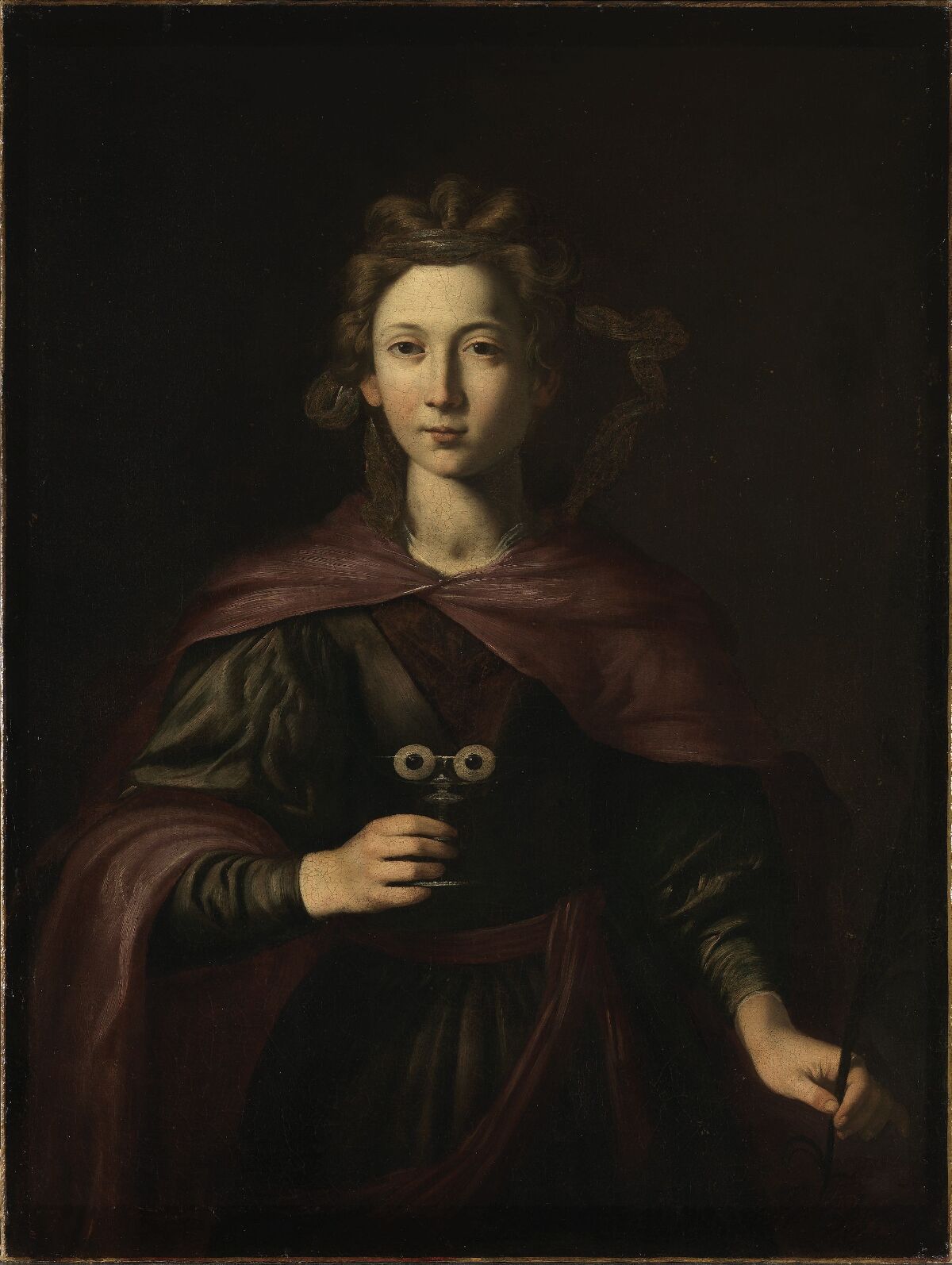
Giovanni Ricca Saint Lucy, c. 1630–50
Giovanni RiccaSaint Lucy, c. 1630–50
A Neapolitan in Ribera's orbit. Lucy is the saint of Syracuse, where you stood in front of Caravaggio's Burial of Saint Lucy.
Jusepe de Ribera Boy with a Pot of Flowers. The Sense of Smell, c. 1637
Jusepe de RiberaBoy with a Pot of Flowers. The Sense of Smell, c. 1637
Room 038. An allegory of the senses, from Naples under Spanish rule. One boy, one pot, one light.
El Greco Tears of St Peter, 1590s
El GrecoTears of St Peter, 1590s
Room 038. Not Caravaggesque at all. El Greco took the opposite route out of the Renaissance: Toledo instead of Rome, elongation instead of weight. There is a gigapixel scan of the picture, so the hands and the keys can be studied at home.
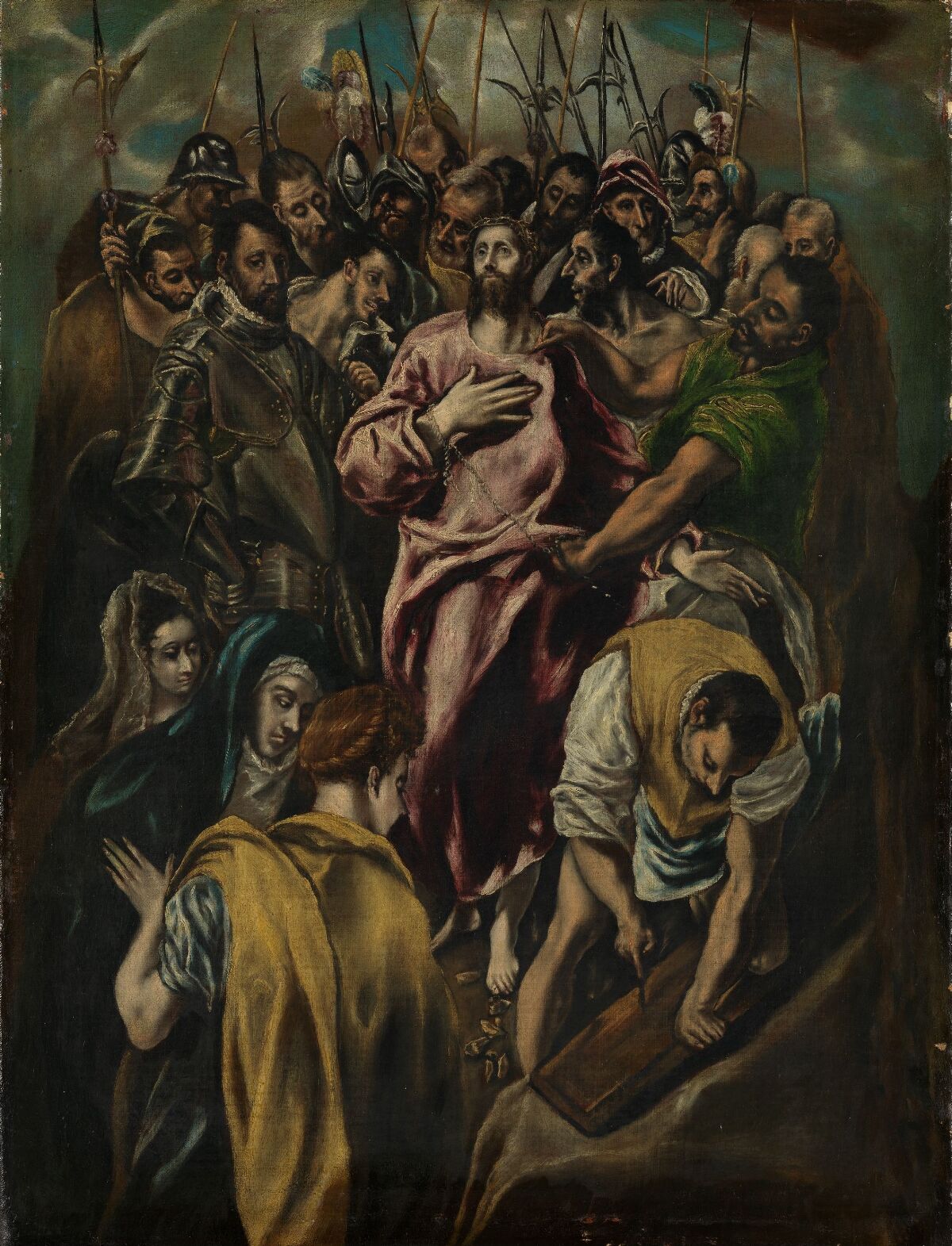
El Greco The Disrobing of Christ, c. 1600
El GrecoThe Disrobing of Christ, c. 1600
Room 038. The same route from Toledo.
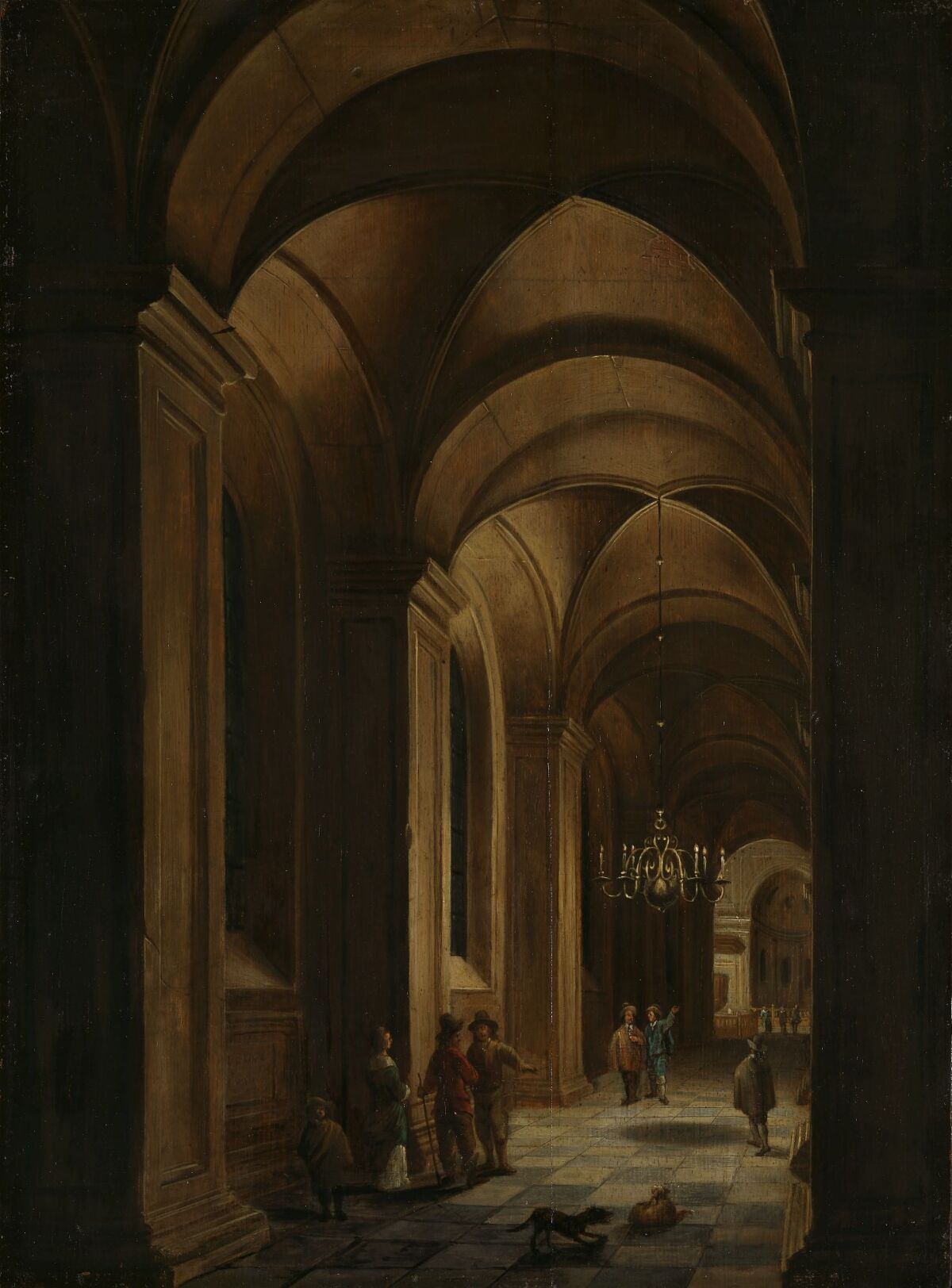
Daniël de Blieck Church Interior, 1651
Daniël de BlieckChurch Interior, 1651
Room 038. An empty, whitewashed Protestant church, built for the sermon. Count the pictures inside the church.
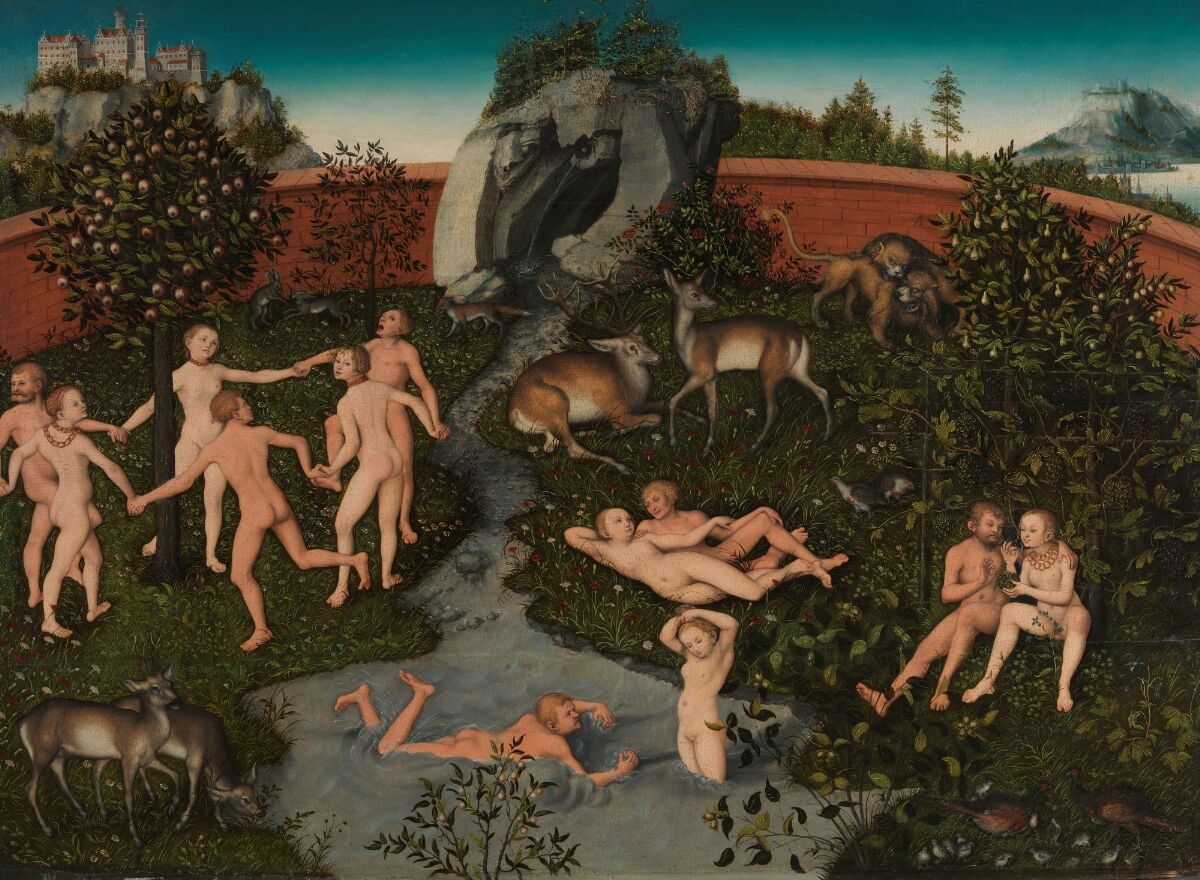
Lucas Cranach the Elder The Golden Age, after 1534
Lucas Cranach the ElderThe Golden Age, after 1534
Room 033. The garden you have called claustrophobic. Look at it again for two minutes.
The walk
Room 033, the years just before the Reformation. Stand in the middle of the room for one minute before you go to any picture. Then go to the two pictures from 1518, the year after Luther's theses, van Orley's Annunciation and the Cranach workshop's Virgin and Child: Is the picture there to be prayed to or to be learned from? Find the detail that decides it. Then look at Saint Sebastian (1543), The Golden Age and the Resting Nymph of the Spring (1550). Which of them could still hang in a church after the reformers had been through?
Room 038, the whitewashed church and the weeping Peter. Look first at de Blieck, then turn to El Greco's Peter without looking at anything in between. One is an empty room built for a sermon, the other a single body in repentance. Which of them preaches?
Room 037, the Catholic answer. Choose one picture and try the Jesuit exercise: put yourself inside the scene, and notice what you hear, smell and feel under your feet. Baburen: follow only the light and the hands. Gaulli, Noah's Sacrifice: is the drama staged on the ground or in the sky? Fetti, Saint Juliana: a type or a person? Pasinelli, Roman Charity: charity and sensuality in one picture. Jordaens' allegory of the Peace of Westphalia: the peace that ended the wars of religion.
Afterwards. Which picture held you? Did the division between Catholic and Protestant change any picture for you? What did the Church want these pictures to do to you, and did any of them manage it?
Around the pictures
Nearly everything in room 038 came in one gift, Christian Langaard's bequest of 1923. A Christiania businessman thereby decided which El Grecos Norway owns. Read the acquisition lines on the labels; the room is a portrait of him. In room 037 the lines name Dahl, Grosch and Bugge, who bought Italian and Flemish baroque in the 1830s and 1840s for a country that had almost none.
The quarrel over images, in short. Before 1517 pictures taught people who could not read, and they were objects of devotion: one prayed to the Madonna, and Sebastian protected against plague. Luther kept the pictures as teaching but removed the cult. Zwingli and Calvin emptied the churches, and painters in Protestant countries turned to the market with landscapes, still lifes, portraits and everyday scenes. The Council of Trent (1563) defended images but demanded clarity, decency and instruction. The result was paintings that hit the body: Caravaggio's real people, the Jesuit exercise of imagining yourself inside the scene, and many penitent Peters and Magdalenes, because penance was what the Protestants rejected. The word "propaganda" comes from the Congregation for the Propagation of the Faith, set up in 1622, the year of Baburen's picture.
Questions for the train: What did the Church want a picture to do to the person standing in front of it? What do Baburen and El Greco think a body is for? Then read Arasse, Histoires de peintures.
Daniel Arasse, Histoires de peintures Read after the Trent text.
Tomaso Montanari's Caravaggio lectures on YouTube In Italian, clear and free. Alternatively Longhi, Caravaggio (1952), the founding text on "Caravaggio's light". Pick two of the last five preparations in the list.
Frick, Cocktails with a Curator The Ribera episode or any other Caravaggesque episode, 25 minutes.
Simon Schama, Power of Art, the Caravaggio episode (BBC, 2006) To reload the vocabulary of the light.
Andrew Graham-Dixon, Caravaggio: A Life Sacred and Profane (2010) The chapters on Rome after 1606 and on the followers, if you want the network: who was in whose studio, and who copied whom.
Great Art Explained (James Payne) on Caravaggio's The Calling of St Matthew The mechanics of the beam.
Afterwards
Describe the pictures from memory, without looking at them, and record a voice note.
Look up the painters of the Utrecht school (Baburen, Honthorst, ter Brugghen) and where their pictures are now. The route Rome → Utrecht → Rembrandt is the best single thread for next year's visit to the Rijksmuseum.