Rooms 040 ("Å bli kunstner", Becoming an artist), 041 ("Morgendis og kumulusskyer", Morning mists and cumulus clouds), 042 ("Johan Christian Dahl") and 043 ("Naturens kraft", Forces of nature) · Two hours
This is the museum's strongest historical story, and the one closest to the years around 1814, when Norway got its constitution. A decorator's apprentice from Bergen goes to Copenhagen (1811) and then to Dresden (1818), moves into Caspar David Friedrich's house (1823), becomes a professor, and paints Norway from memory and sketches for the rest of his life. Room 043 hangs the two side by side.
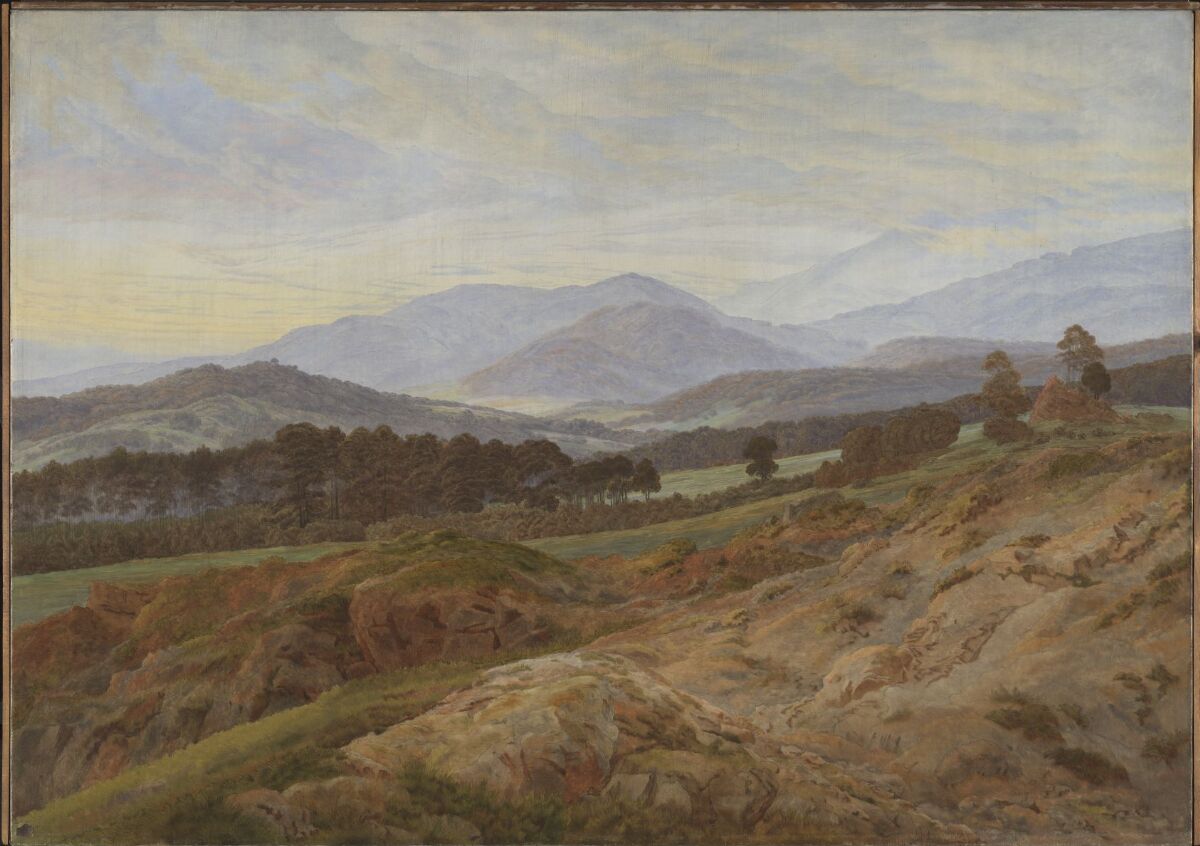
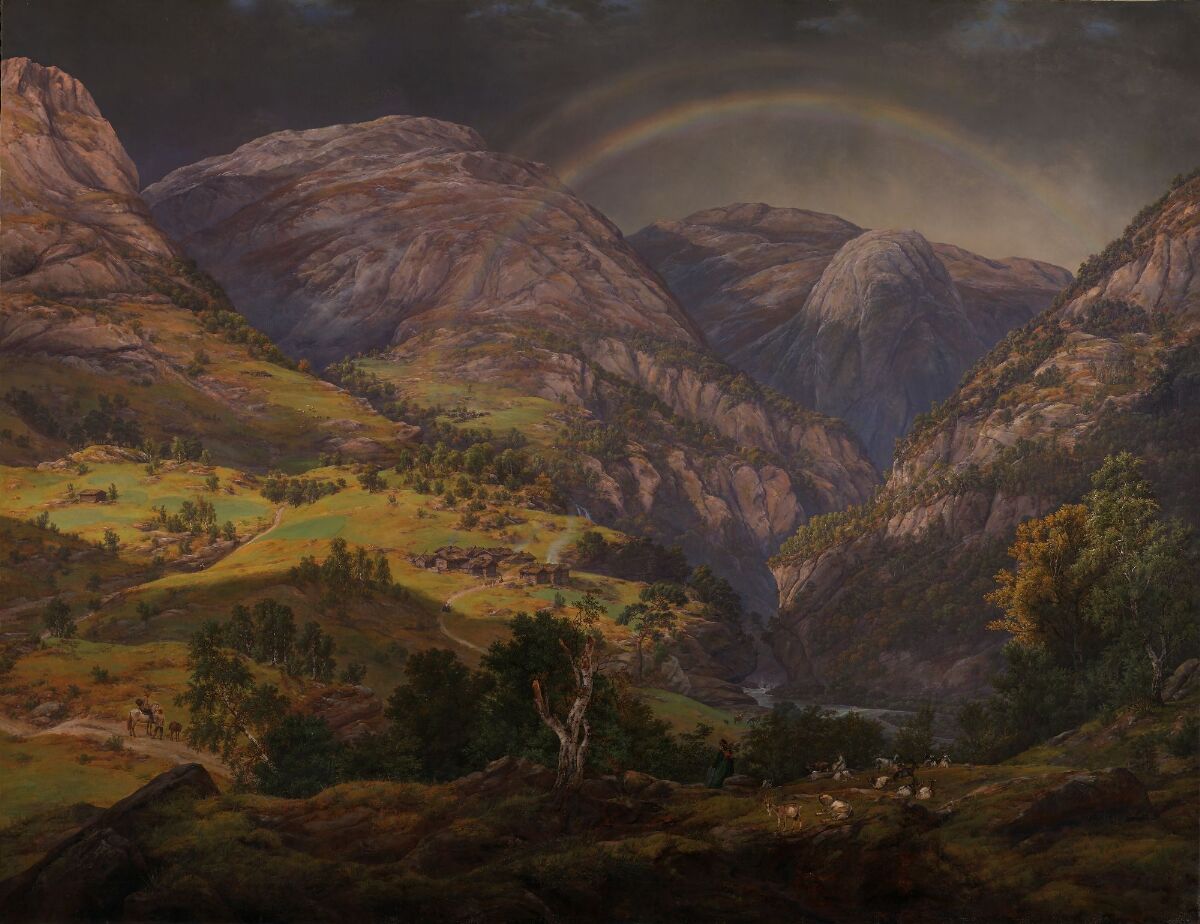
Caspar David Friedrich Riesengebirge Landscape, 1835Johan Christian Dahl View from Stalheim (Fra Stalheim), 1842
Friedrich's Riesengebirge (1835) against Dahl's Stalheim (1842). The same house in Dresden and the same genre, seven years between the pictures. One empties the landscape until it is a thought; the other fills it until it is a nation. What did Dahl decide that Friedrich would not?
The pictures
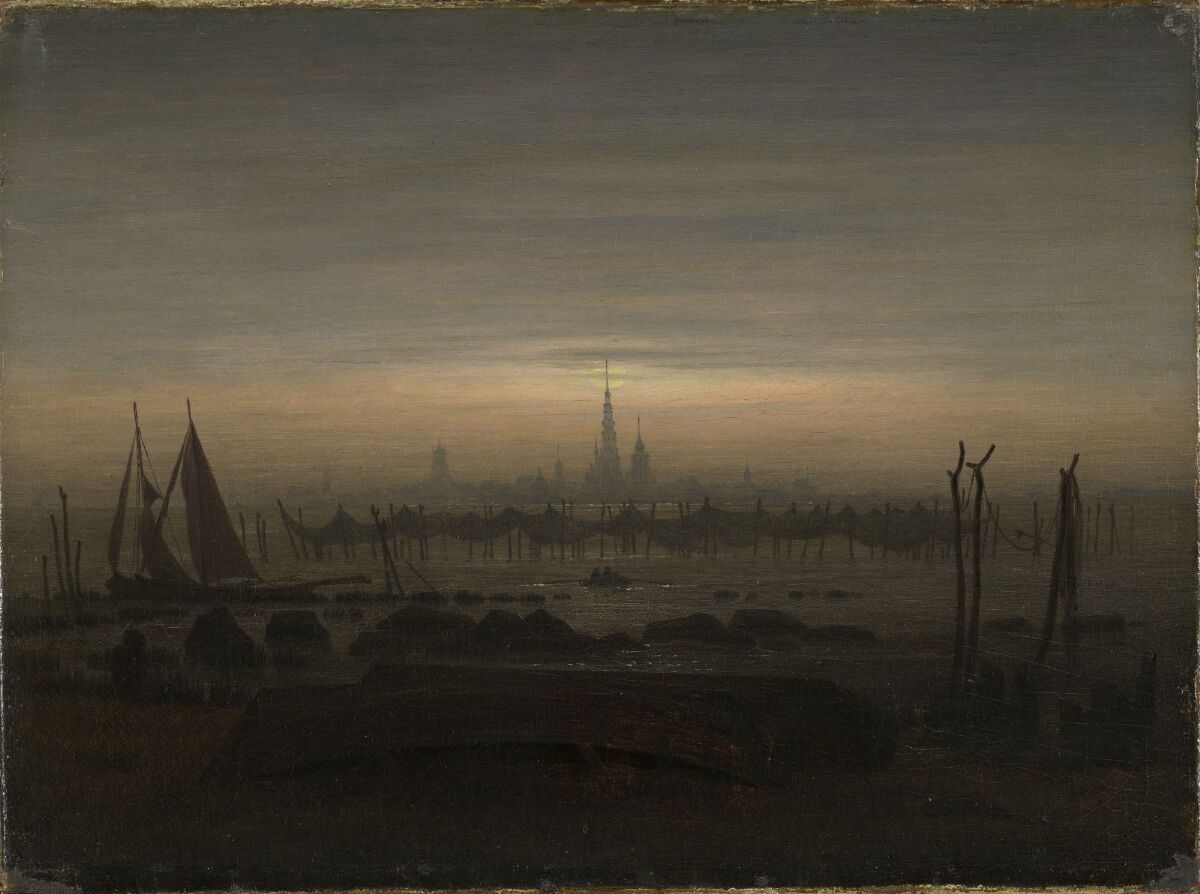
Caspar David Friedrich Greifswald in Moonlight, 1817
Caspar David FriedrichGreifswald in Moonlight, 1817
Small and silent. The museum's text says that the fishing nets "act as a fence between the viewer and the city", and that the church towers are mirror-reversed. Why would a painter reverse his own birthplace?
Caspar David Friedrich Riesengebirge Landscape, 1835
Caspar David FriedrichRiesengebirge Landscape, 1835
Small and silent. The picture came to the gallery in 1904 from the estate of Siegwald Dahl, and is one side of the pair below.
Johan Christian Dahl View from Stalheim (Fra Stalheim), 1842
Johan Christian DahlView from Stalheim (Fra Stalheim), 1842
The rainbow "keeps the landscape in a firm grip". The drawings are from 1826; the painting came sixteen years later. Find the five things that could not have been seen from one spot. The picture came to the gallery as a gift in 1914; Dahl sold mostly to Germans.
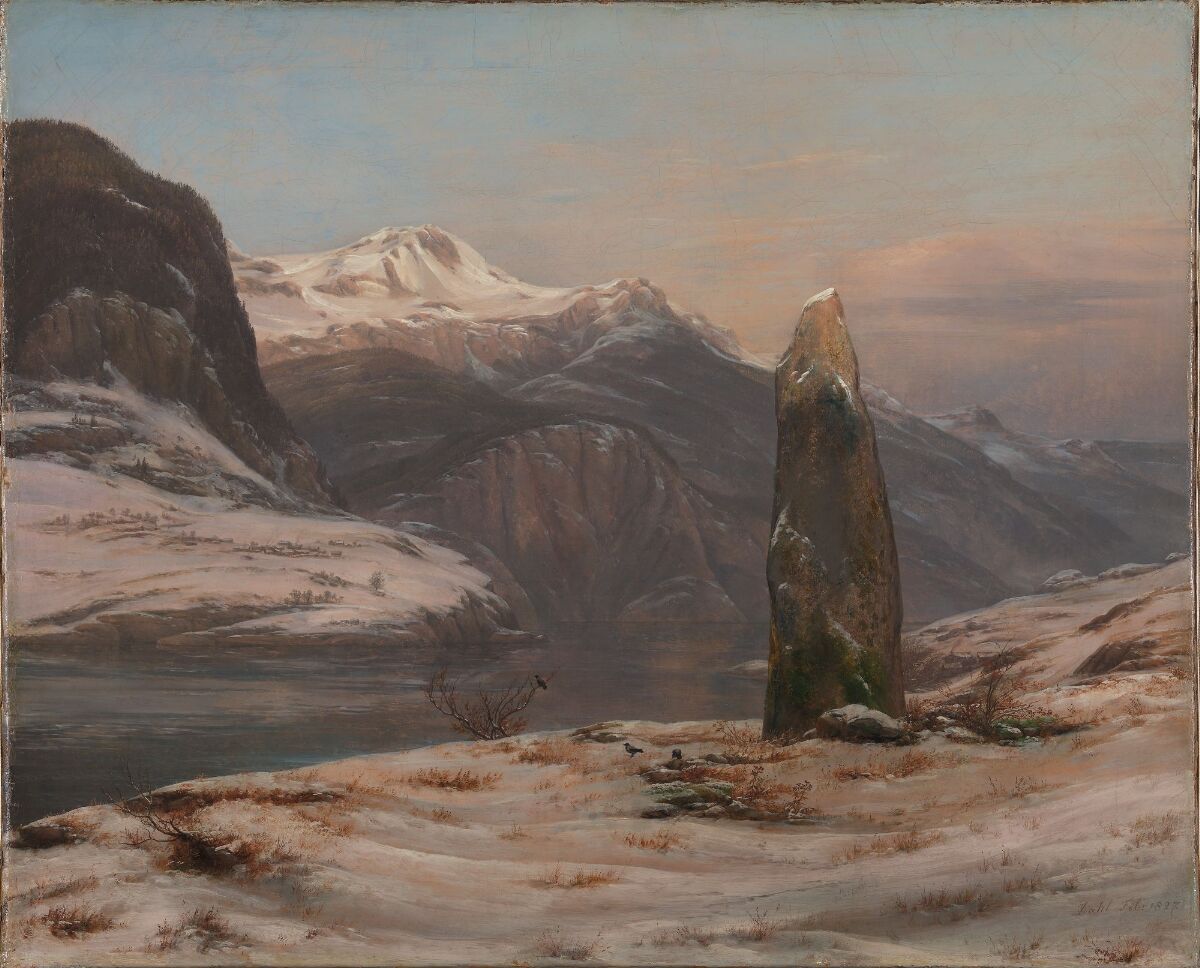
Johan Christian Dahl Winter at the Sognefjord (Vinter ved Sognefjorden), February 1827
Johan Christian DahlWinter at the Sognefjord (Vinter ved Sognefjorden), February 1827
The view towards Fimreite, where the battle for the crown was fought in 1184. A landscape as a history painting without figures.
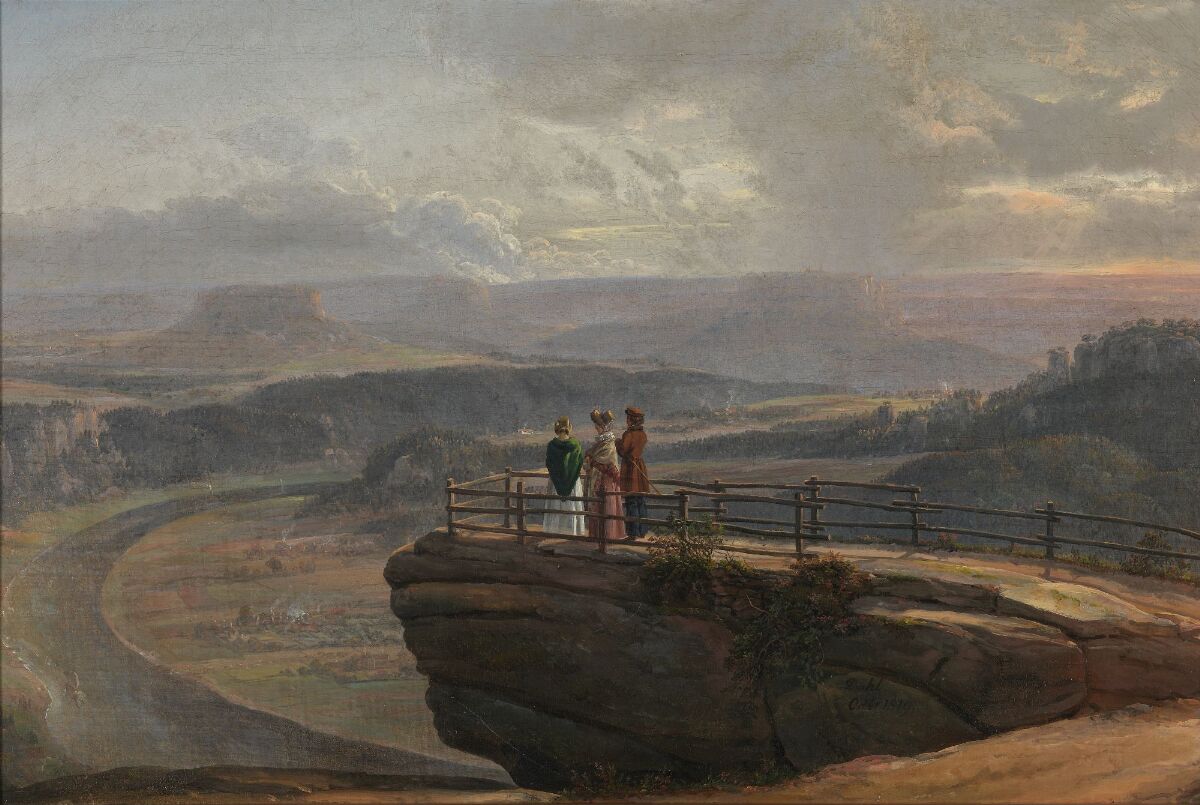
Johan Christian Dahl View from Bastei (Fra Bastei), 1819
Johan Christian DahlView from Bastei (Fra Bastei), 1819
Room 042. In room 041 hang the small, dated cloud studies (Drifting Clouds, 1 April 1835; Villa Malta, Rome, 22 June 1821). Dahl dated his sketches to the day. Compare the sketches' honesty with Stalheim's rhetoric.
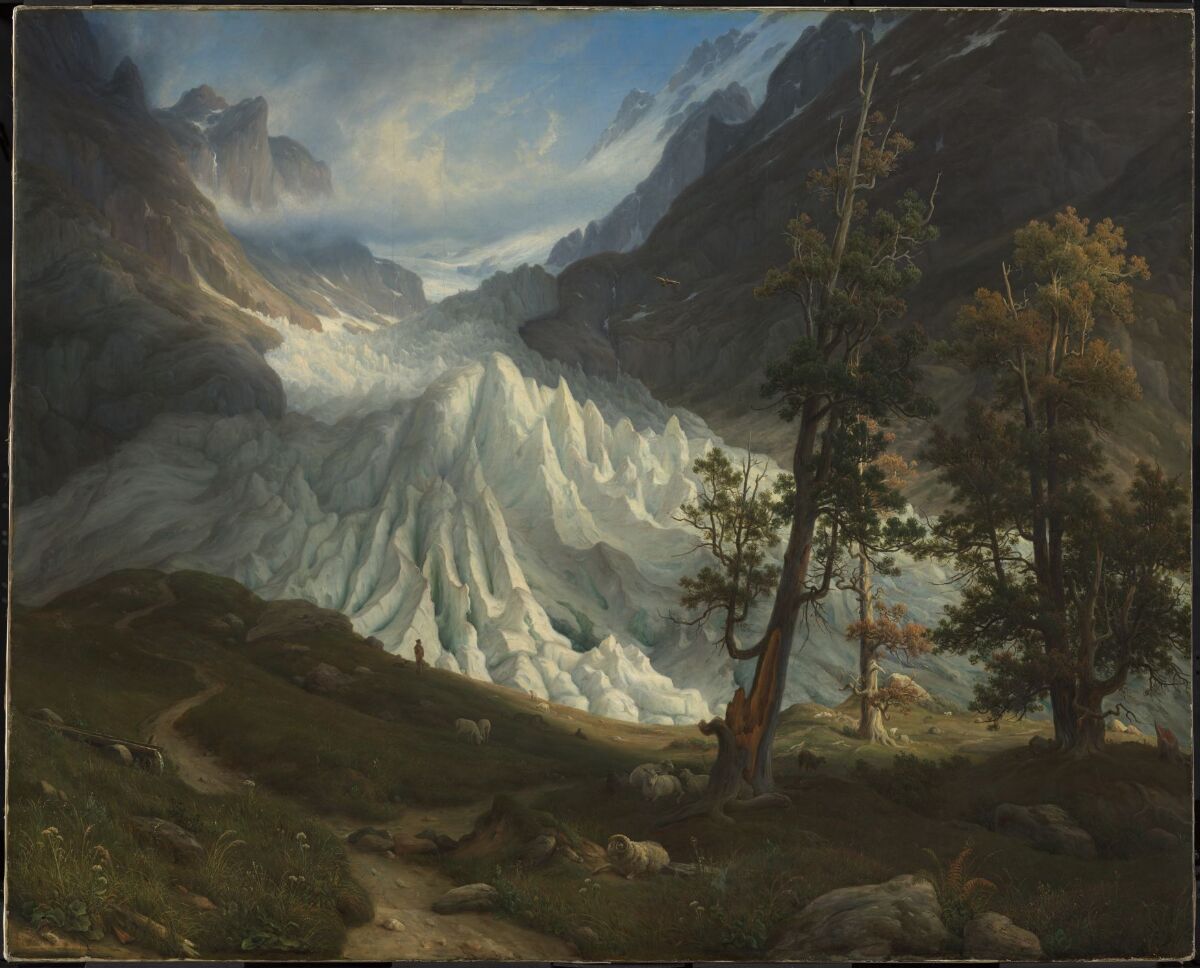
Thomas Fearnley The Grindelwald Glacier (Grindelwaldgletscheren), 1838
Thomas FearnleyThe Grindelwald Glacier (Grindelwaldgletscheren), 1838
Dahl's pupil, dead at 39 in Munich. There is a gigapixel scan of the picture.
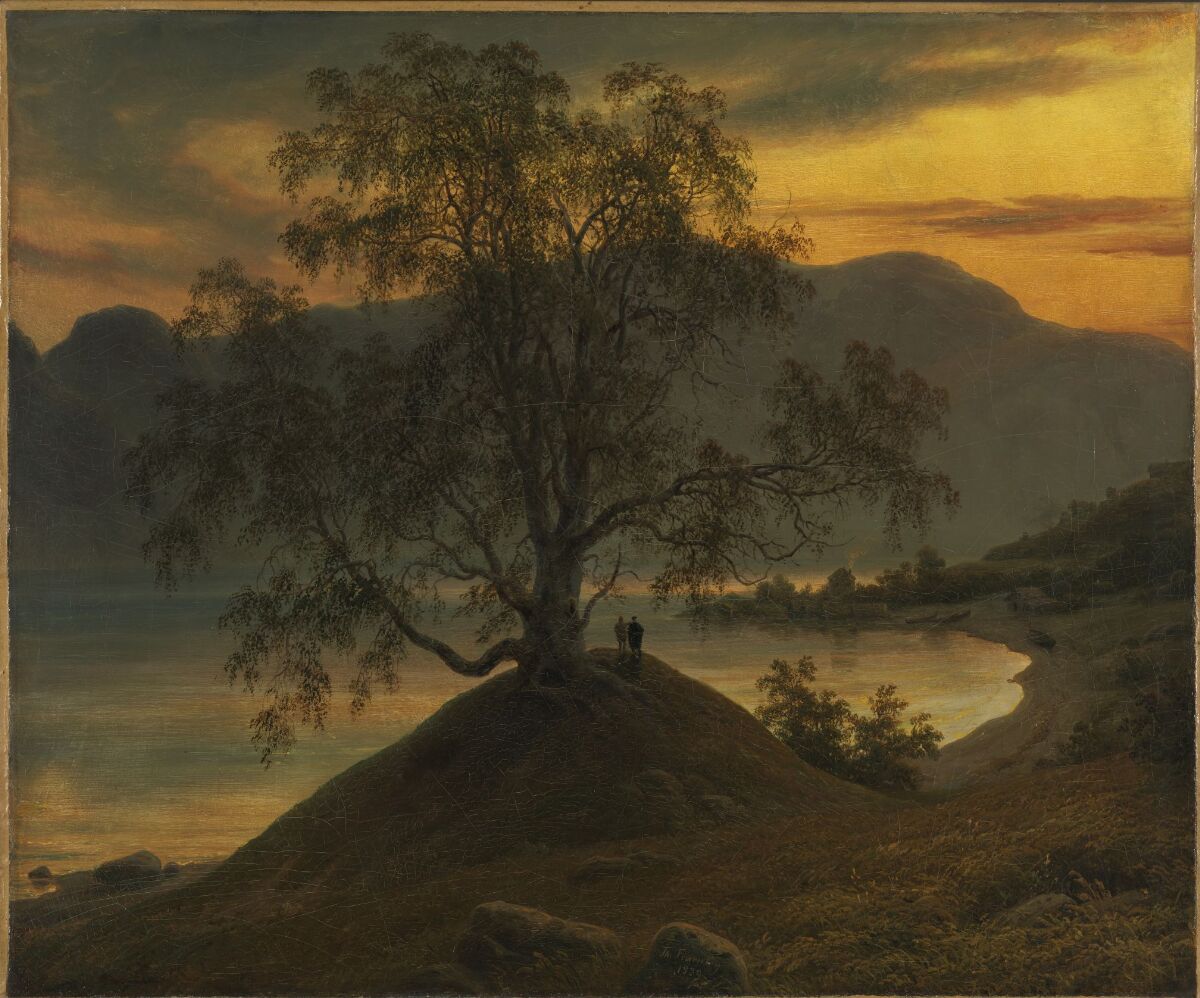
Thomas Fearnley Old Birch Tree at the Sognefjord (Slindebirken), 1839
Thomas FearnleyOld Birch Tree at the Sognefjord (Slindebirken), 1839
The birch stood on a burial mound and was brought down by a storm in 1874. The picture outlived the tree.
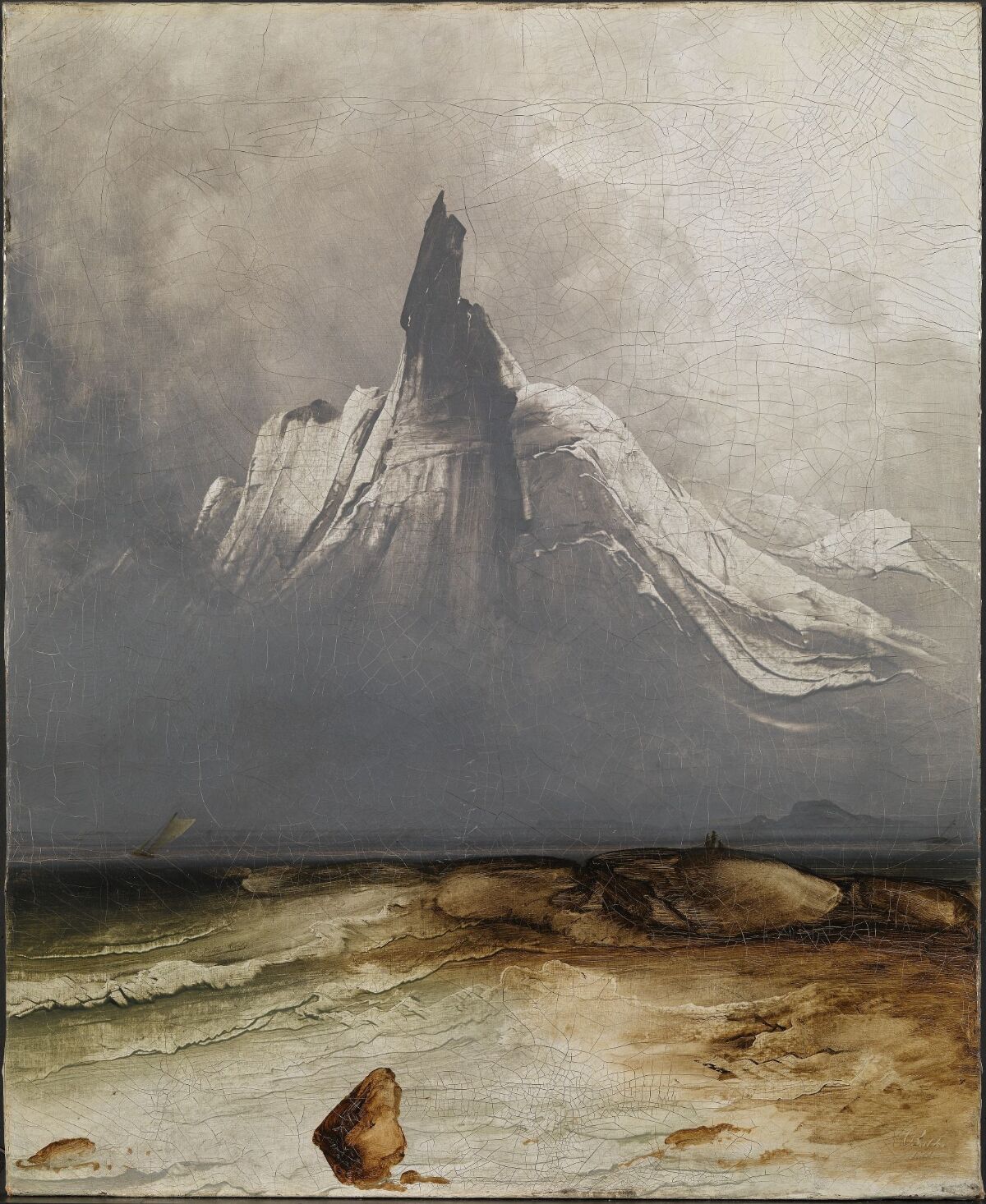
Peder Balke Stetind in Fog (Stetind i tåke), 1864
Peder BalkeStetind in Fog (Stetind i tåke), 1864
Balke was also a pupil of Dahl, and the one who went the other way: few details and almost no colour. The museum's text points to the small group of people on the crag as a yardstick for the forces of nature. Balke is your bridge to the modern rooms, forty years early. Give him the full time.
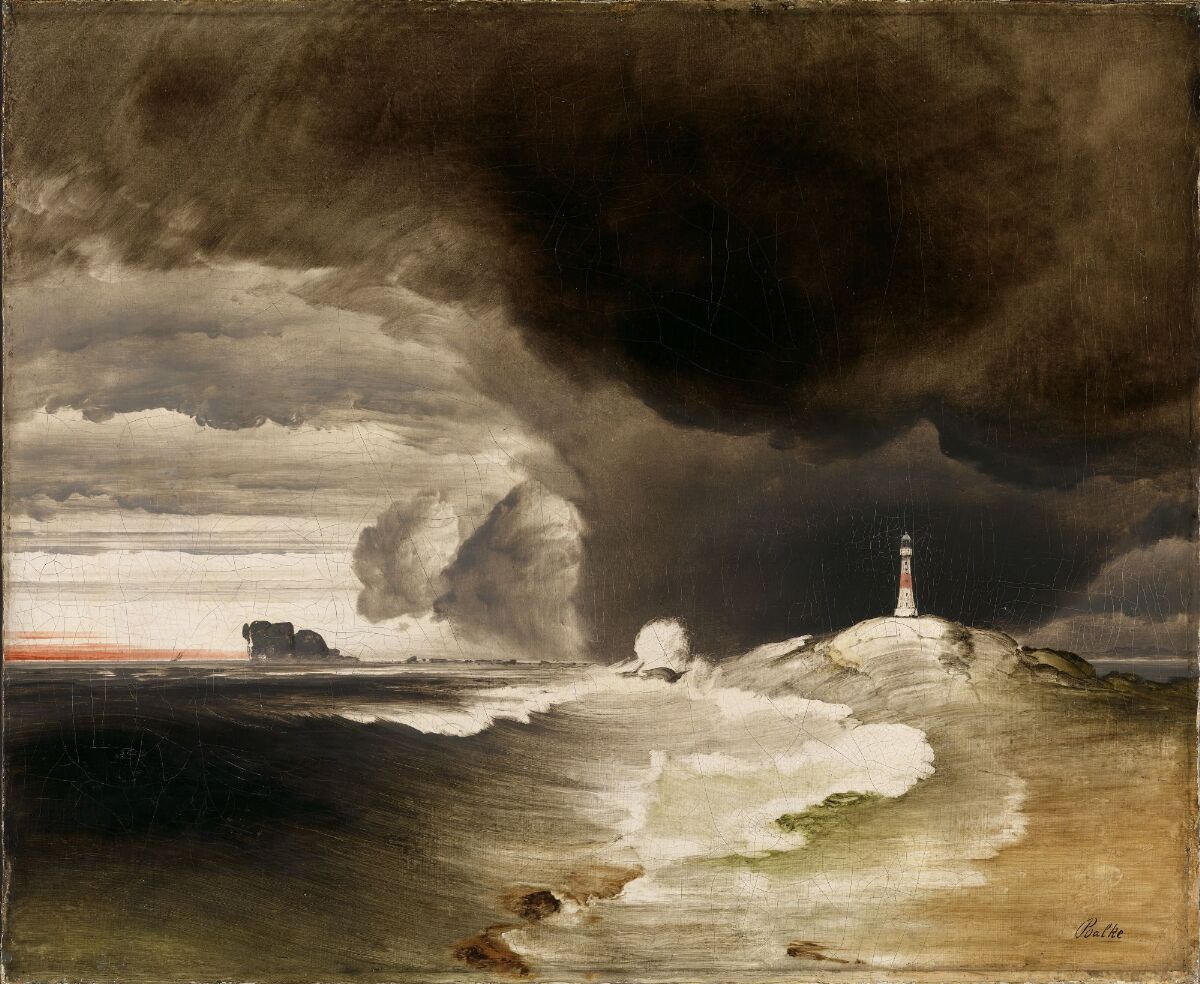
Peder Balke Lighthouse on the Norwegian Coast (Fyr på den norske kyst), 1850–1860
Peder BalkeLighthouse on the Norwegian Coast (Fyr på den norske kyst), 1850–1860
The same Balke, at about the same time. Here the museum writes that you can see clearly how he put the paint on, "whether through brushes, palette knives, or even his fingers". The picture was on the Norwegian 1000-krone banknote from 1975 to 1987.
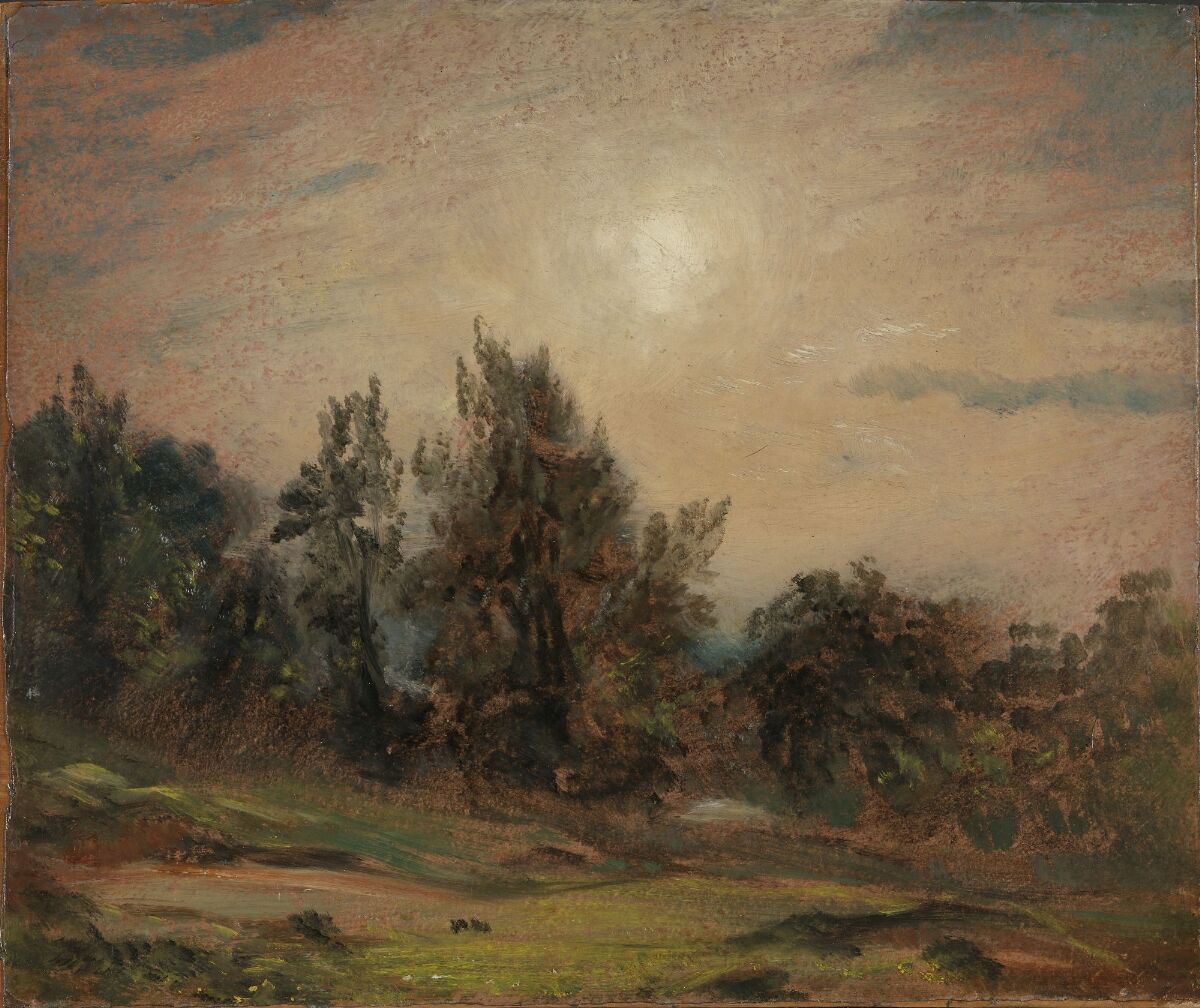
John Constable Trees on Hampstead Heath, 9 October 1821
John ConstableTrees on Hampstead Heath, 9 October 1821
Room 041. Painted outdoors in England, in the same decade as Corot's study from Italy. Dahl's cloud studies belong with these, not with Stalheim.
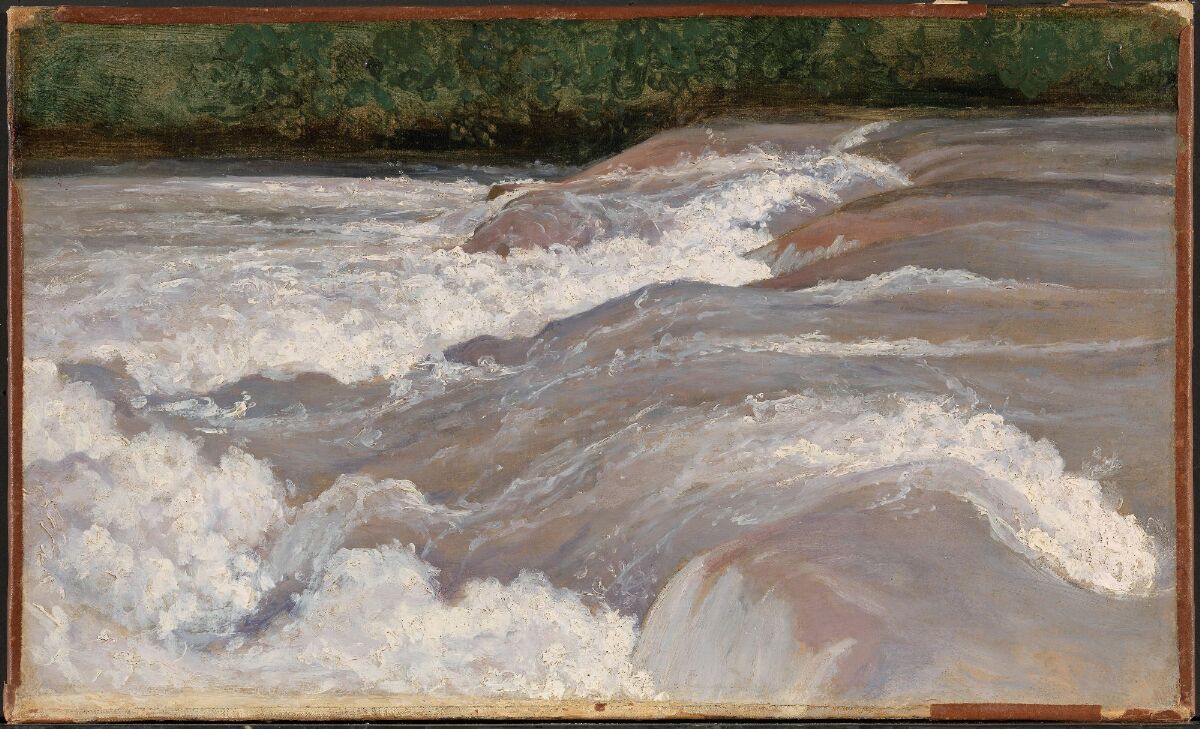
Camille Corot The Velino Above the Cascade of Terni, 1826
Camille CorotThe Velino Above the Cascade of Terni, 1826
Room 041. Painted outdoors in Italy, in the same decade as Constable's study from England.
Around the pictures
Who looked at Stalheim in 1842, and where? Not in Norway: Dahl sold mostly to Germans, and the picture came to the gallery as a gift in 1914. What did a buyer in Dresden want a Norwegian fjord for? Then ask the reverse question for Oslo in 1914.
Read the museum's own texts on Dahl and Fearnley in rooms 041–043. They are unusually good.
Before you go
Florian Illies, Zauber der Stille (2023) How Friedrich was forgotten, found by Disney and abused by the Nazis; reception history to carry into room 043.
Gunnarsson, Nordic Landscape Painting in the Nineteenth Century (1998) The pages on Dahl and Fearnley, and the Nordic peers Oslo does not hang.
Rom for rom, episode 1 (in Norwegian) Covers rooms 043 and 046.
The catalogue of the exhibition "Dahl og Friedrich" (2014–15, Oslo/Dresden) The National Museum has published on the two together; borrow it.
A BBC documentary on Constable, or Great Art Explained on Friedrich's Wanderer For the English Romantic parallel.
Afterwards
Describe the pictures from memory, without looking at them, and record a voice note.
Read about the founding of the National Gallery (1837) and Dahl's role in it, and in saving the stave churches (Fortidsminneforeningen, the Society for the Preservation of Ancient Monuments, 1844). The man in the Rössler portrait in room 042 is the reason Urnes still stands and the reason the museum owns a Baburen.