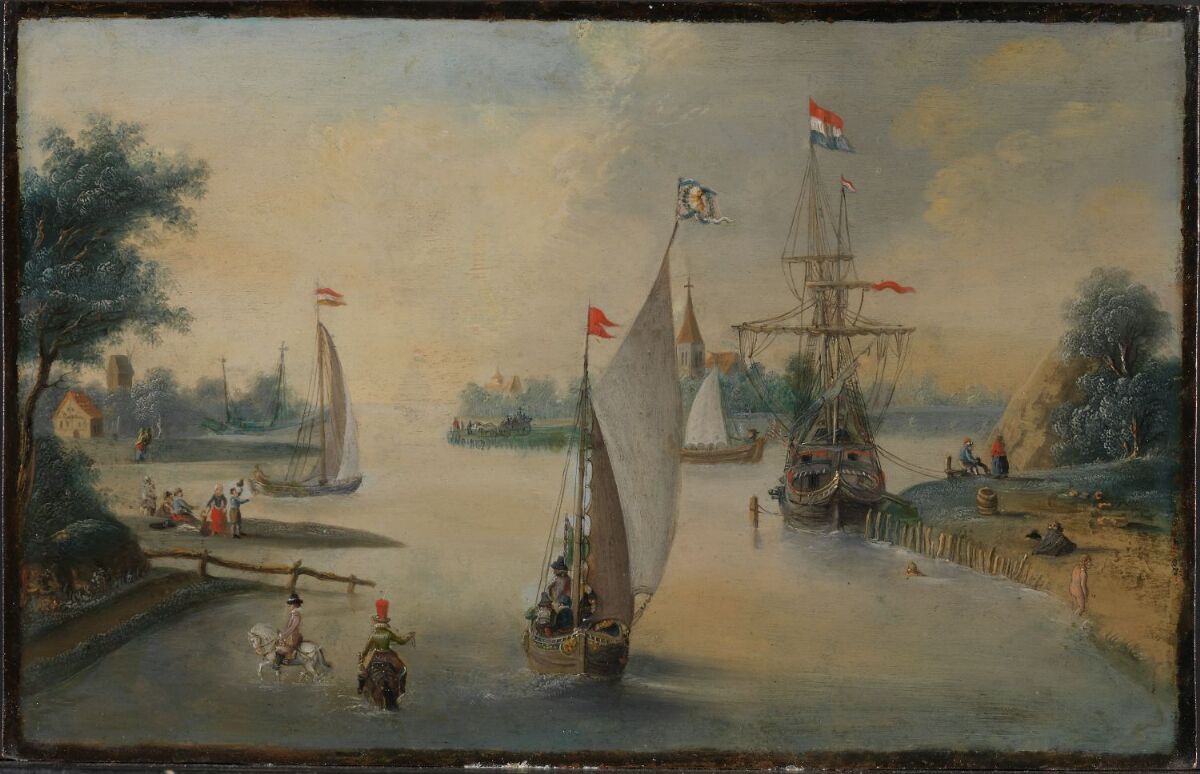
Hendrick AvercampSummer, early 1600s
Room 034. Together with Winter, a pair by the painter of skating scenes. Avercamp was deaf and mute, and his pictures are all about watching.
This is the visit for the fifteen-minute habit. Seventeenth-century Dutch painting was made to be looked at from twenty centimetres, by people who owned the picture and saw it every day. Svetlana Alpers called it "the art of describing": a culture that believed knowledge came through the eye, and painted accordingly. Your Bosch instinct belongs here. Bring a hand lens if you own one.
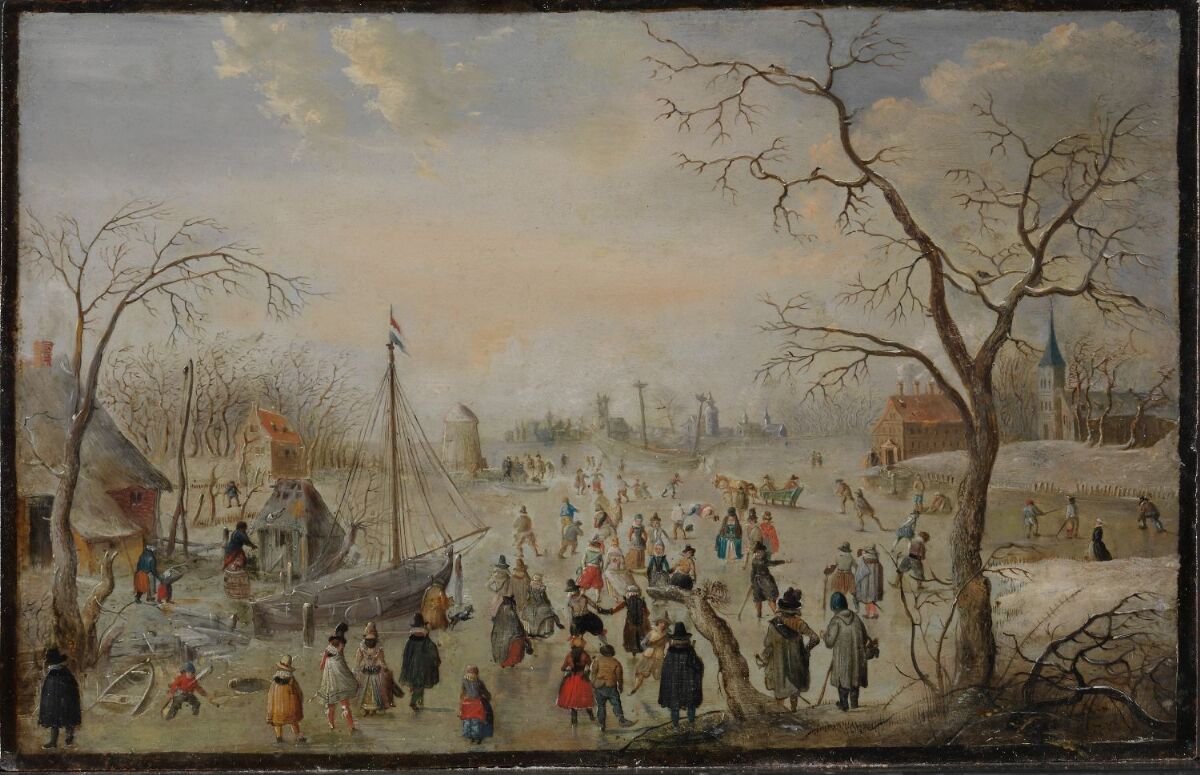
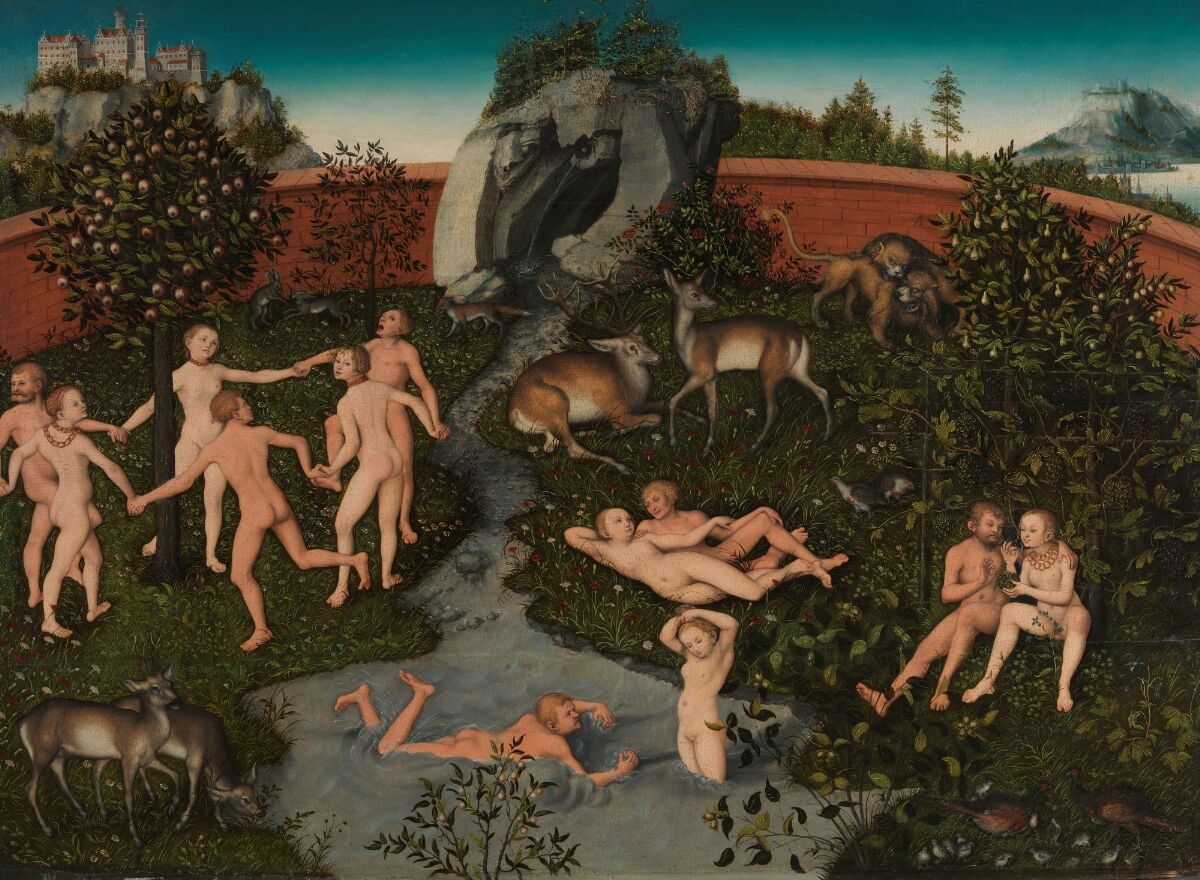
Avercamp's Winter against Cranach's Golden Age. Both are full of people, and both are about a community at leisure. One is a Lutheran court's classical fantasy, the other a Calvinist town's actual Tuesday. Which is the more detailed, and which detail is doing the most work?
Room 034. Together with Winter, a pair by the painter of skating scenes. Avercamp was deaf and mute, and his pictures are all about watching.
Room 034. Count the stories. Find the one figure who is looking at you.
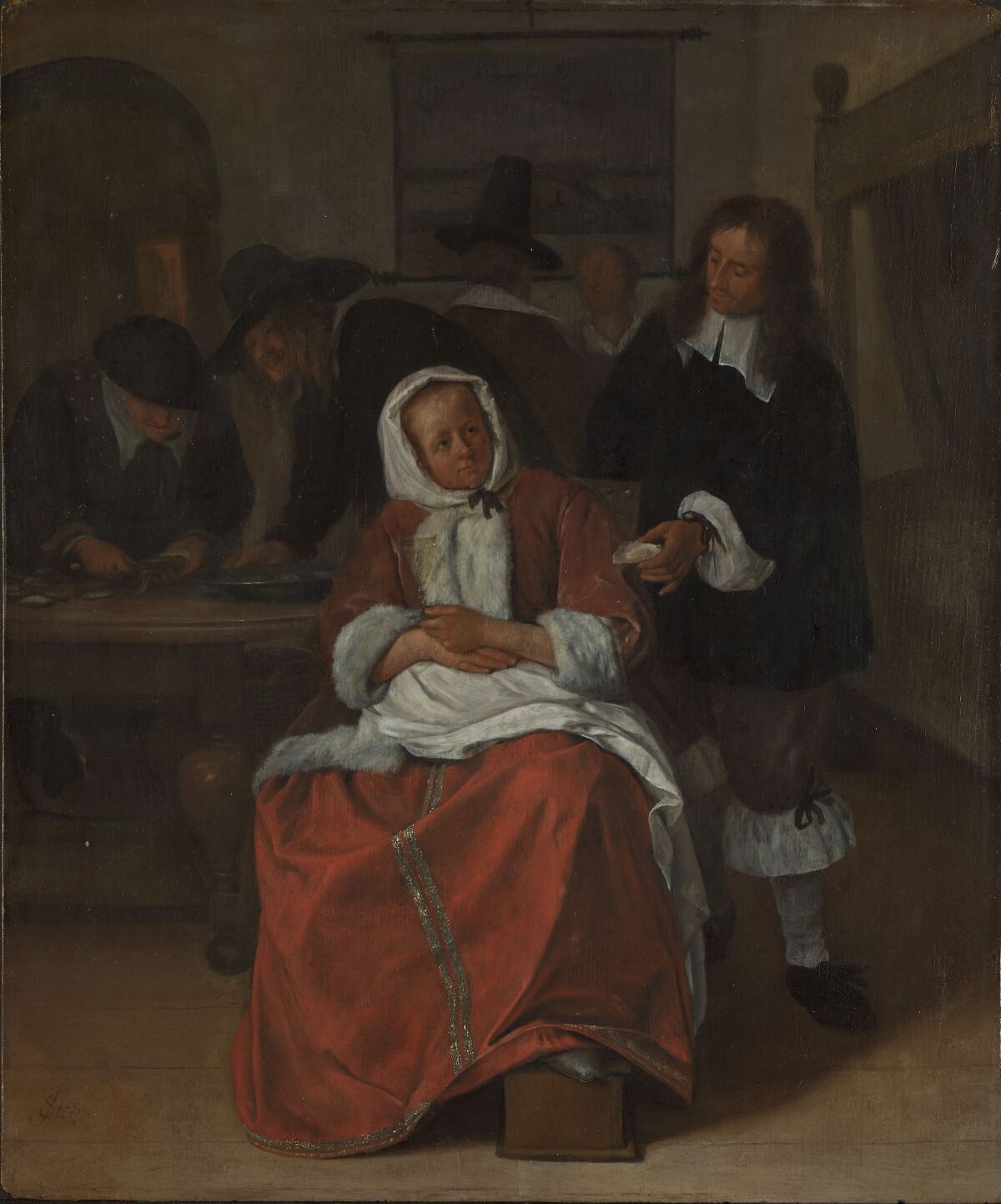
Room 038, 38 × 32 cm. Steen is the comic novelist of Dutch painting. Every object is a joke or a warning, and oysters meant one thing in 1660.
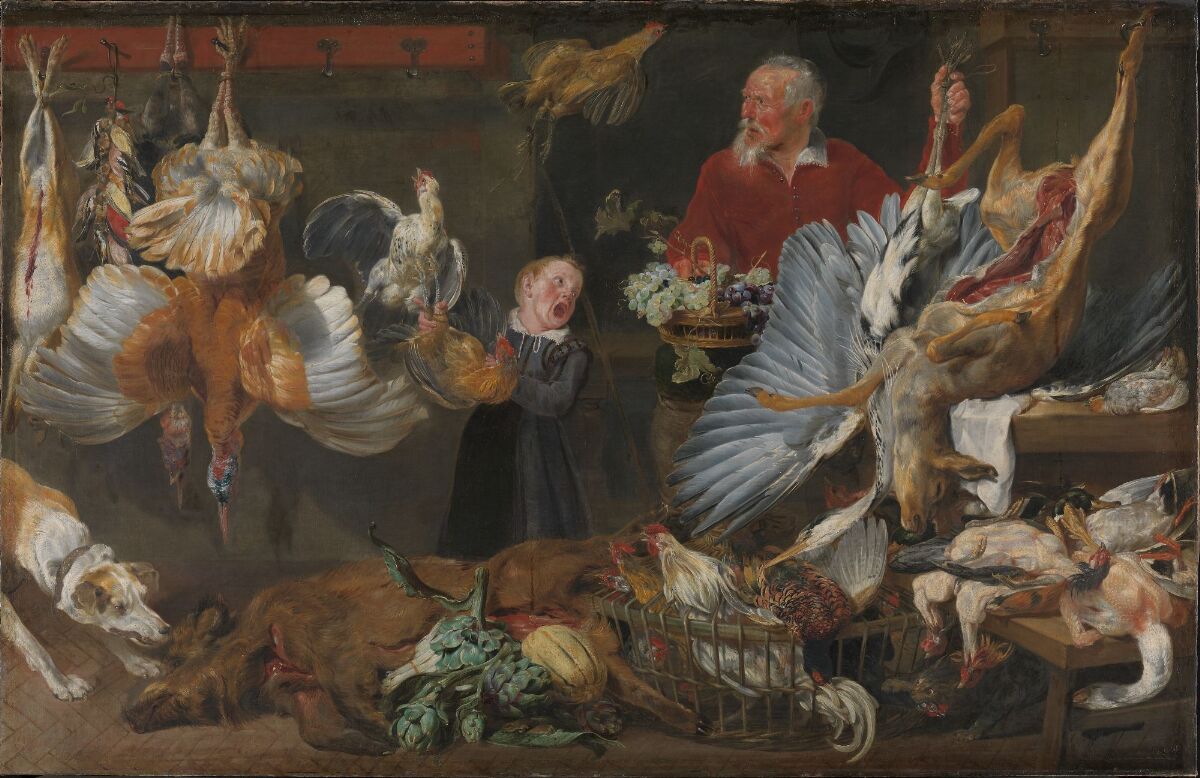
Room 038, nearly three metres wide. The museum's text points to the boy who is not quite up to his task, so the hens flutter away. A Flemish market stall as a display of painting skill; Rubens borrowed him for the animals.
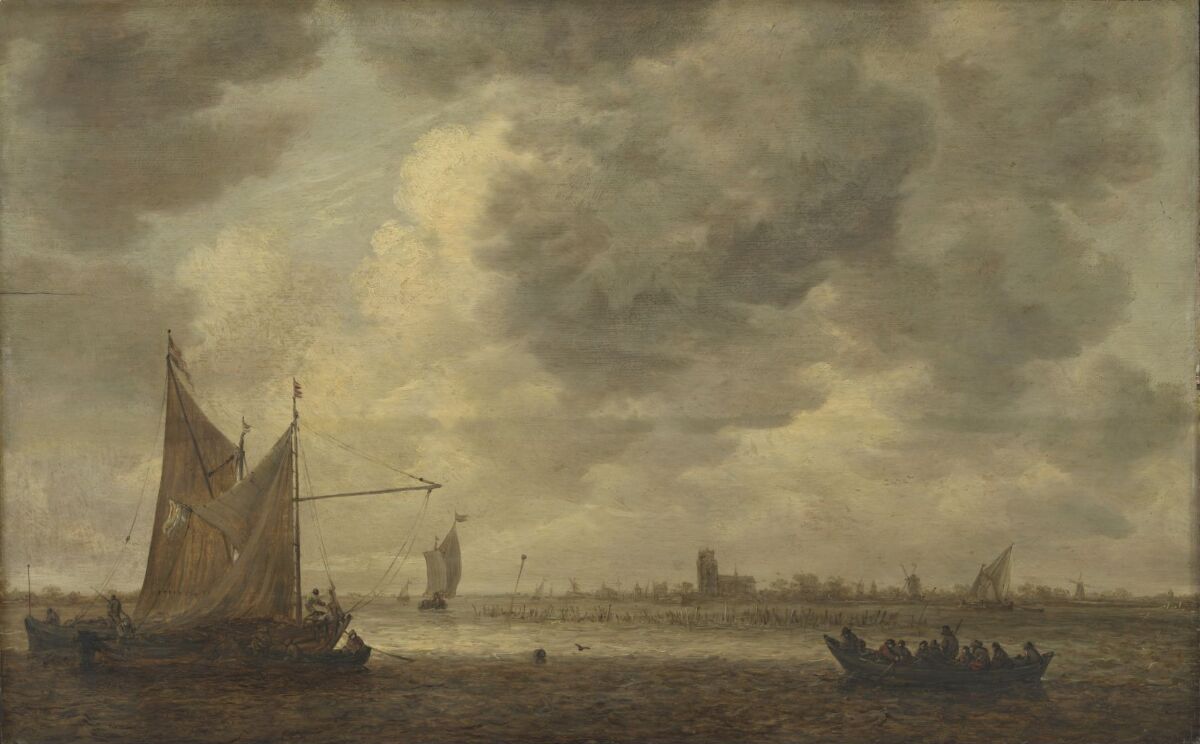
The tonal landscape; its heir is Jacob van Ruisdael's Mountain Landscape with an Old Oak (1660s, room 034). Van Goyen painted with almost one colour.

An interior: the floor tiles are a lesson in perspective. The same goes for Pieter Janssens' The Messenger (c. 1670–75), where the letter is a plot.
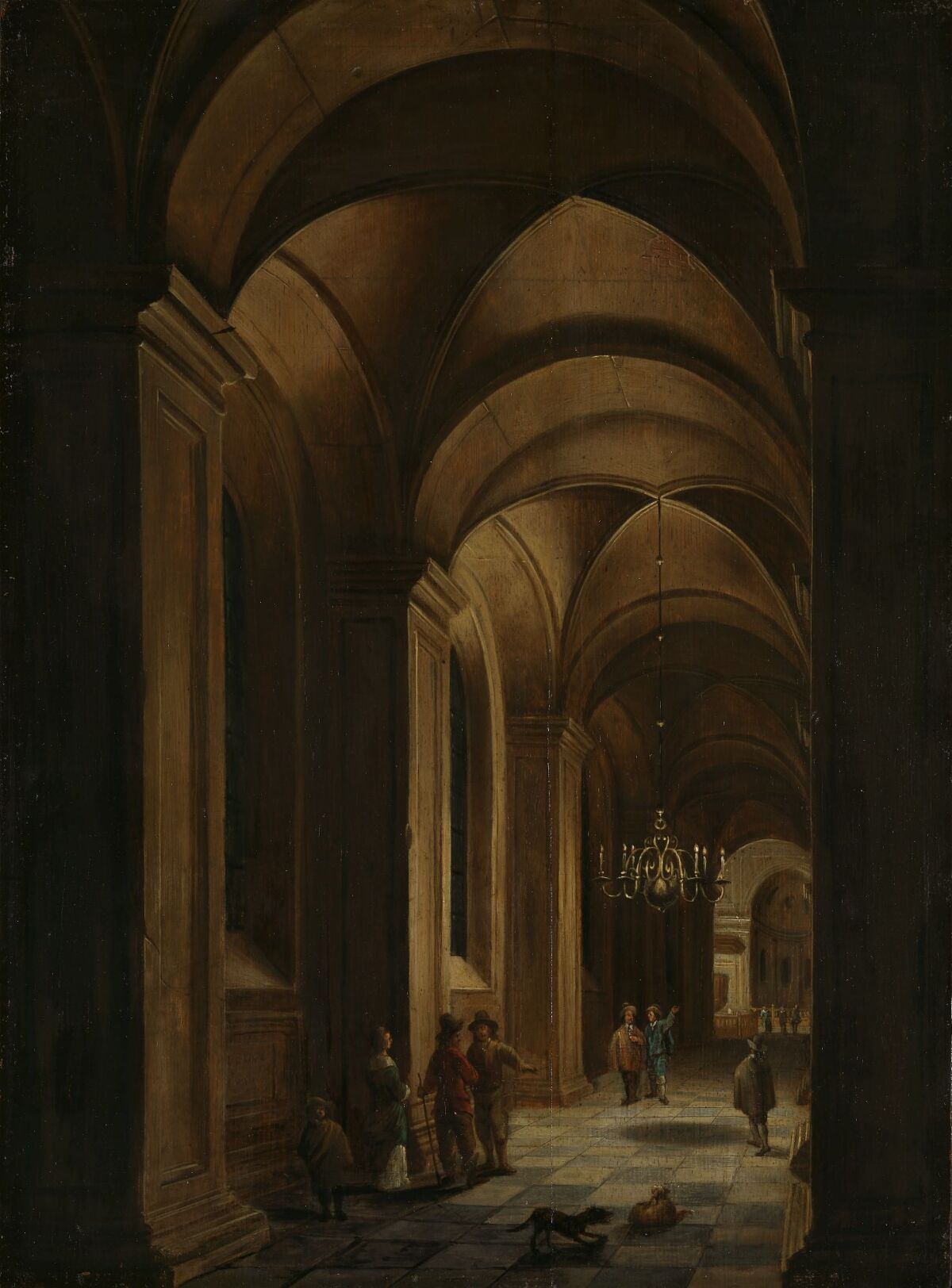
A whitewashed Protestant church as subject.
Room 033. Cranach was Luther's friend and portraitist, and The Golden Age is Wittenberg's idea of paradise. In the same room hang Gerard David's Virgin and Child and two Dürer woodcuts from the Apocalypse (1498). The Dürer prints are what reached Norway first: paper travels.
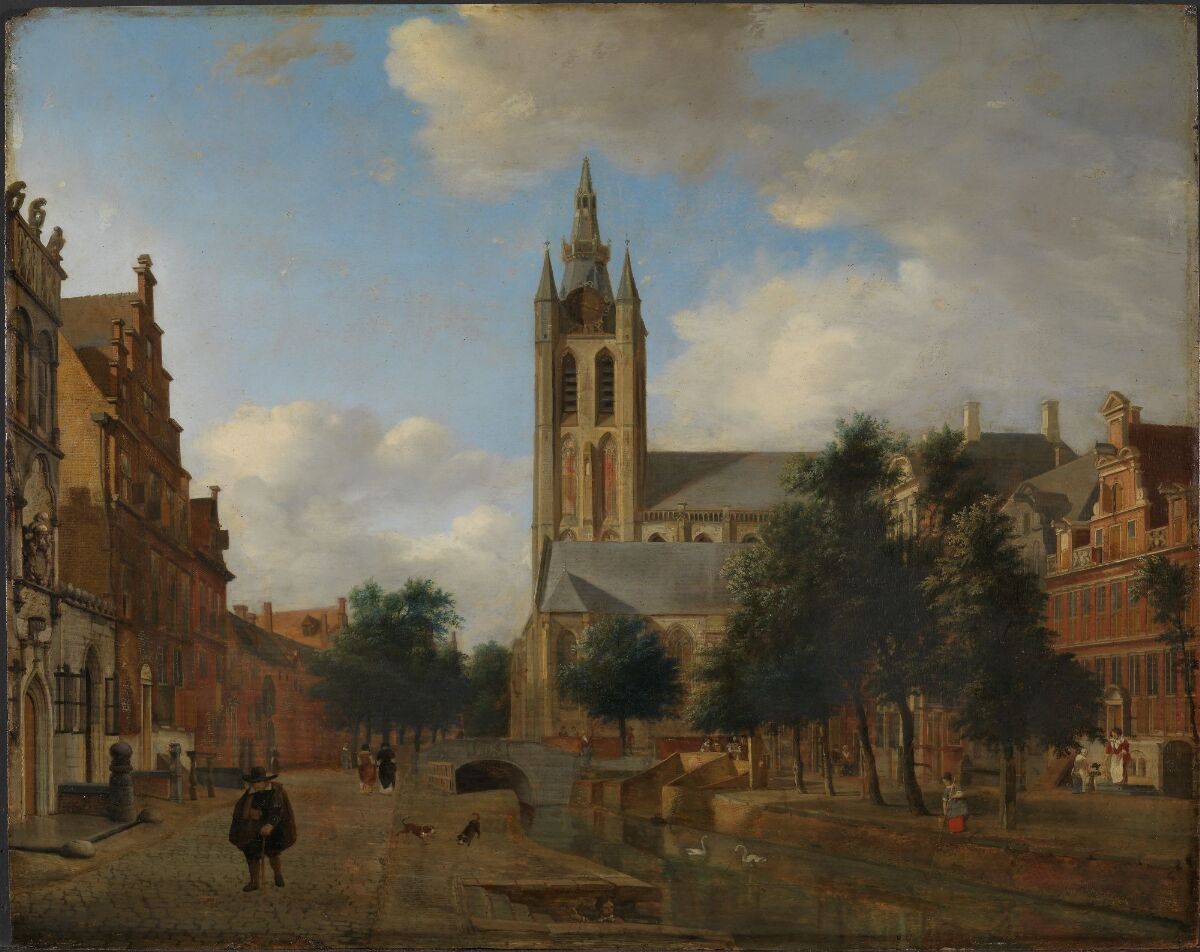
A detour to floor 1, room 005. The museum's one Dutch cityscape hangs among the design galleries, not on the art floor. Van der Heyden painted brick by brick, and he also invented the fire hose; both belong in the look.
How did van Goyen paint with almost one colour? Ask the question in front of The River Oude Maas near Dordrecht.
De Blieck: Compare, in your head, with the Catholic altarpieces in room 033, painted a century earlier. The same Low Countries, with a Reformation in between.
The exercise: Pick one picture under 50 cm and do "ten times two" (list ten things, then ten more). Then describe it from memory, without looking. Then look again and note what you remembered wrongly.
Describe the pictures from memory, without looking at them, and record a voice note.