Rooms 045 ("Tradisjonen tro", True to tradition), 049 ("Historie og mytologi", History and mythology) and 064 ("Det var en gang …", Once upon a time …) · Ninety minutes
Norway got a constitution in 1814 and a visual identity about thirty years later, painted largely in Düsseldorf by Norwegians who had to go abroad to learn how. Room 045 is that project, room 049 is its grandiose historical wing, and room 064 is where it became children's books.
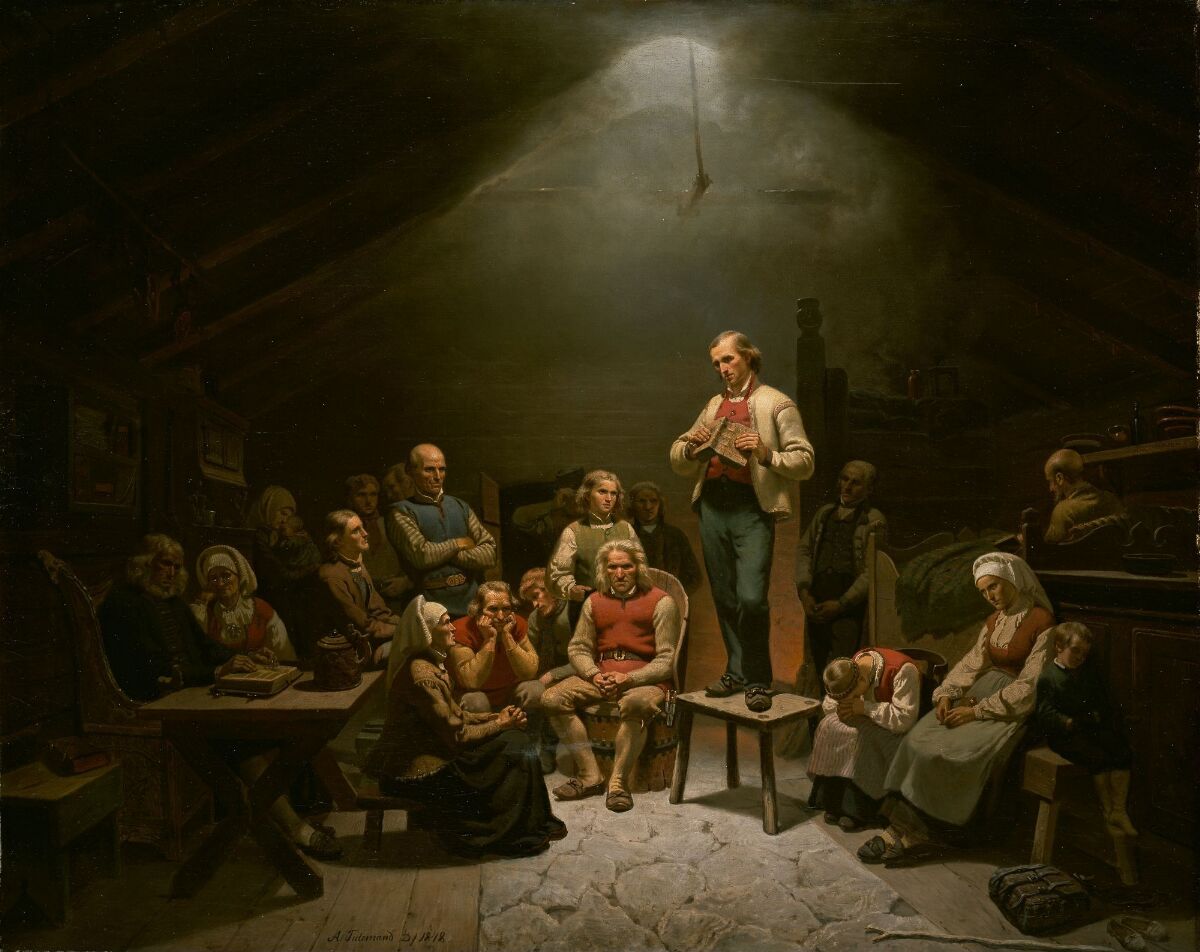
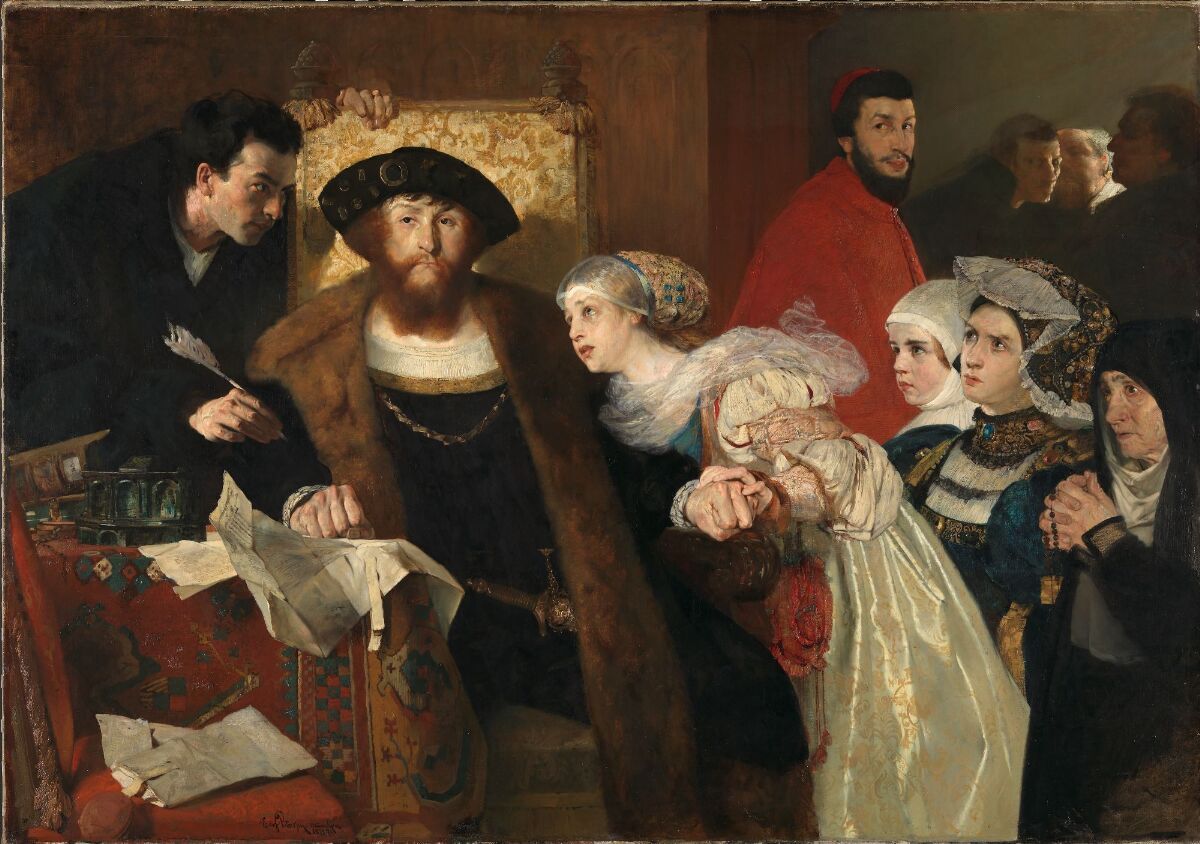
Adolph Tidemand Low Church Devotion (Haugianerne), 1848Eilif Peterssen Christian II Signing the Death Warrant of Torben Oxe (Christian II undertegner dødsdommen over Torben Oxe), 1875–1876
Tidemand's Low Church Devotion against Peterssen's Christian II. Twenty-seven years between them, both indoors, both about authority and a text. One is a document of a living movement, the other a costume drama. Which of the painters believed his own picture?
The pictures
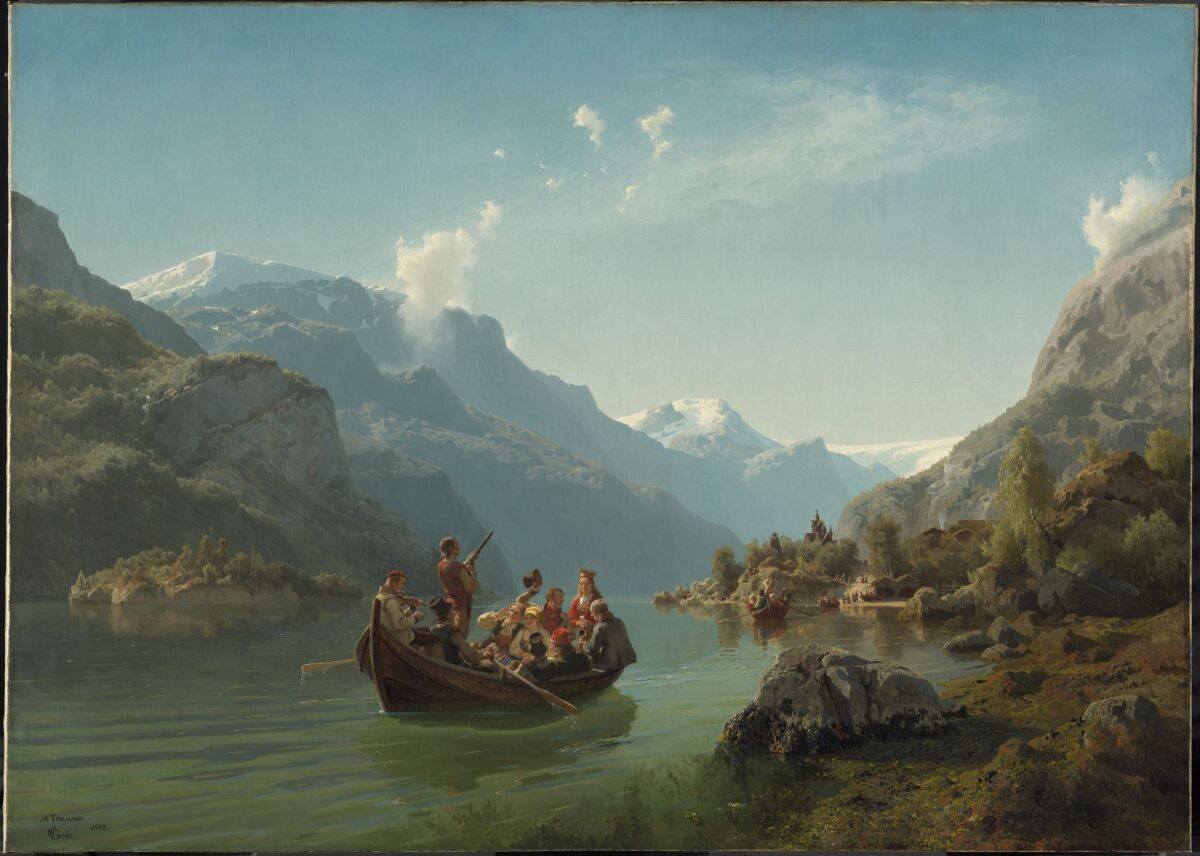
Hans Gude and Adolph Tidemand Bridal Procession on the Hardangerfjord (Brudeferd i Hardanger), 1848
Hans Gude and Adolph TidemandBridal Procession on the Hardangerfjord (Brudeferd i Hardanger), 1848
Gigapixel image. The museum's text says the picture "has been revered as an 'icon' by generations of Norwegians". Two painters have painted one canvas, so find the seam between Gude's landscape and Tidemand's figures. The stave church, the fjord and the costumes are assembled from different places.
Adolph Tidemand Low Church Devotion (Haugianerne), 1848
Adolph TidemandLow Church Devotion (Haugianerne), 1848
A lay preacher in a smoke-blackened farmhouse. The Haugians were followers of Hans Nielsen Hauge, the lay preacher who had travelled Norway fifty years earlier. Düsseldorf technique applied to a Norwegian religious revival. Bjørnson, the poet, is supposed to have said that he could not have written his peasant tales without Tidemand.
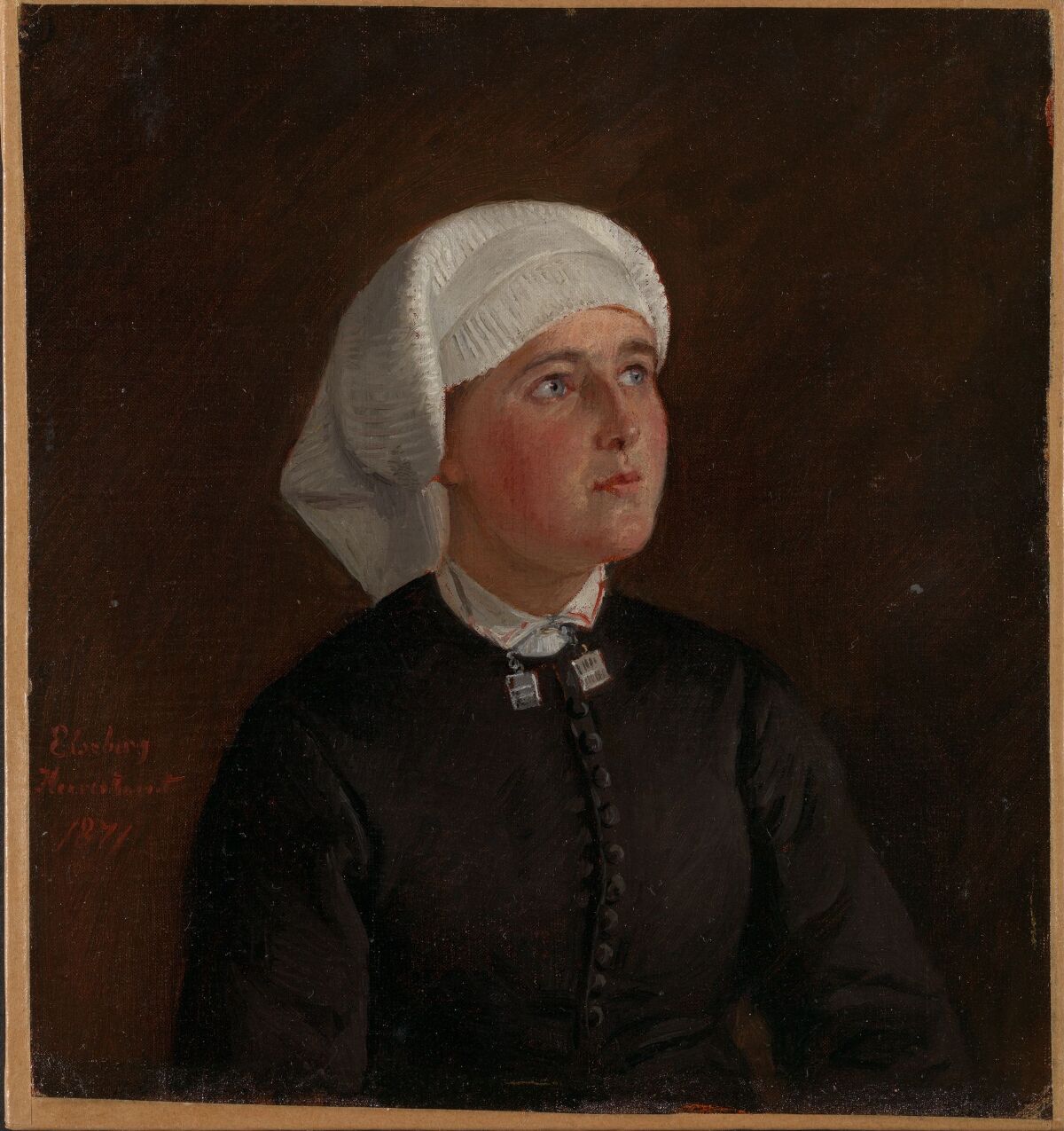
Adolph Tidemand Portrait of Elseberg Herrestvedt (Elseberg Herrestvedt), 1871
Adolph TidemandPortrait of Elseberg Herrestvedt (Elseberg Herrestvedt), 1871
Tidemand's peasant portraits (also Sella Larsdatter Vikør and The Farmer Torstein Ringheim from Voss) show people with names, not types. Compare with Biard's two portraits of a youth from Kautokeino (1839) in the same room. A French painter's Sámi sitters have no names.
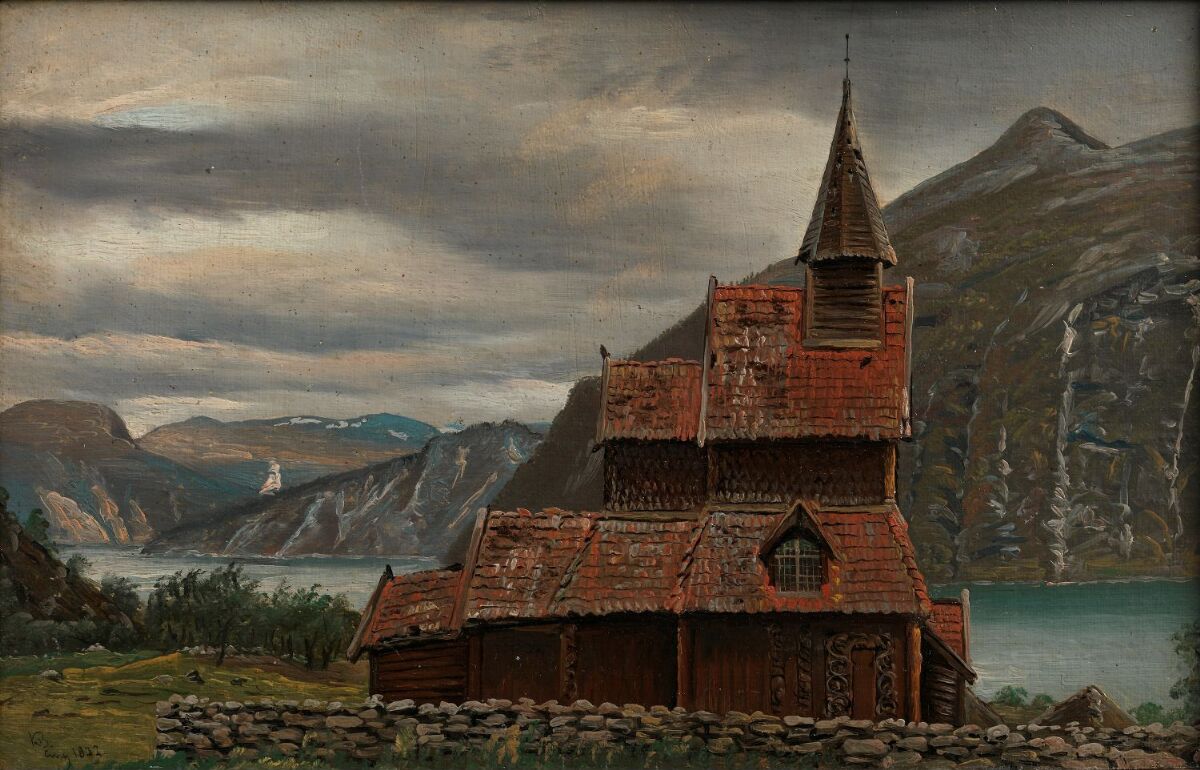
Knud Baade Urnes Stave Church in Sogn (Urnes stavkirke i Sogn), 1832
Knud BaadeUrnes Stave Church in Sogn (Urnes stavkirke i Sogn), 1832
The church Dahl helped to save, painted before it was understood as heritage. Tycho Jæger's Urnes Church in Sogn (1853) shows it afterwards.
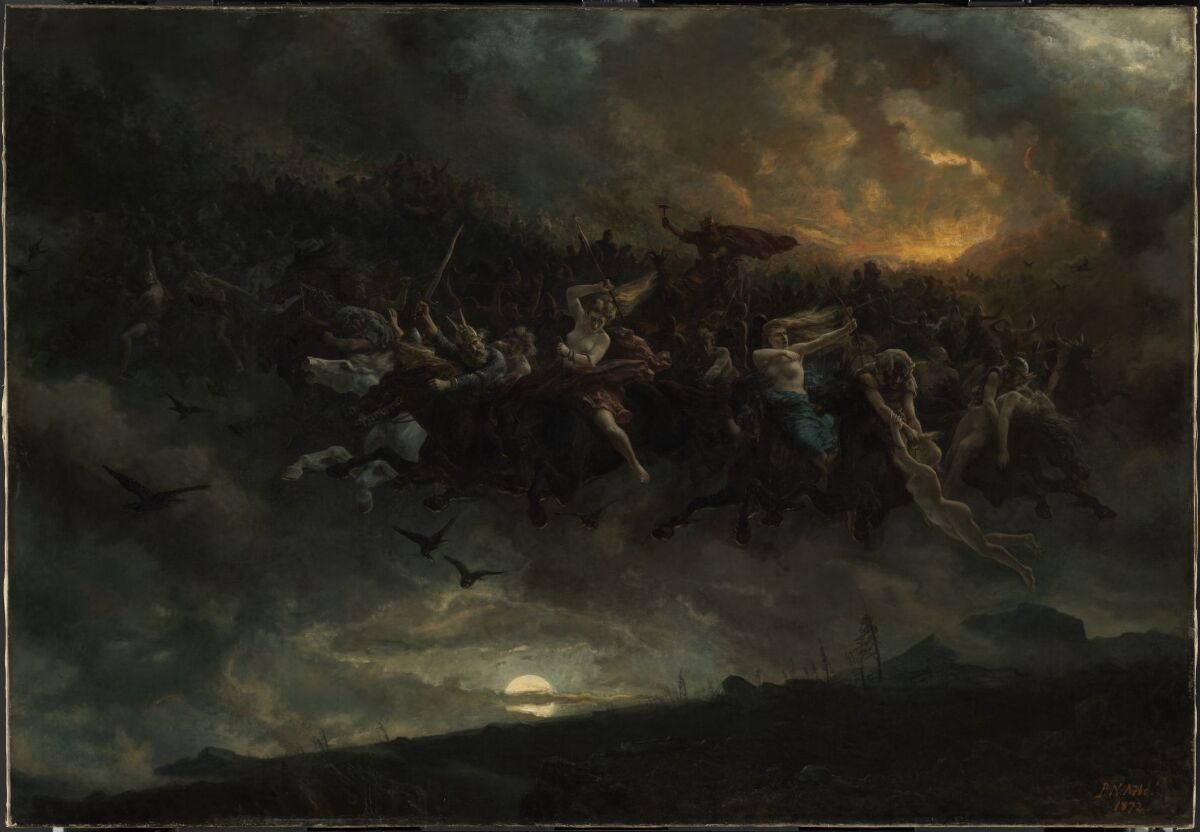
Peter Nicolai Arbo The Wild Hunt of Odin (Åsgårdsreien), 1872
Peter Nicolai ArboThe Wild Hunt of Odin (Åsgårdsreien), 1872
Room 049, together with Arbo's The Valkyrie (1869). The museum's text says the starting point was above all Welhaven's poem of the same title from 1844.
Eilif Peterssen Christian II Signing the Death Warrant of Torben Oxe (Christian II undertegner dødsdommen over Torben Oxe), 1875–1876
Eilif PeterssenChristian II Signing the Death Warrant of Torben Oxe (Christian II undertegner dødsdommen over Torben Oxe), 1875–1876
Room 049. The death warrant of 1517 led indirectly to the king's fall, says the museum's text; the adviser in black and the queen in white lean in towards the king from either side. The other half of the pair below.
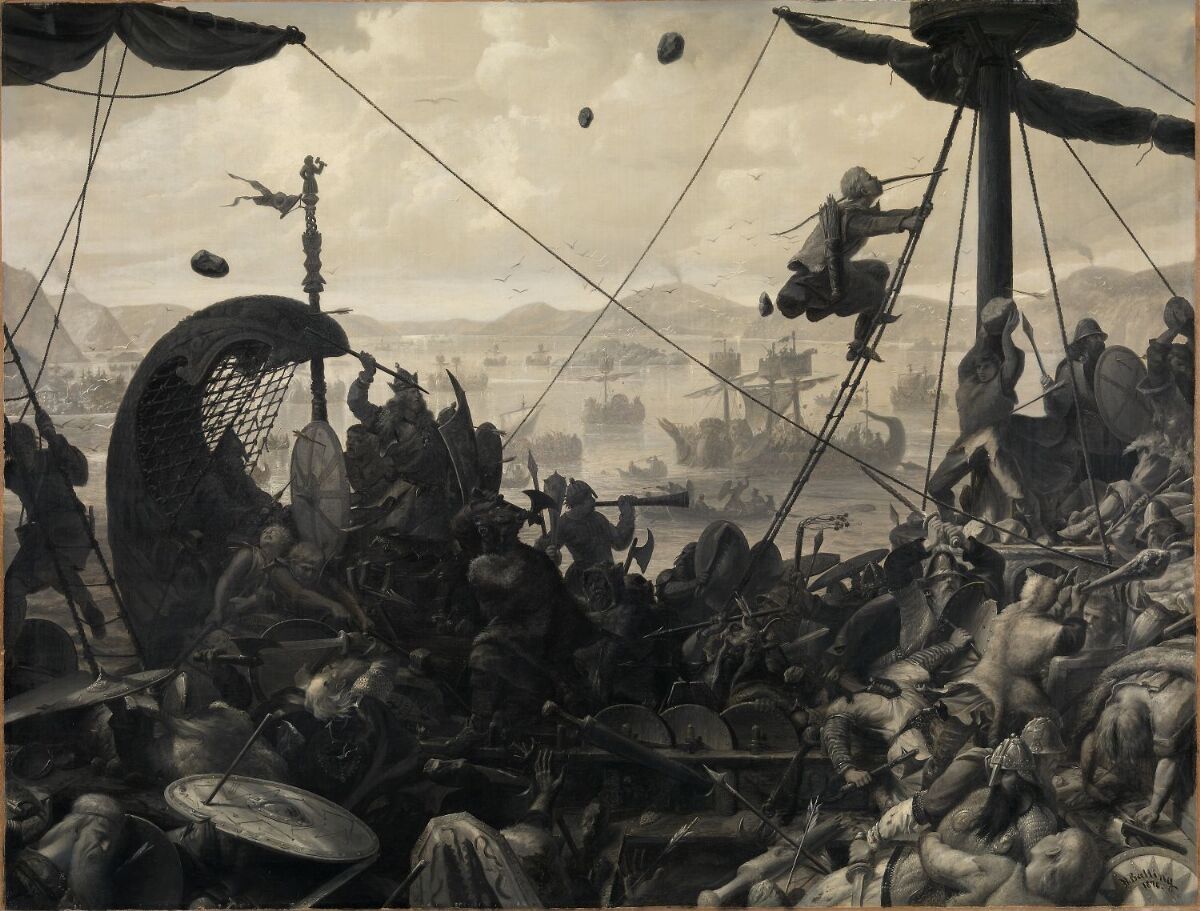
Ole Peter Hansen Balling Harald Fairhair in the Battle of Hafrsfjord (Harald Hårfagre i slaget ved Hafrsfjord), 1870
Ole Peter Hansen BallingHarald Fairhair in the Battle of Hafrsfjord (Harald Hårfagre i slaget ved Hafrsfjord), 1870
Room 049. History painting, the genre Europe considered the highest, arrived in Norway just as Europe gave it up.
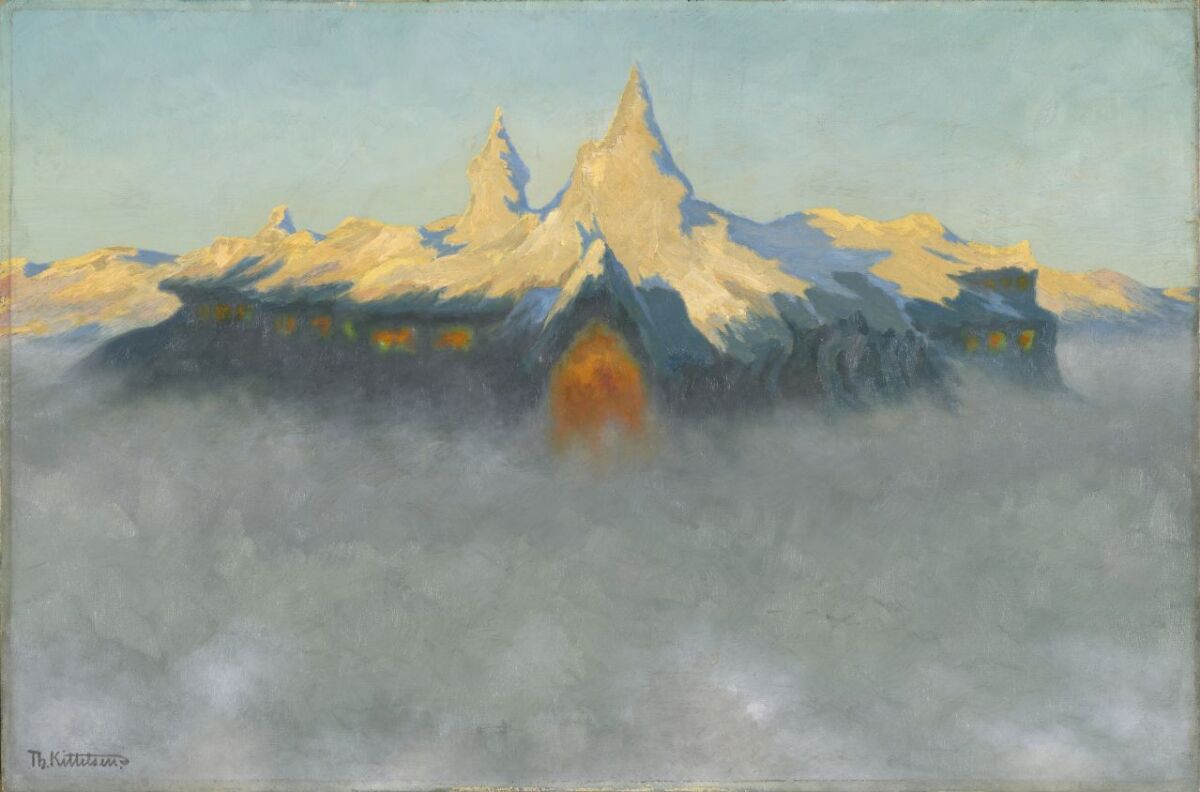
Theodor Kittelsen Soria Moria Palace (Der lå Soria Moria slott), 1900
Theodor KittelsenSoria Moria Palace (Der lå Soria Moria slott), 1900
Room 064. Kittelsen's fairy-tale pictures, also Askeladden (1900) and White Bear King Valemon (1912), together with August Cappelen's forest studies from 1851, which taught him the forest. The national romance ends in the nursery.
Around the pictures
What is the Bridal Procession arguing for, and to whom, in 1848, the year of revolutions?
What did a Norwegian need from Harald Fairhair in 1870?
Who bought these pictures? The Bridal Procession came to the gallery in 1895, after half a century of prints and tableaux. Read the acquisition lines: gifts from merchants, and "bought from the artist". Then ask what Kumu in Tallinn did with the same problem in its rooms for the nineteenth century: a people painting itself into existence under someone else's academy. There it was St Petersburg and Düsseldorf, here Copenhagen and Düsseldorf.
Before you go
Gunnarsson, Nordic Landscape Painting in the Nineteenth Century Düsseldorf and the national landscape in Norway, Sweden and Denmark.
Berg, Norges malerkunst, vol. 1 (in Norwegian) Free on Bokhylla, the National Library's online bookshelf. The chapters on Tidemand and Gude.
How the newspapers around 1814 imagined the nation Then look at how the painters imagined it thirty years later.
Gunnar Danbolt, Norsk kunsthistorie (in Norwegian) The chapters on Düsseldorf and national romanticism.
Afterwards
Describe the pictures from memory, without looking at them, and record a voice note.
Find out what the Bridal Procession was doing in 1905 and in 1945. The chain-of-viewers question is easiest to ask of a picture that has been reproduced this much.