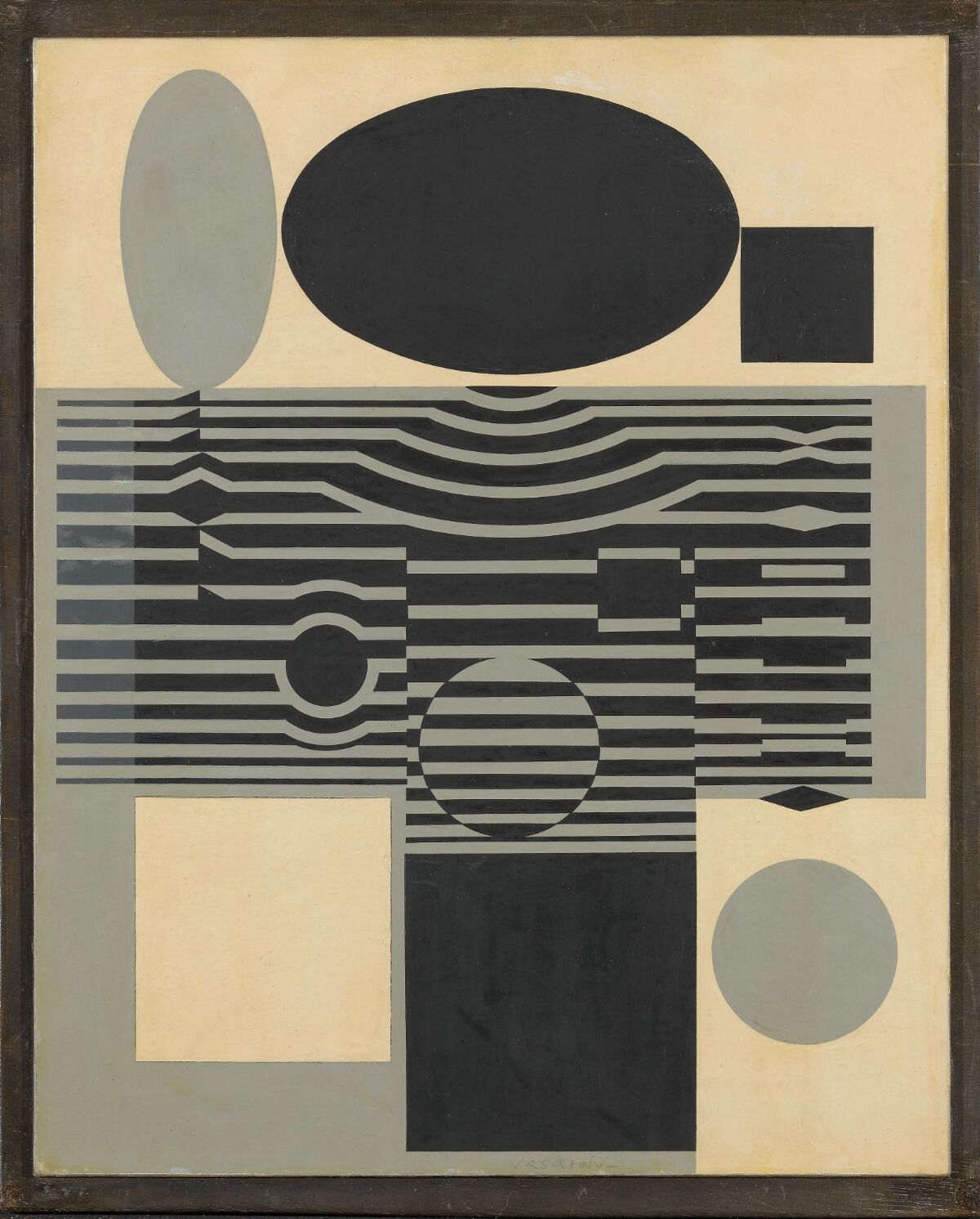
Victor VasarelyKantara II, 1956–59
Gift from Konrad Gromholt in 1967. Op art is the one modern genre whose effect is physiological and undeniable. Stand still for two minutes in front of the picture and report what moves.
This is the room for the feeling you have put into words: neat geometric patterns, and the thought "I could have painted that". The room exists to test the thought, so test it properly. One picture at a time.
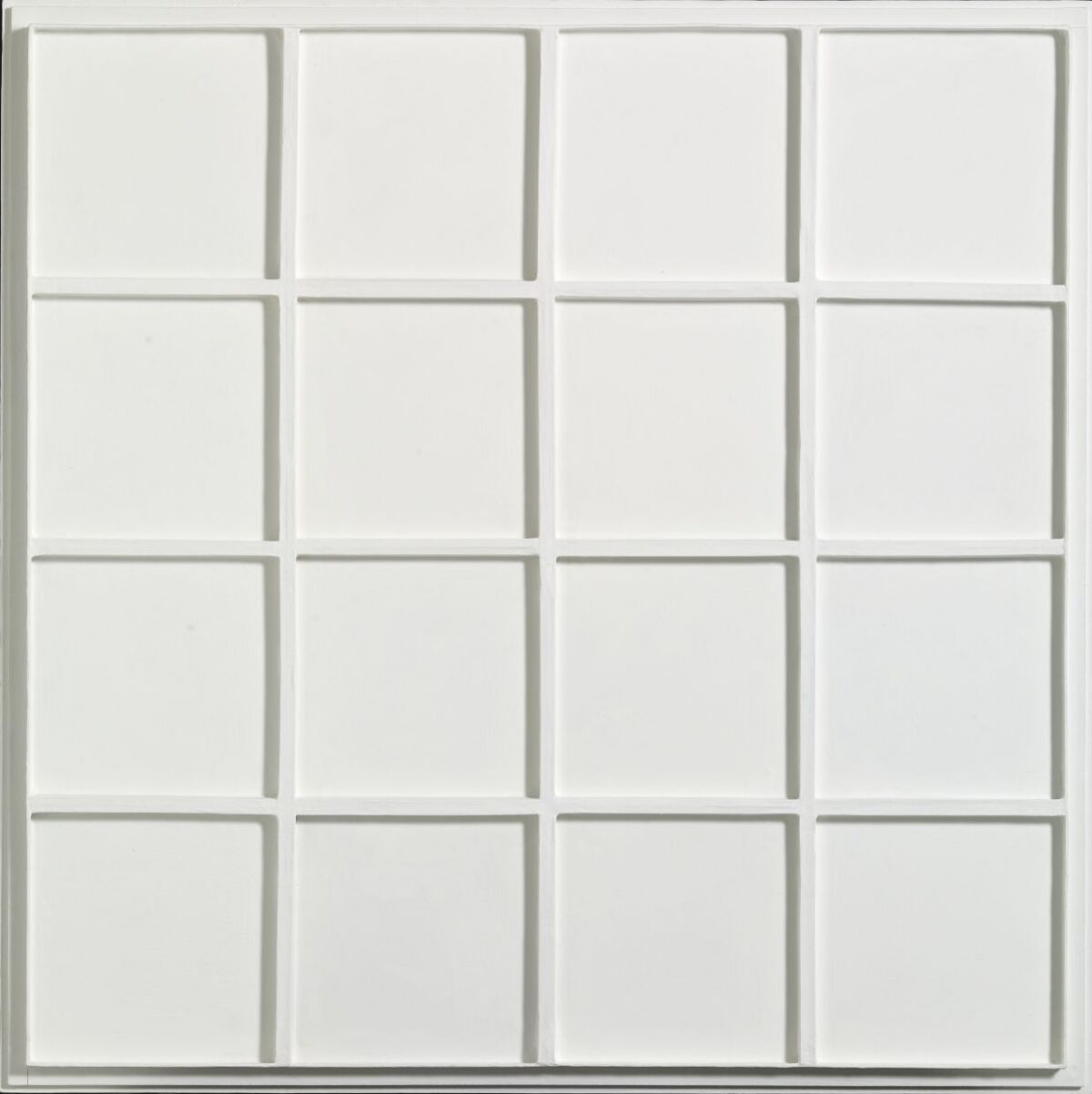
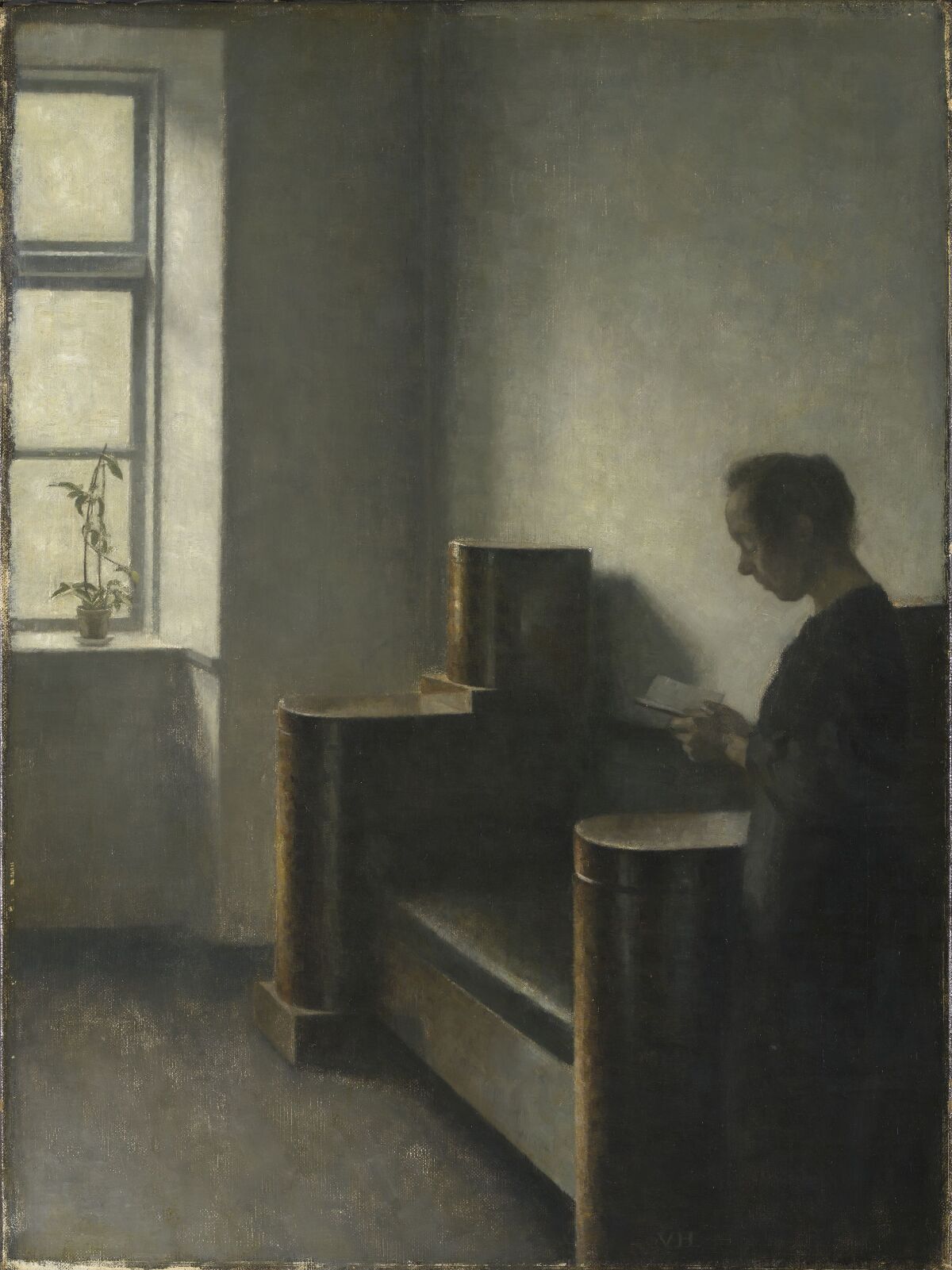
Schoonhoven's white relief against Hammershøi's grey interior (room 058, The circle). Both are about almost nothing, and both are about light on a surface. One keeps a woman in the room. Does she matter?
Gift from Konrad Gromholt in 1967. Op art is the one modern genre whose effect is physiological and undeniable. Stand still for two minutes in front of the picture and report what moves.
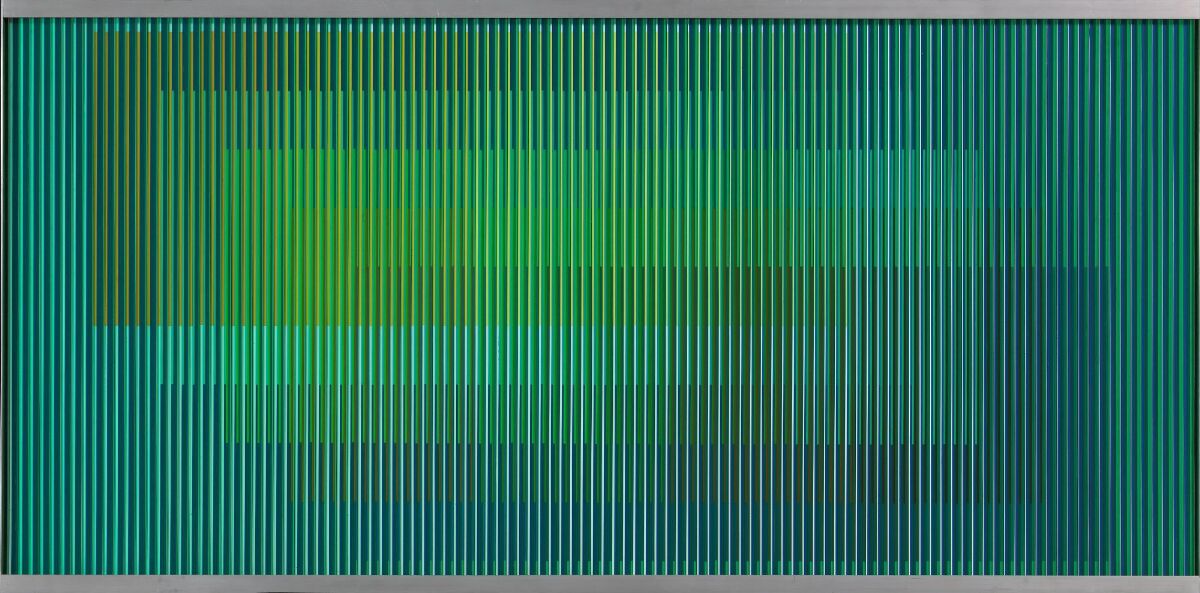
Gift from the Friends of the National Gallery in 1973. Hundreds of coloured strips at calculated angles, so that the colour changes as you walk past. Try walking.
A white relief, bought in 2001, and one half of the pair below. In the same room hang Gunnar S. Gundersen's Grey Room (1966) and Mouche Thomsen's Black Rectangle in Pink and Blue (1972).
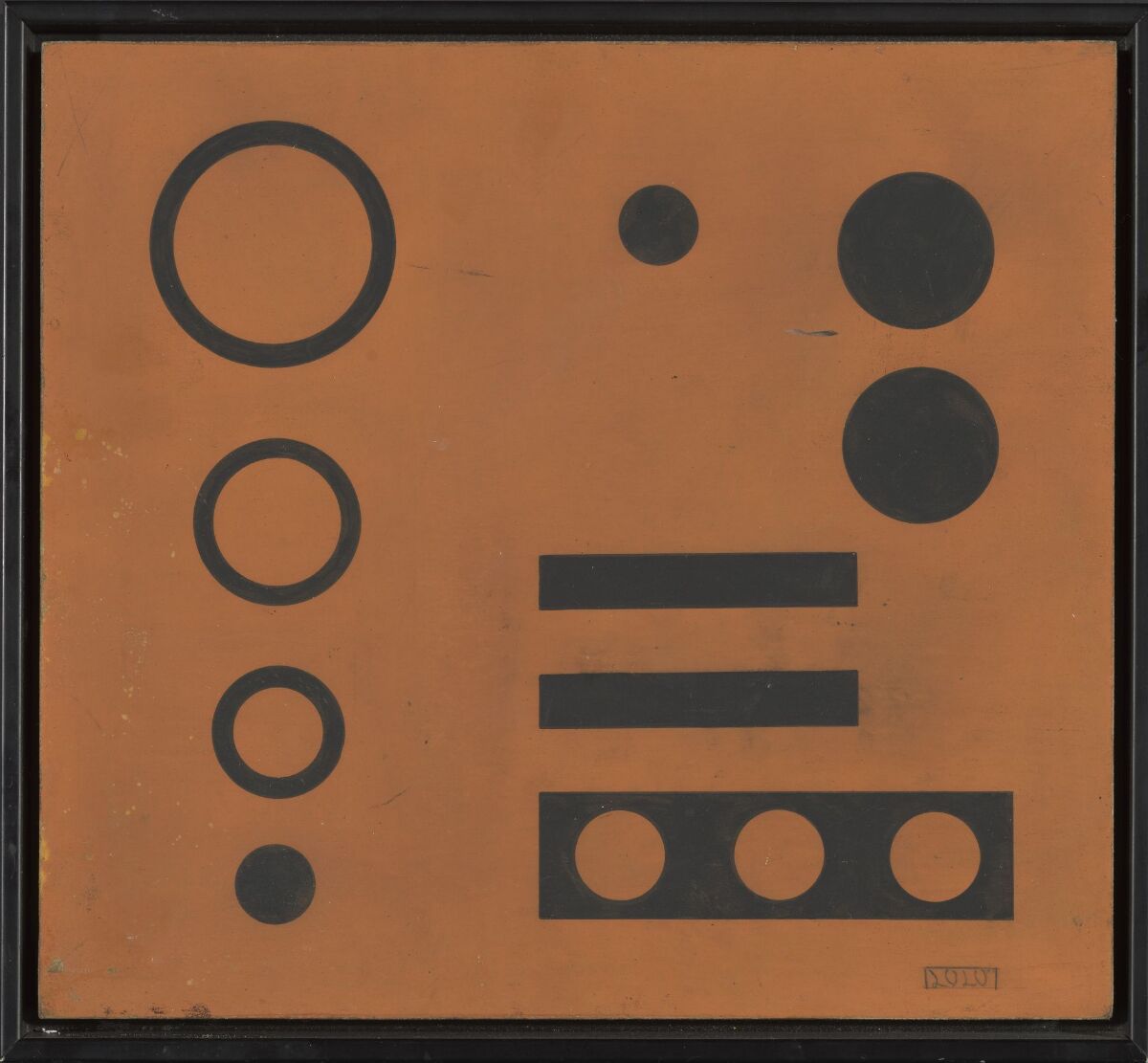
One of Soldevilla's two reliefs from 1956 in room 078, bought in 2020.
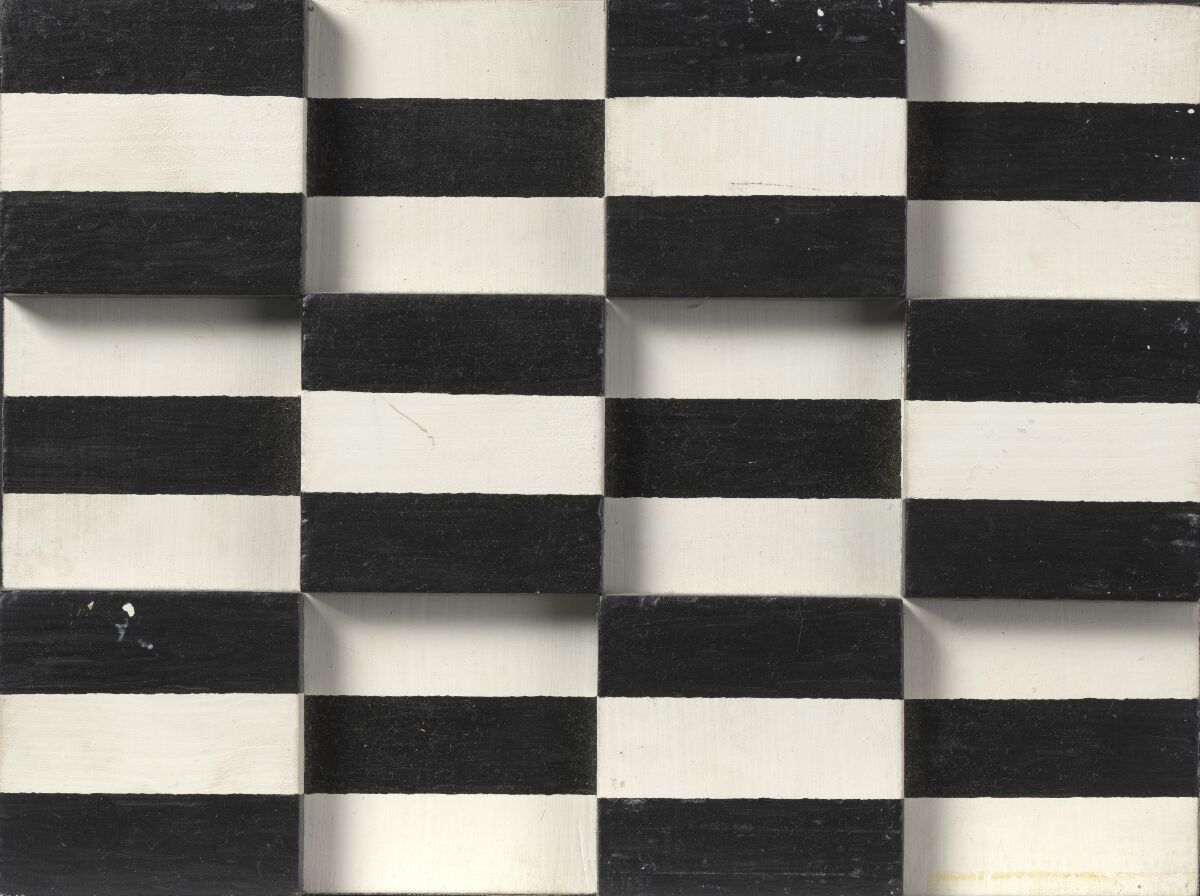
One of Dobloug's small models from 1969–71, bought by the museum in 2024.
The test, in order. 1. Could you? Pick the picture that most provokes the thought. Describe step by step how you would make it: materials, measurements, how long, what decisions. Be concrete.
2. Did anyone do it before 1950? The thought "I could have painted that" quietly assumes that anyone could have done it at any time. Ask why no one did, and what had to exist first: colour theory, industrial paint, a public that had seen Mondrian, the rejection of the hand after two wars.
3. What is the picture doing to your eye? Stand still for two minutes in front of the Vasarely and report what moves.
4. Then the honest conclusion. Having done 1–3, you may still write "a pattern, nothing more". But now it is a conclusion, not a glance.
The period eye: Konrad Gromholt gave the Vasarely in 1967, and the Friends of the National Gallery gave the Cruz-Diez in 1973. Who were these people, and what did owning op art mean in Oslo in the years around the 1972 referendum on joining the European Community? The Dobloug models were bought in 2024, so the museum is still making up its mind about this room.
Describe the pictures from memory, without looking at them, and record a voice note.