Rooms 084 ("Tilbake til maleriet", Back to painting) and 085 ("Outsidere og magikere", Outsiders and magicians) · An hour and a half
This visit is built as a bridge for you. In the late 1970s and the 1980s painting came back, and in Norway it came back partly in the technique you already love. Odd Nerdrum paints with Rembrandt's palette and Caravaggio's light, as a deliberate refusal of everything in rooms 075–082. Whether that is depth or costume is exactly the kind of question this programme is made for, and by now you are equipped to answer it. The visit fits best late in the year.
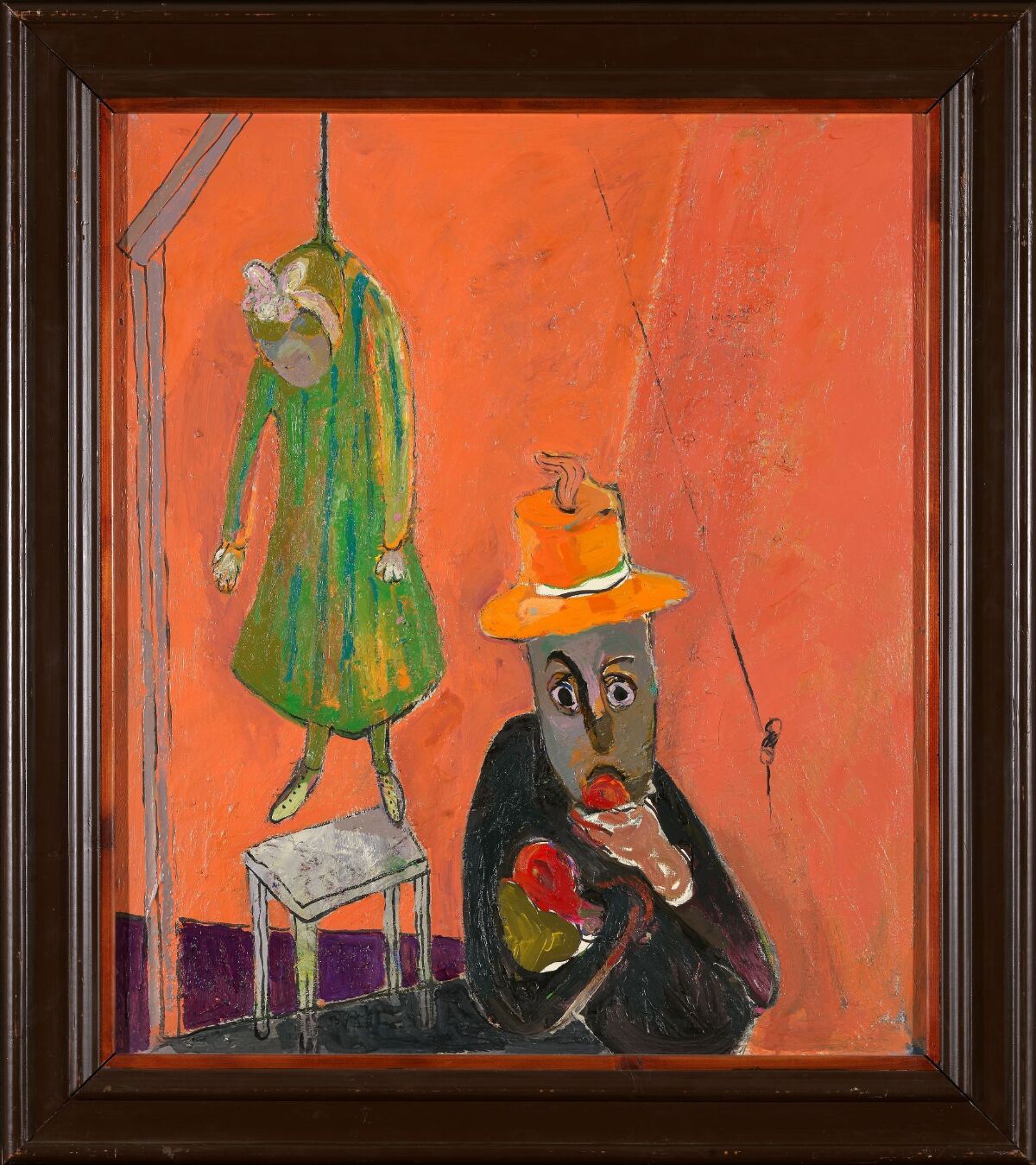
Nerdrum's Klodvig against Ribera's Boy with a Pot of Flowers (room 038, Light and faith). Three and a half centuries between them, both a single figure in theatre light. Walk between them. It is a long walk, but take it. Which of the pictures is about painting, and which is about its subject?
Room 084. Nerdrum calls himself a kitsch painter, not an artist, and means it as a position. The gallery bought the picture in 1976, the year after it was painted. One of four answers to how painting came back: the old masters.
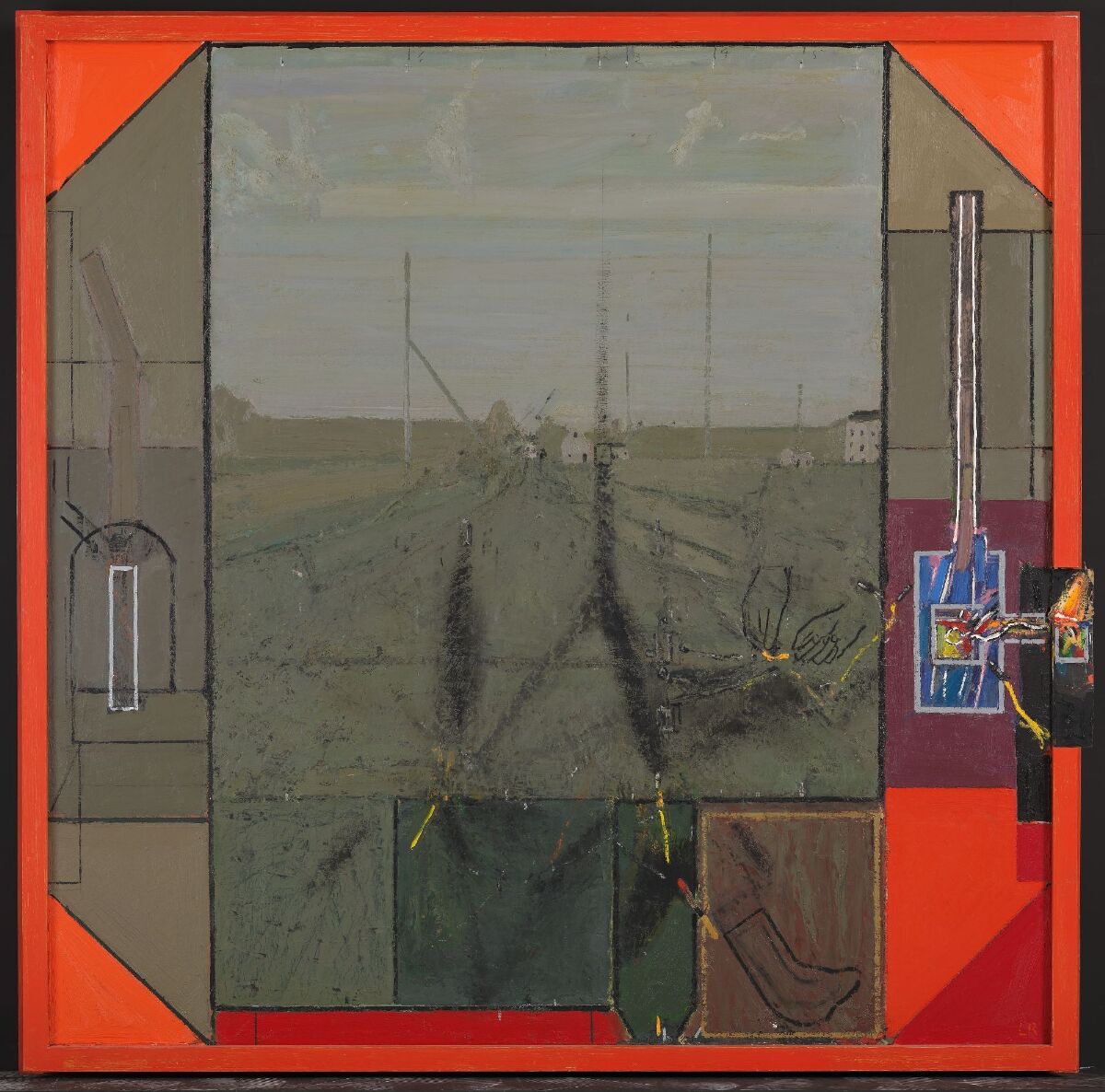
Leonard RickhardStillness of the Night – Landscape in Red and Grey (Nattens stillhet – et landskap i rødt og grått), 1989–90
Room 084. Rickhard stands for the cool stage set as a way back. In the same room hang Håkon Bleken's Madonna Takes Off Her Halo I (1978), Olav Christopher Jenssen's From Nowhere (1984–85) and Lena Cronqvist's Tango III (1986), all bought by the museum within a few years of being painted.
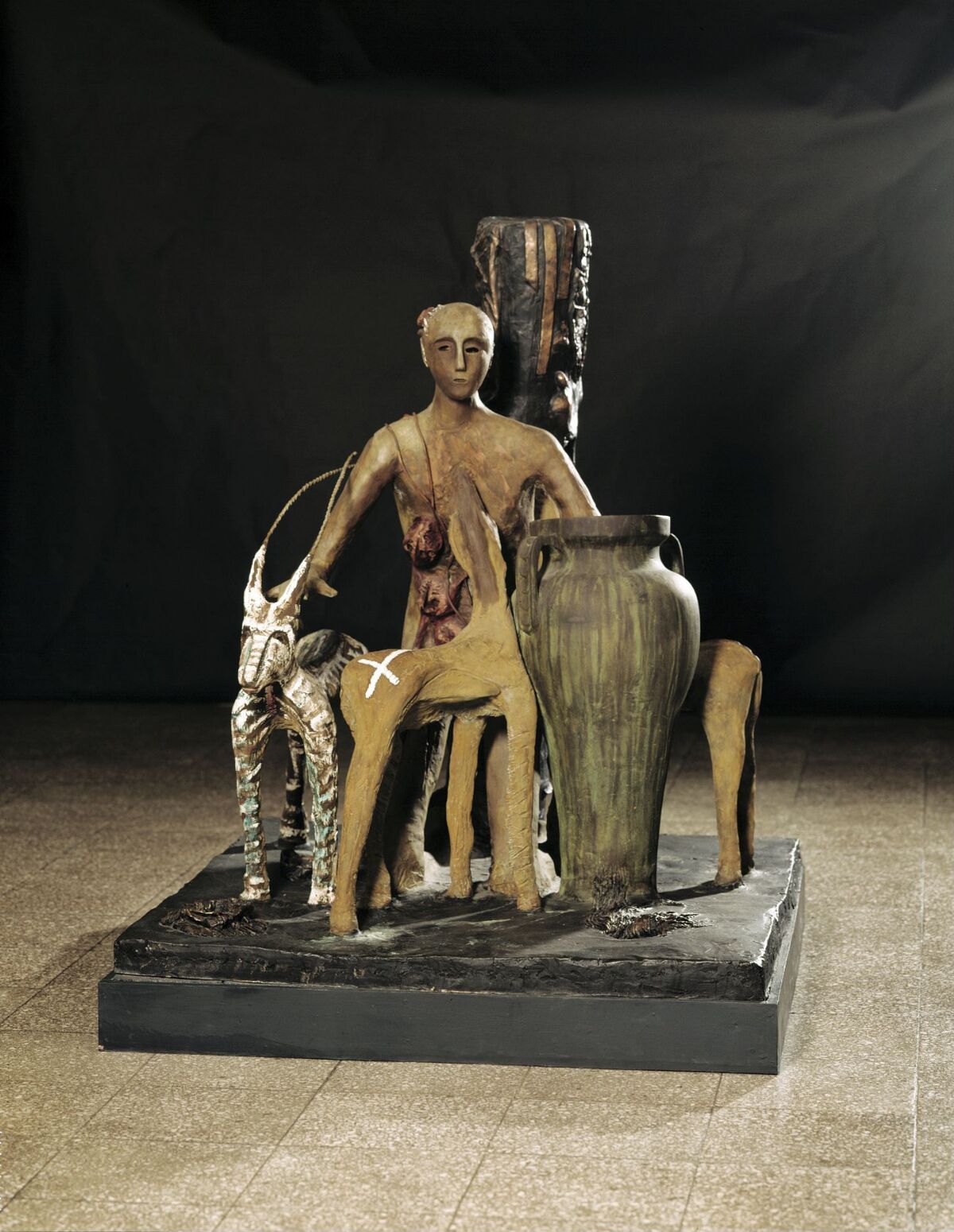
Room 084. Paladino stands for the Italian "transavanguardia". The museum's text describes it as a return to painting and to the myths, symbols and legends of the past.
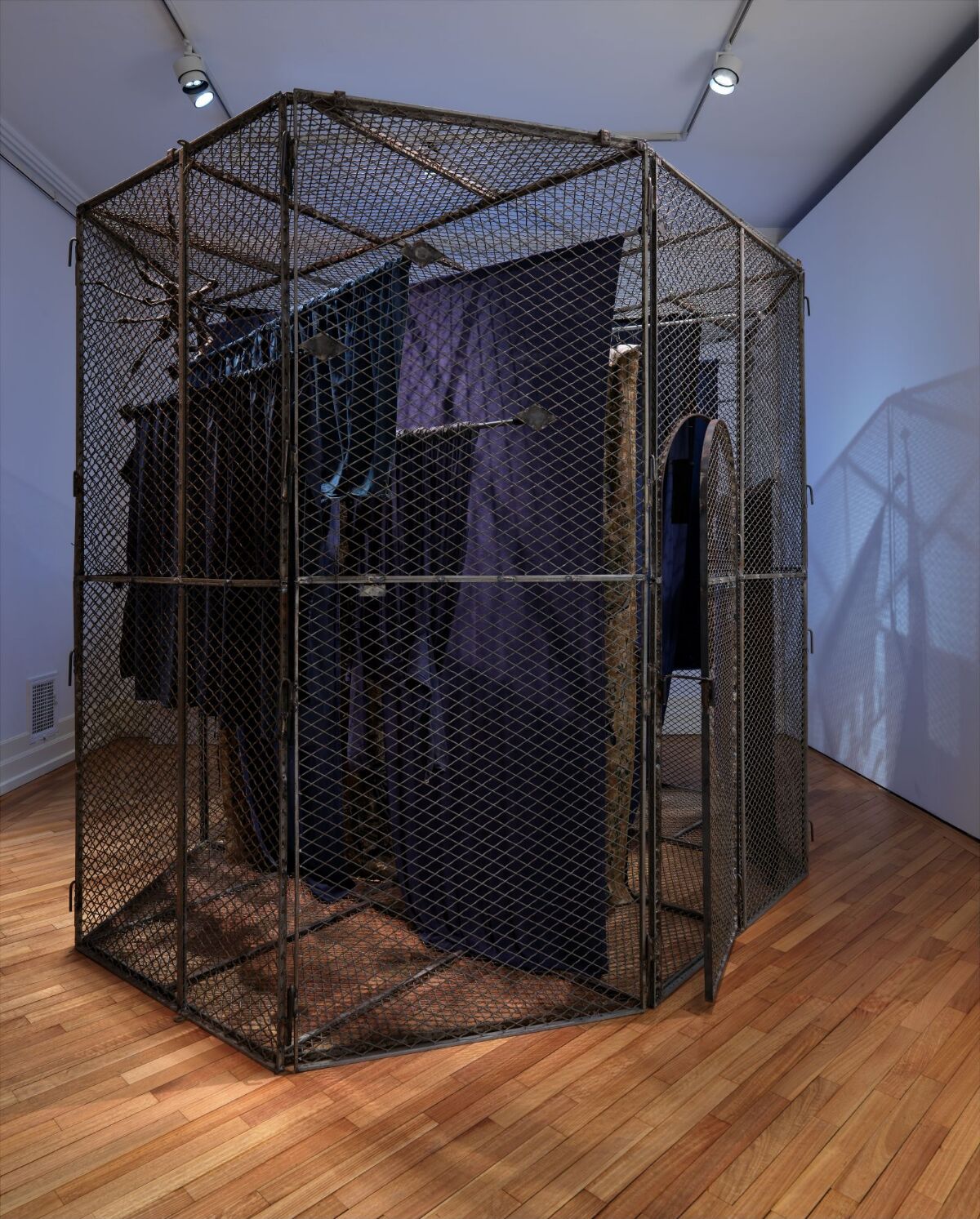
Room 085 is mostly not painting. Cell VIII is "an octagonal cage made of wire mesh with a single door", hung with clothes and a large tapestry, according to the museum's text. Here are also Bourgeois' Ste Sébastienne (1992), Nan Goldin's Self-Portrait Writing in Diary (1989), Tracey Moffatt's staged photographs from 1994 and works by Iver Jåks.
Around the pictures
For Klodvig: Stand in front of the picture with Light and faith in your head. Is the light doing what Baburen's light does, or quoting it? Where did he spend the hours?
Three questions that are easily confused. Origin: What happens to a work when it turns out to have the wrong origin? This is where Ossian belongs, the supposedly ancient Gaelic poems James Macpherson published in the 1760s, and the imagined case of a painting that has passed for a Rembrandt and turns out to have been painted by the caretaker. Time: Is the same technique worth as much when it is used three hundred years later? This is where Klodvig belongs. Effort: Does a work lose value when it is no longer hard to make? This is where AI-generated images belong, where the human skill is entirely absent, and modern art that does not look hard to make, so that the concept has to carry more of the meaning. Ask the three separately in front of the picture.
For room 085: Use the works for one question. What does a Cell by Bourgeois ask of fifteen minutes that a Steen does not?
The period eye: Why did Oslo in 1975 get a painter who wanted to be in 1650, and why was he hated by the institutions and loved by the public? Compare with Nørregaard's traditionalism in 1890 (The circle). Two refusals of the modern, 85 years apart. What makes one look like integrity and the other like reaction, and is that fair?
Before you go
Martin Gayford, Modernists and Mavericks (2018) Postwar painting (Freud, Bacon, Auerbach) for someone who likes paint. The English cousins of Nerdrum's refusal.
Robert Hughes, The Shock of the New, the last chapter (the 1991 edition adds "The Future That Was") On the return of painting in the 1980s.
An interview with Nerdrum on kitsch There are several in Norwegian. His manifesto On Kitsch (2000) is in libraries.
Book: Barnes, Keeping an Eye Open
Afterwards
Describe the pictures from memory, without looking at them, and record a voice note.
This is the natural place to close the year's notes with one page: what has changed since October 2026, picture by picture, in your own sentences.