Rooms 073 ("Menneske og samfunn", The human condition), 074 ("Hva skal jeg kjempe med?", What shall I fight with?), 075 ("Etter den store katastrofen", After the great disaster) and 076 ("På barrikadene", On the barricades) · Two hours
This visit is the Norwegian counterpart to the visit to Kumu in Tallinn. There you saw the 1920s experiments, the 1945 break into socialist realism and the slow subversion of it. Norway had no occupying ideology after 1945, so the rooms here ask a different and in some ways harder question: What does painting choose when it is free after a catastrophe? The hang gives two answers at once: the figurative, political line (Aulie, Ekeland, Ryggen, the 1970s posters) and the abstract line (Weidemann, Sitter, Bergman, Haukeland), which won the institutions.
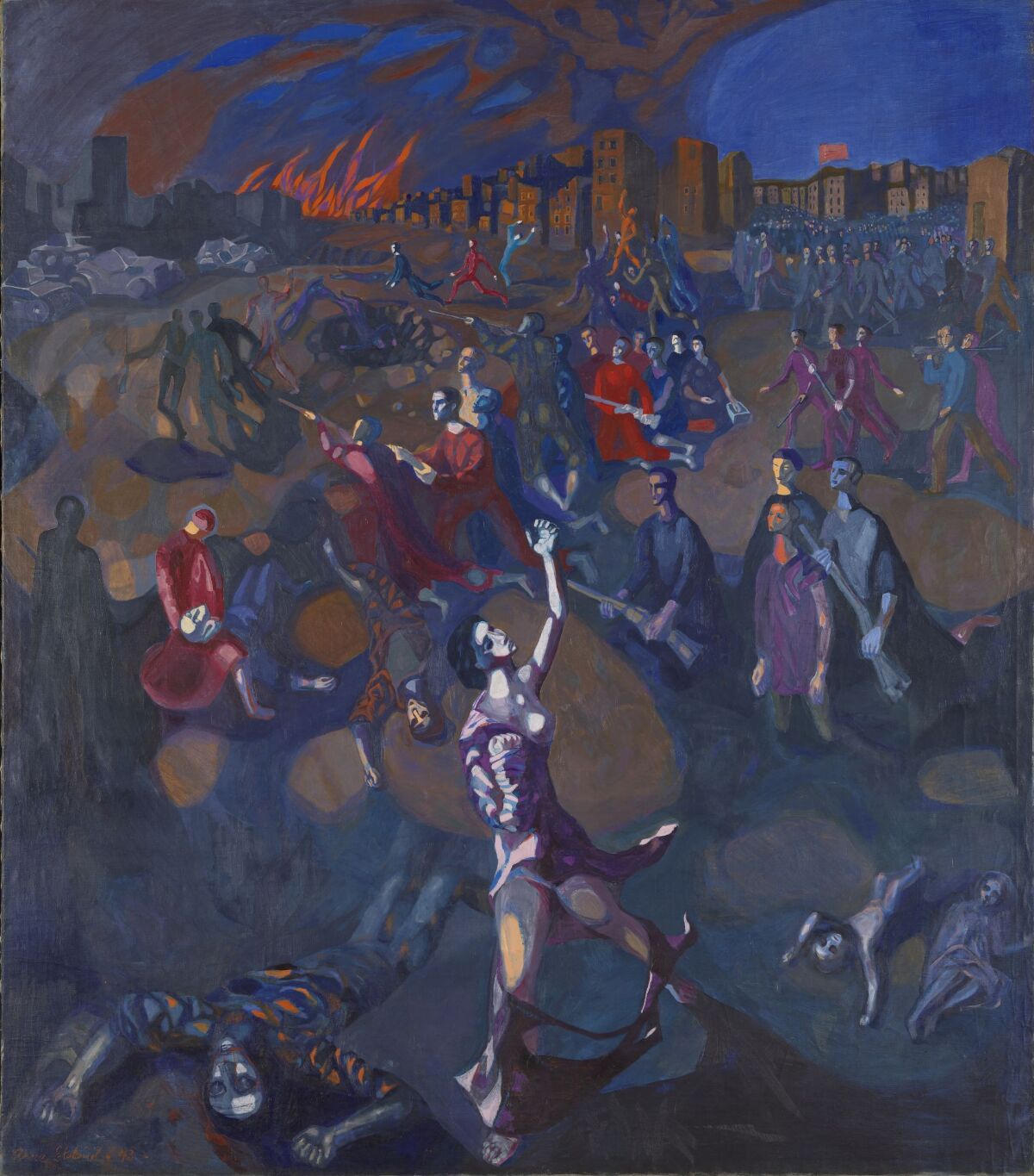
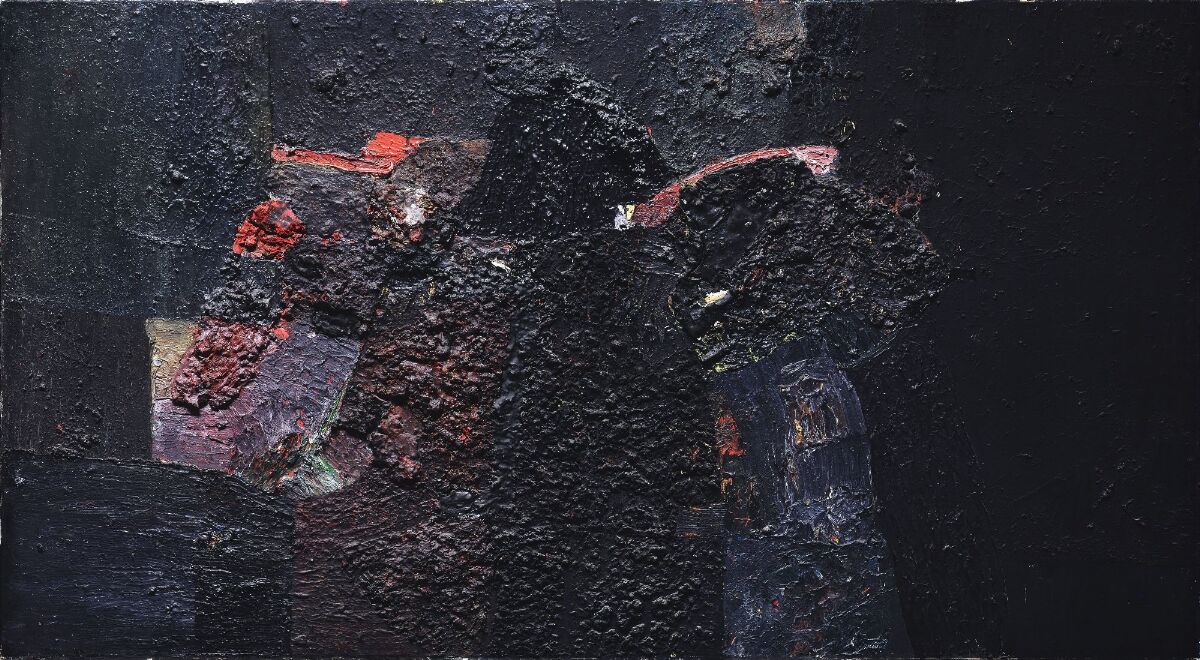
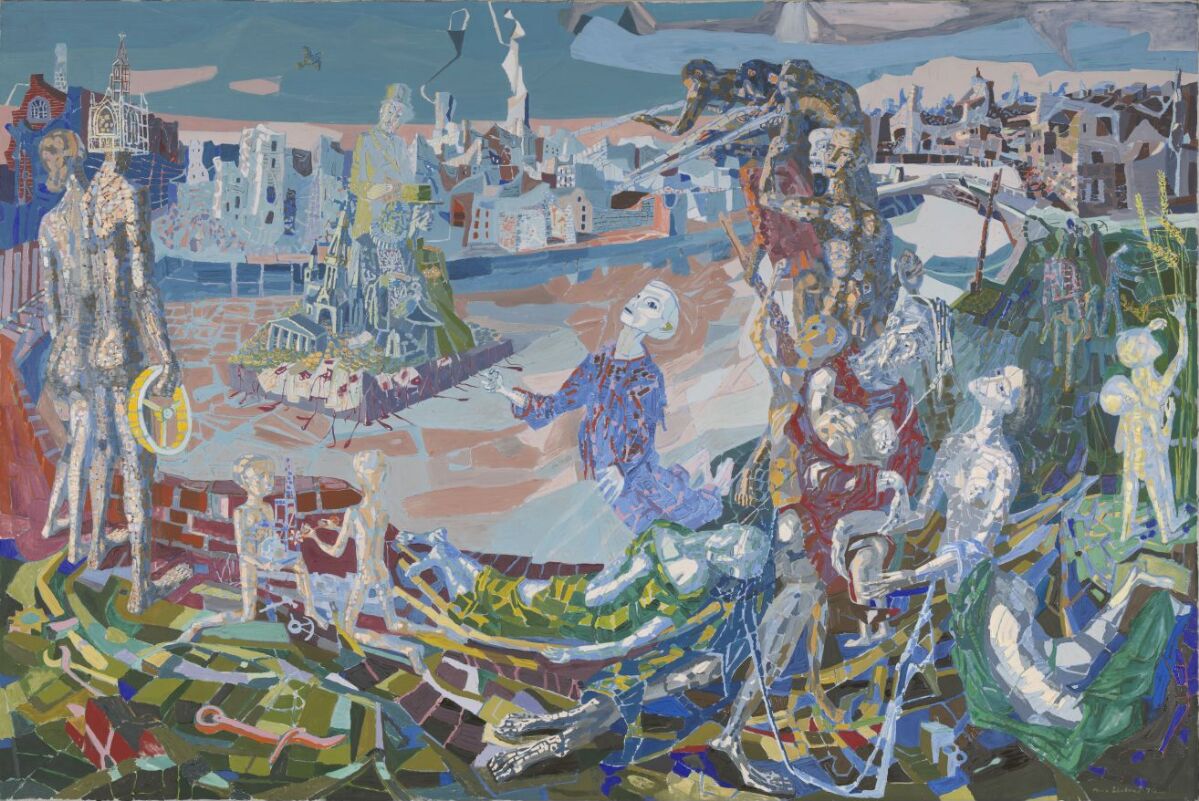
Ekeland's The Battle (1943) against Weidemann's Pine Tree Stump (1960). Seventeen years, one war, the same country. One painter still believes a picture can be a battle; the other paints a stump. Then ask what the Estonians were painting in 1960, and what they were allowed to paint.
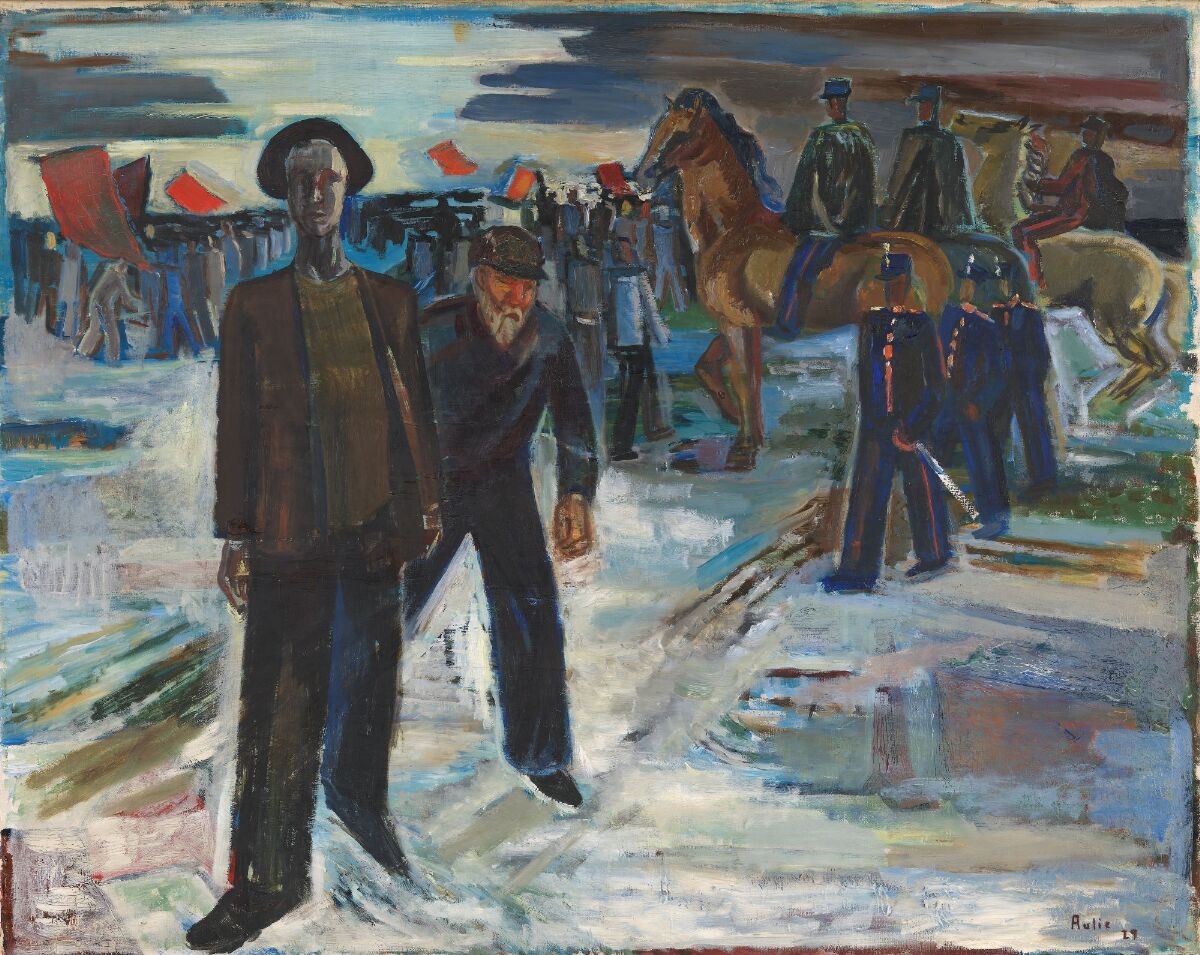
Room 073 shows social painting from before the war. Here also hang Willi Midelfart's In the Street in Berlin (1932), Alf Rolfsen's fresco-like series from 1932, Helene Schjerfbeck's My Worldly Madonna (1944), Munch's Workers on their Way Home (1920) and John Savio's Sámi woodcuts.
Room 074. Ekeland painted the war in a style with roots in the Italian Renaissance and German expressionism. The museum's text says the picture was first shown on 4 April 1940, five days before the invasion, and that in 1942 it was included as degenerate art in the occupying power's exhibition at the National Gallery. The room also shows Kai Fjell's The Violin (1947).
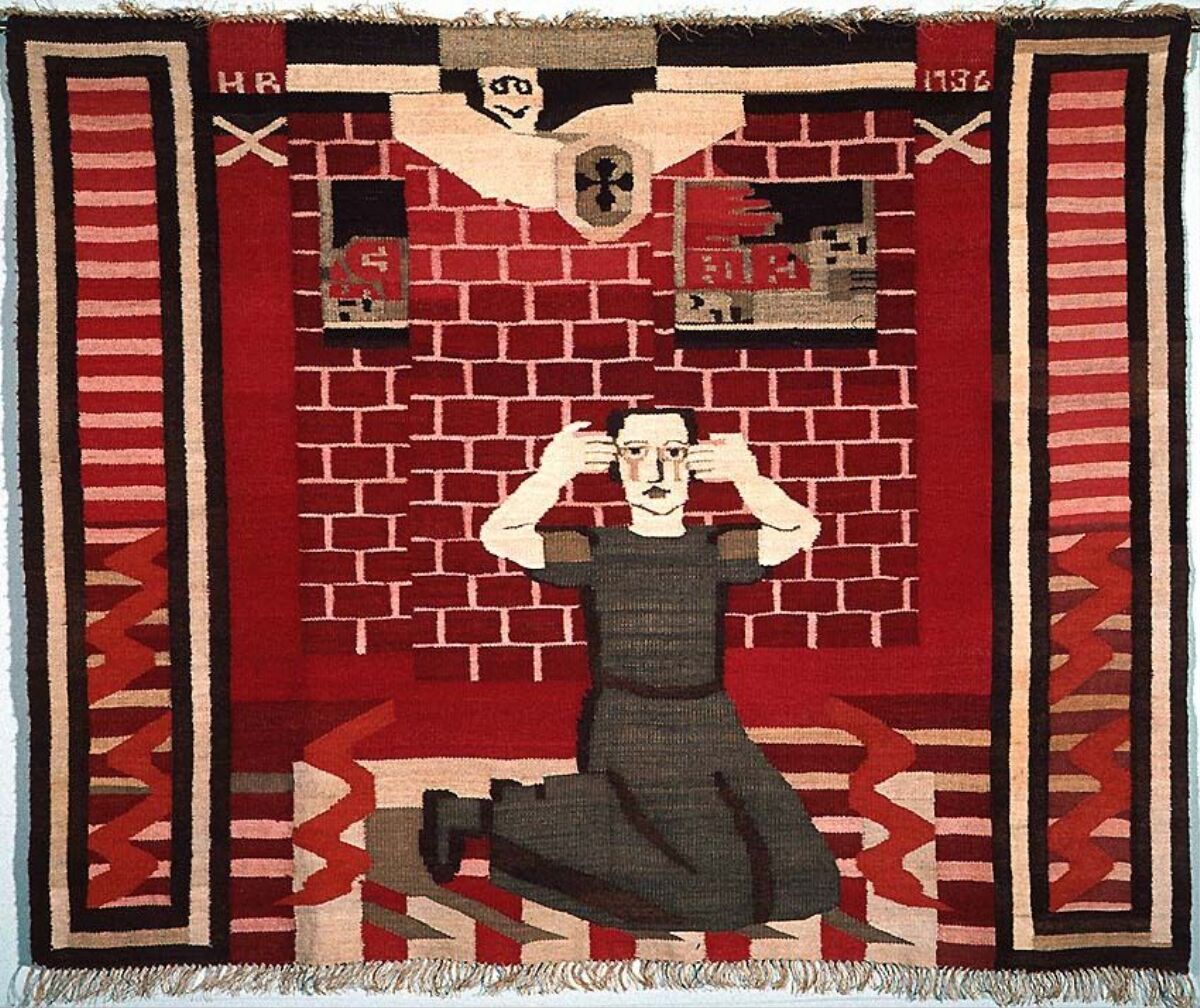
Room 074, together with Dawn (1936). Ryggen wove politics into tapestry on a farm at Ørlandet on the Trøndelag coast, and spun and dyed the yarn herself. Give her the full time. She is detail, narrative and anger in one object, and a tapestry is slow to make and slow to read.
Room 075, bought the year after it was painted. The room also shows Anna-Eva Bergman's No. 3-1957 Wall, Arnold Haukeland's Earth Forces (1972), Alberto Burri's Sack and Black 3 (1950s) and Asger Jorn's Restless Complexes (1964).
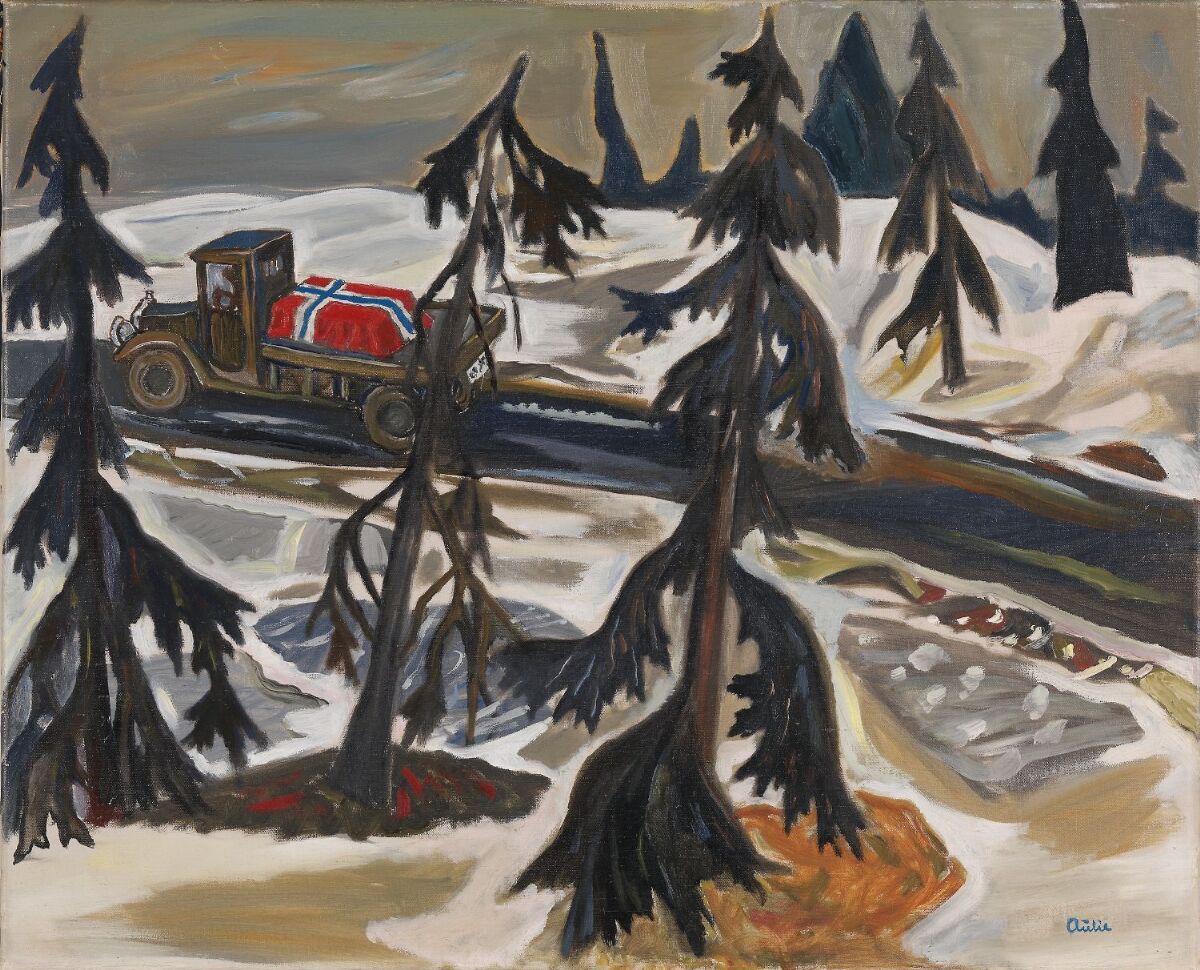
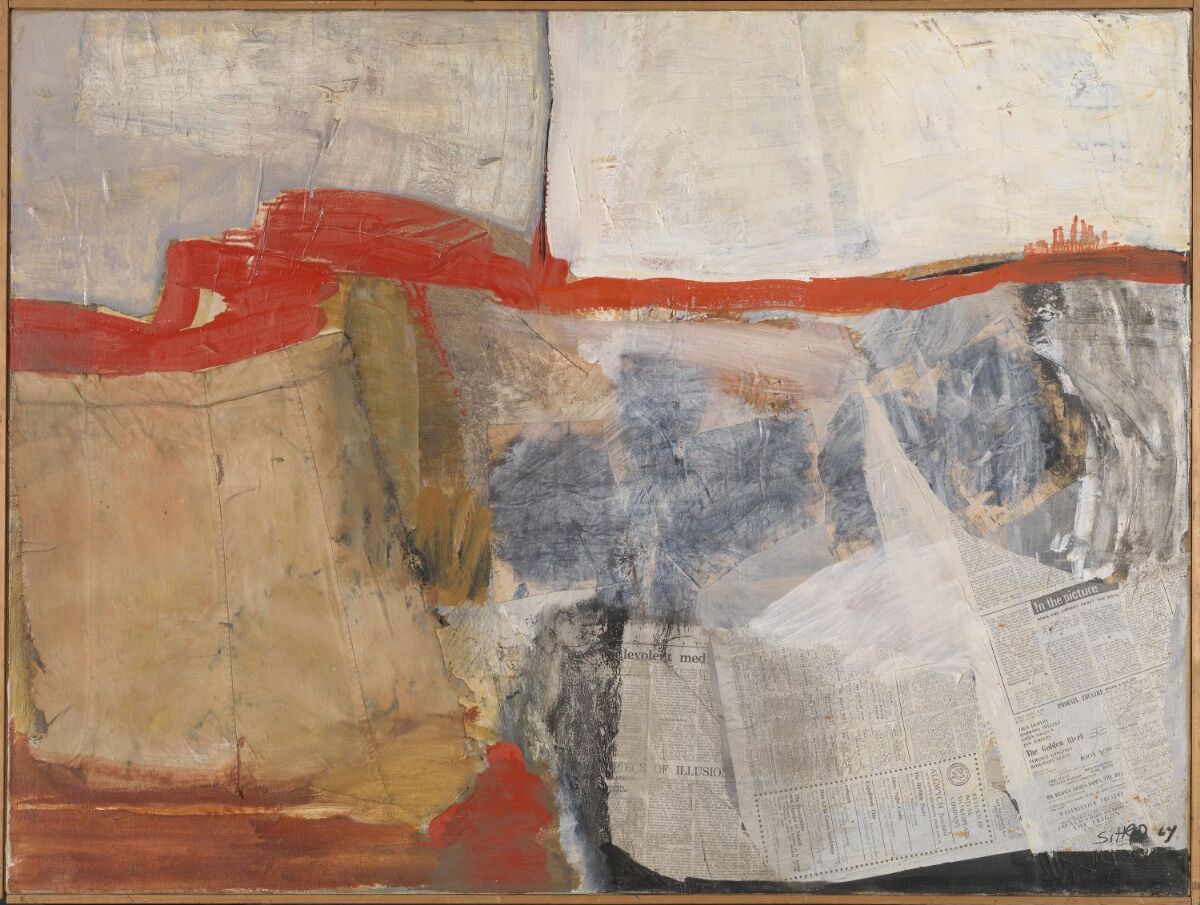
Room 075. The room also has photographs of Erling Viksjø's government building (1958–60), where Carl Nesjar sandblasted murals into the concrete of the state's own high-rise, Sitter's and Haaland's among them. Here abstraction became official, and the building was bombed in 2011. A chain of viewers, in concrete.
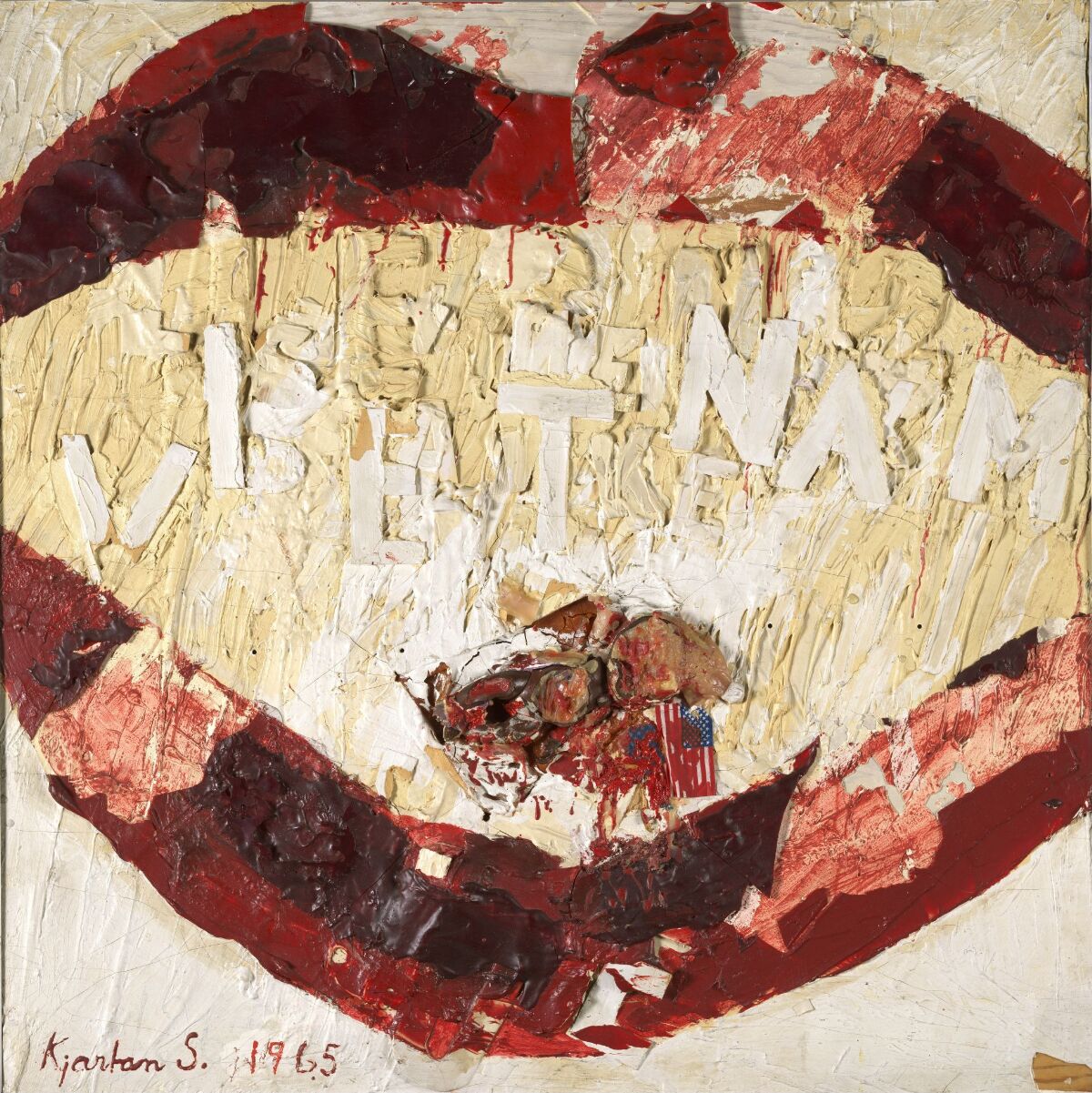
Kjartan SlettemarkOn reports from Vietnam. Children are doused with burning napalm, their skin is charred black and they die, 1965
Room 076, together with Slettemark's Nixon Visions, Per Kleiva's American Butterflies (1971) and the GRAS group's silkscreens. The work was shown in 1965 in a glass case on Eidsvolls plass in front of the Storting, Norway's parliament, the museum's text says. Here painting leaves the canvas for the poster.
Around the pictures
For room 073: Which pictures believe art can achieve something, and which already doubt it?
The period eye: Read the acquisition years on the labels in room 075. How fast did the gallery buy the abstract painters, compared with the fifty years it took for Keyser and Kaarbø (Form)? The institution's own taste is the hidden picture in every room.
Before you go
Robert Hughes, The Shock of the New, the chapter on art and politics ("The Powers That Be")
Robert Hughes, The Shock of the New, the chapter on abstraction after 1945 For the Burri and Jorn line.
The National Museum's texts on Ekeland and Ryggen Ryggen has had major exhibitions in recent years, with good catalogues.
Your own notes from Kumu in Tallinn, the rooms for 1945–60 Re-read them the night before.
Book: Kaljundi and Polli, Landscapes of Identity
Afterwards
Describe the pictures from memory, without looking at them, and record a voice note.
Write the comparison you have been carrying since August: Tallinn 1920–1960 and Oslo 1920–1960, five paragraphs. It will be the year's first piece of art-historical writing, and it should be about pictures you have actually stood in front of in both cities.