
Pablo PicassoGuitar, 1912
Bought 1921. Start with the inventory: list ten things you see, then ten more. The second ten will be about edges and overlaps, and that is what the picture is made of. The aesthetic question comes last.
The easiest way into cubism for you is through the people, not through the pictures. Picasso and Braque worked "in close contact with each other" from 1907 to 1914, the museum's text says, and in spring 1912 Picasso made what is counted as the first collage in the history of art. The Norwegian Thorvald Hellesen worked beside Fernand Léger in Paris in the late 1910s. Three Norwegian women, Ragnhild Keyser, Ragnhild Kaarbø and Charlotte Wankel, studied with Léger and André Lhote in the 1920s and brought geometric abstraction home to a country that did not want it. In 1921 the gallery bought a Picasso. That is the story, and the pictures are its evidence. The rules for the modern rooms apply.
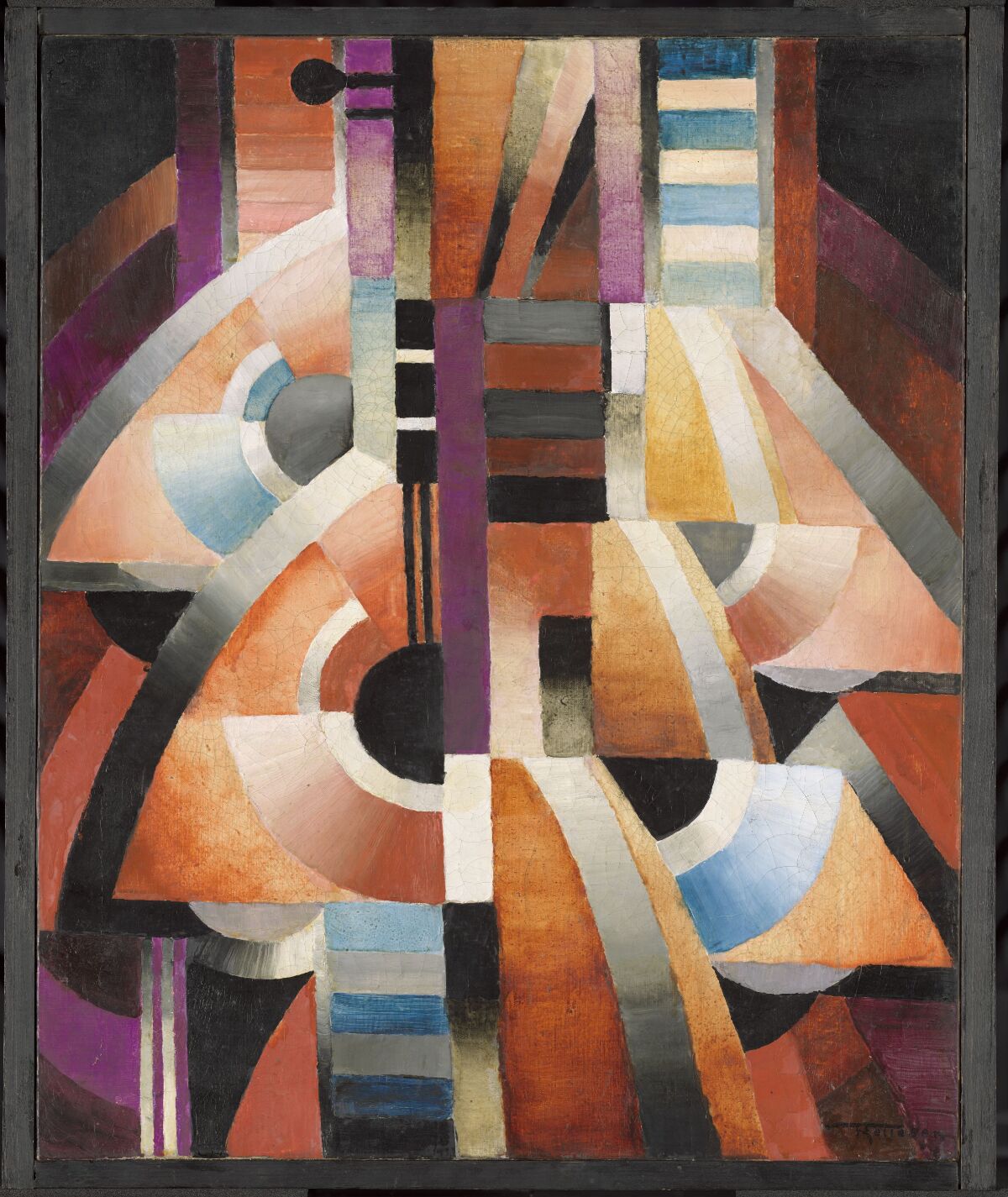
Hellesen's Balalaika against Picasso's Guitar. Two stringed instruments four years apart, a master and a provincial painter. Is Hellesen worse, or just different? Point to three concrete places where the difference lies.
Bought 1921. Start with the inventory: list ten things you see, then ten more. The second ten will be about edges and overlaps, and that is what the picture is made of. The aesthetic question comes last.

Fifteen years after Guitar, after a neoclassical phase. Same painter, same genre.
Room 070, available as a gigapixel image. In the same room hang three canvases by him titled Composition. The museum's text finds musicality and rhythm in the recurring forms, and says that he was long forgotten and only rediscovered around 1970. A Norwegian in Léger's circle before Léger was famous.

Machines, contour and flat colour. Léger "embraced the industrialized world's technology and production methods", says the museum's text.
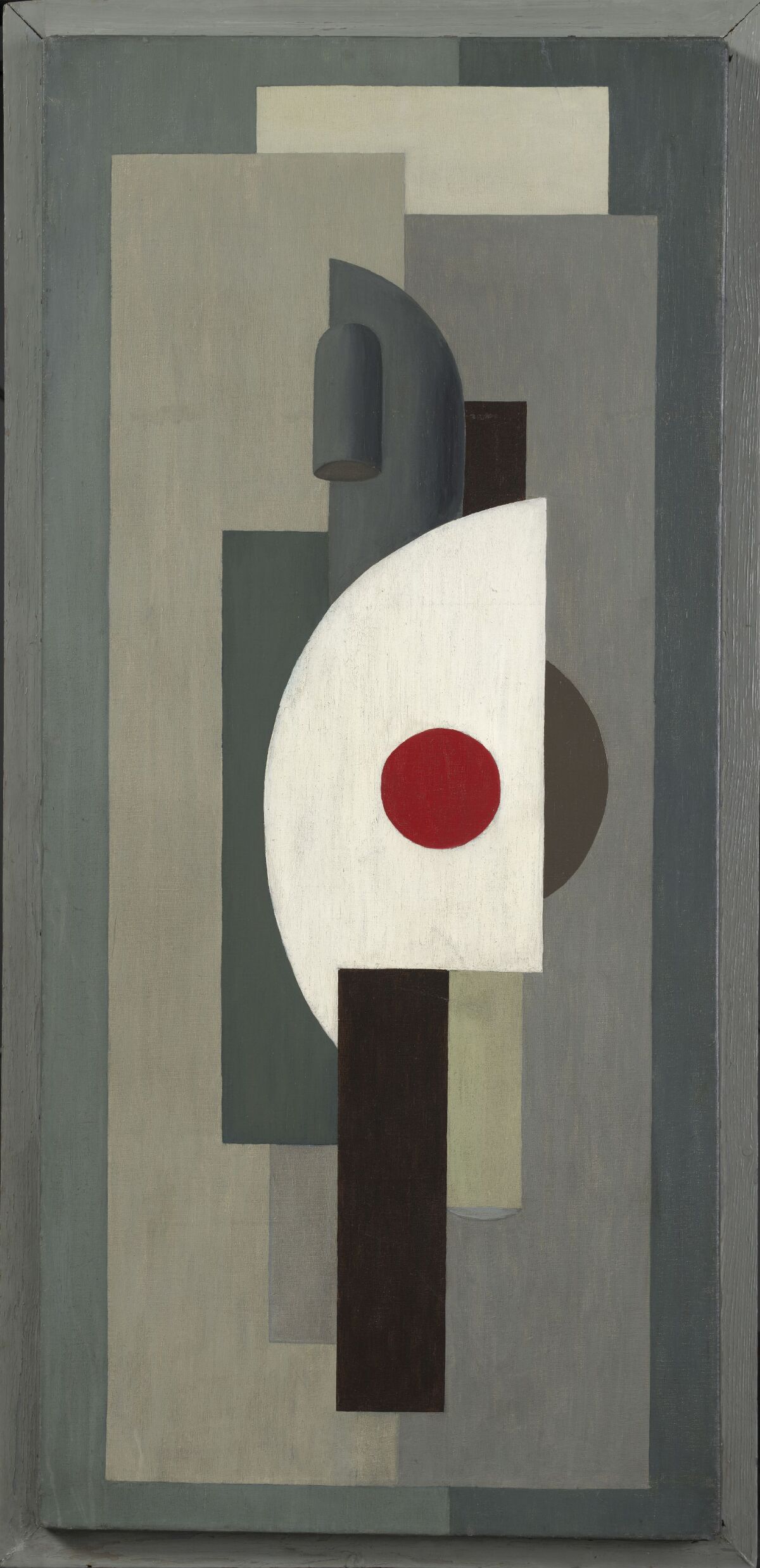
Room 070. The museum counts Keyser, Kaarbø and Wankel among the foremost abstract modernists of the 1920s in Nordic art. In Armour, flat forms are set against and over one another, with an element of strong red against white; the museum's text sees the forms and surfaces of the modern age in it. After a much-discussed "scandalous" exhibition of Scandinavian cubism in 1927 she moved back towards the figurative. The museum bought Armour in 1977, Wankel's Composition (1927) the same year, and Kaarbø's Composition with Head (c. 1925) only in 1991.
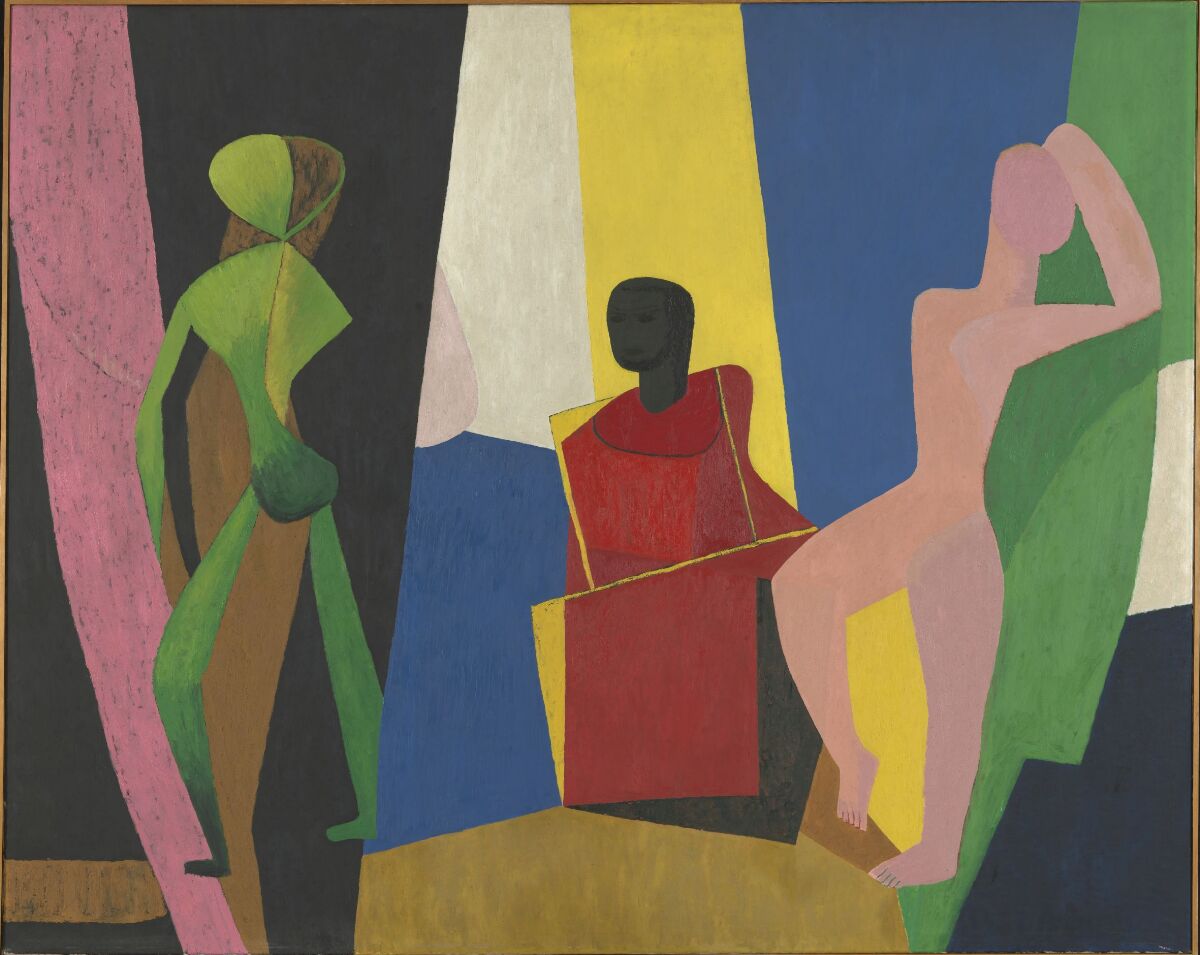
Room 068. The museum's text reads the figures, from a historical point of view, as three goddesses of Roman mythology in a cubist idiom, and quotes Holtsmark from 1935: the painting is to be "a new experience, not a dead representation of something that was already known". A test of the historical-glasses method on a picture that looks as if it has none.
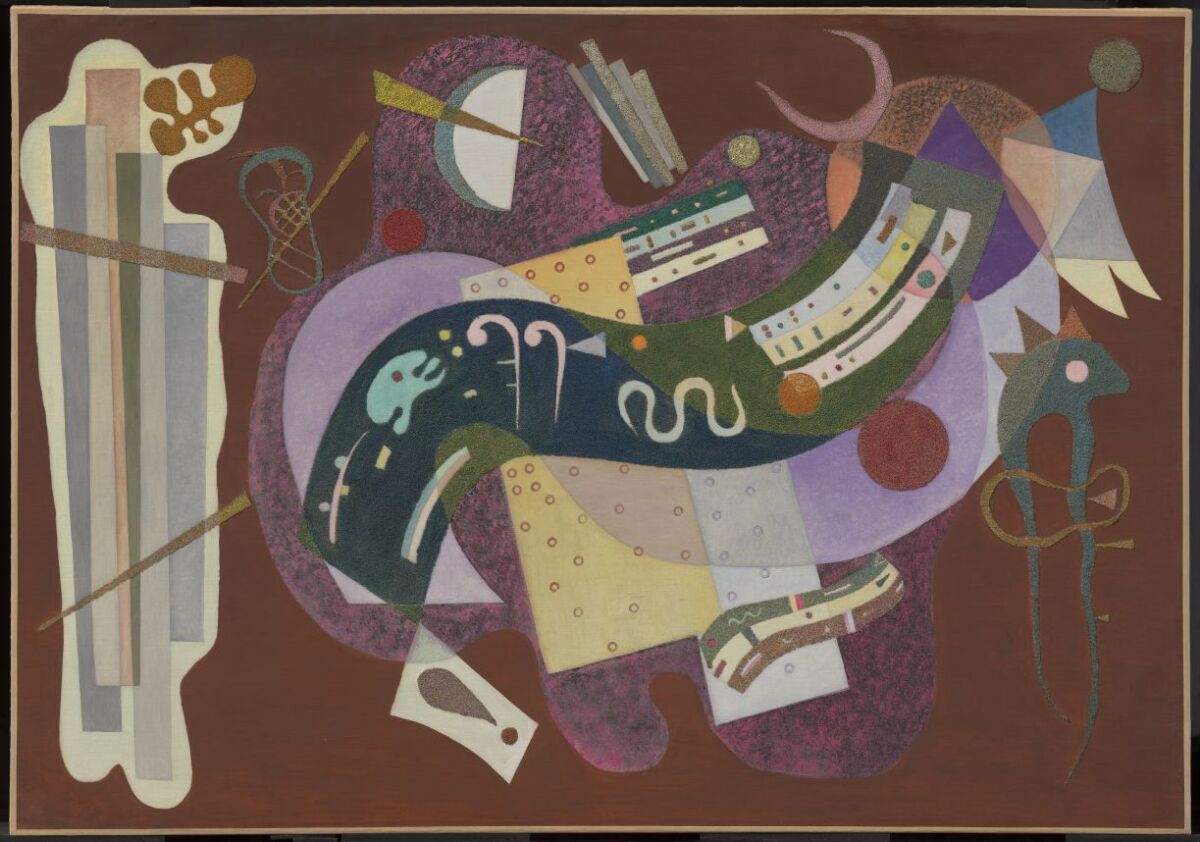
Room 068, available as a gigapixel image. Use the inventory routine on the picture: colours, weights and directions.
The historical question for Guitar: What did a guitar made of flat planes mean in Paris in 1912, to a man who had watched photography take over likeness?
For Still Life: What did Picasso keep from 1912?
For Léger: What did Léger think a picture was for in 1927? Compare with what Tidemand thought in 1848.
For Keyser, Kaarbø and Wankel: Fifty years in the dark. Why?
For Kandinsky: You have said that Kandinsky is "nice to look at" but does not speak. Write down, this once, what the picture would have to say for it to count as speaking.
The period eye: Who in Kristiania in 1921 wanted a cubist Picasso badly enough to buy one for the nation? Jens Thiis, the gallery's director, bought modern French art early and was attacked for it. The same institution then overlooked Keyser, Kaarbø and Wankel until 1977 and 1991. The museum is itself a chain of viewers with opinions.
Describe the pictures from memory, without looking at them, and record a voice note.