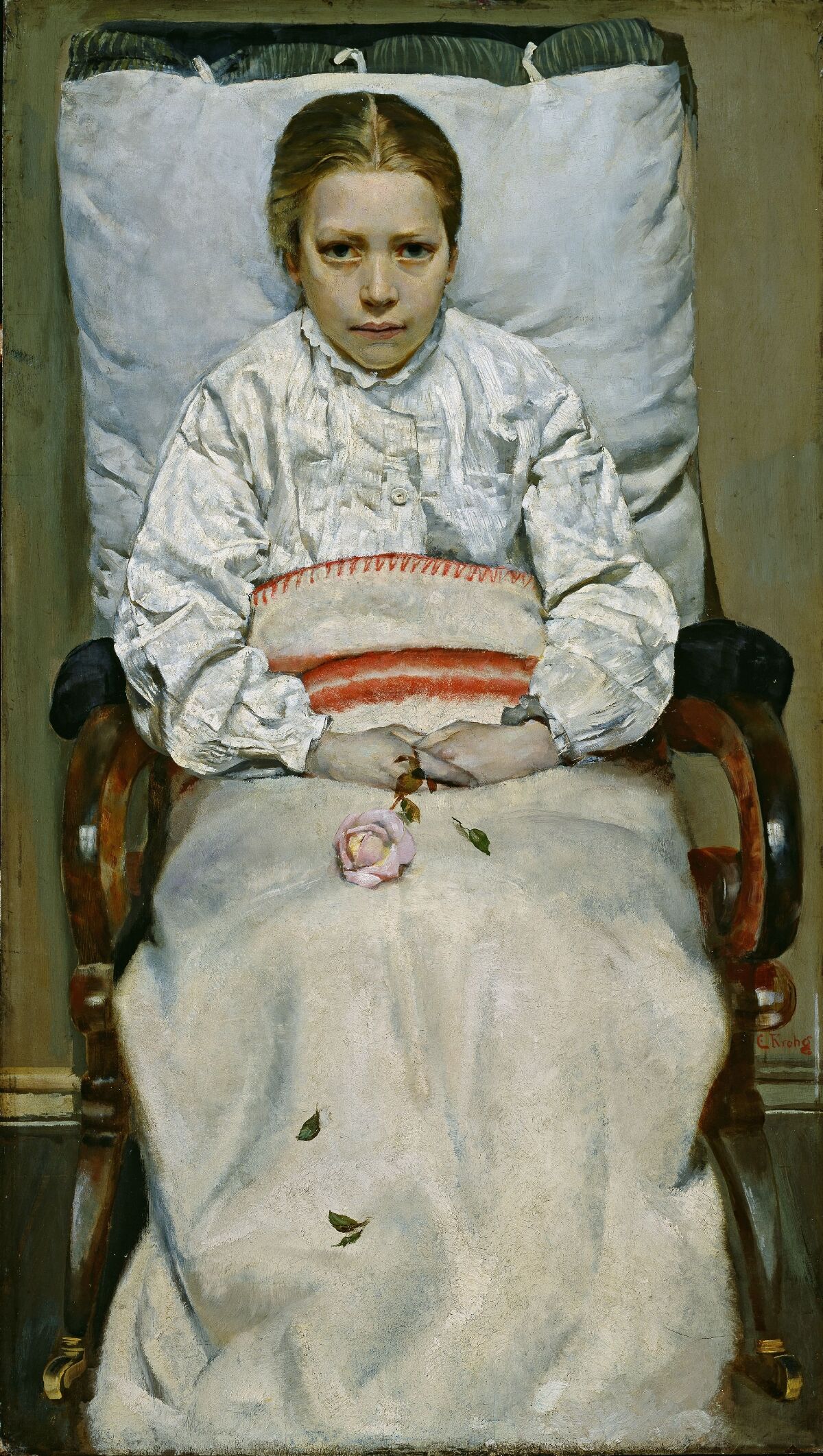
Christian KrohgSick Girl (Syk pike), c. 1880–81
Room 057. Krohg was Munch's teacher. The picture is the first half of the pair the whole visit is built on. Gift from Olaf Schou 1909.
So far Munch has got a quick glance from you. This visit is built so that a glance will not do. It starts in realism (Krohg, Werenskiold), walks through the teenage Munch who painted like them, and ends at the pictures that left realism. The rules for the modern rooms apply: the full thirteen and a half minutes, the historical question first and one defence read beforehand.

Krohg's Sick Girl and Munch's The Sick Child are the pair the whole visit is for. Krohg was Munch's teacher. Same subject, five years and two rooms between them. Munch himself called The Sick Child his farewell to realism. Make an inventory of everything painted in both pictures. Where exactly does Munch stop describing? What does he do with the time he saved?
Room 057. Krohg was Munch's teacher. The picture is the first half of the pair the whole visit is built on. Gift from Olaf Schou 1909.
Gigapixel image. Munch himself, the museum's text says, called the painting his farewell to realism. It was first shown in 1886 under the title Study.

Room 057, together with The Struggle for Existence (1889). Painting as journalism: the novel Albertine was confiscated, Krohg lost the case in the Supreme Court, and several venues refused to show the picture, according to the museum's text. A picture that was fought over in newspapers and a courtroom is a textbook case of the chain of viewers.
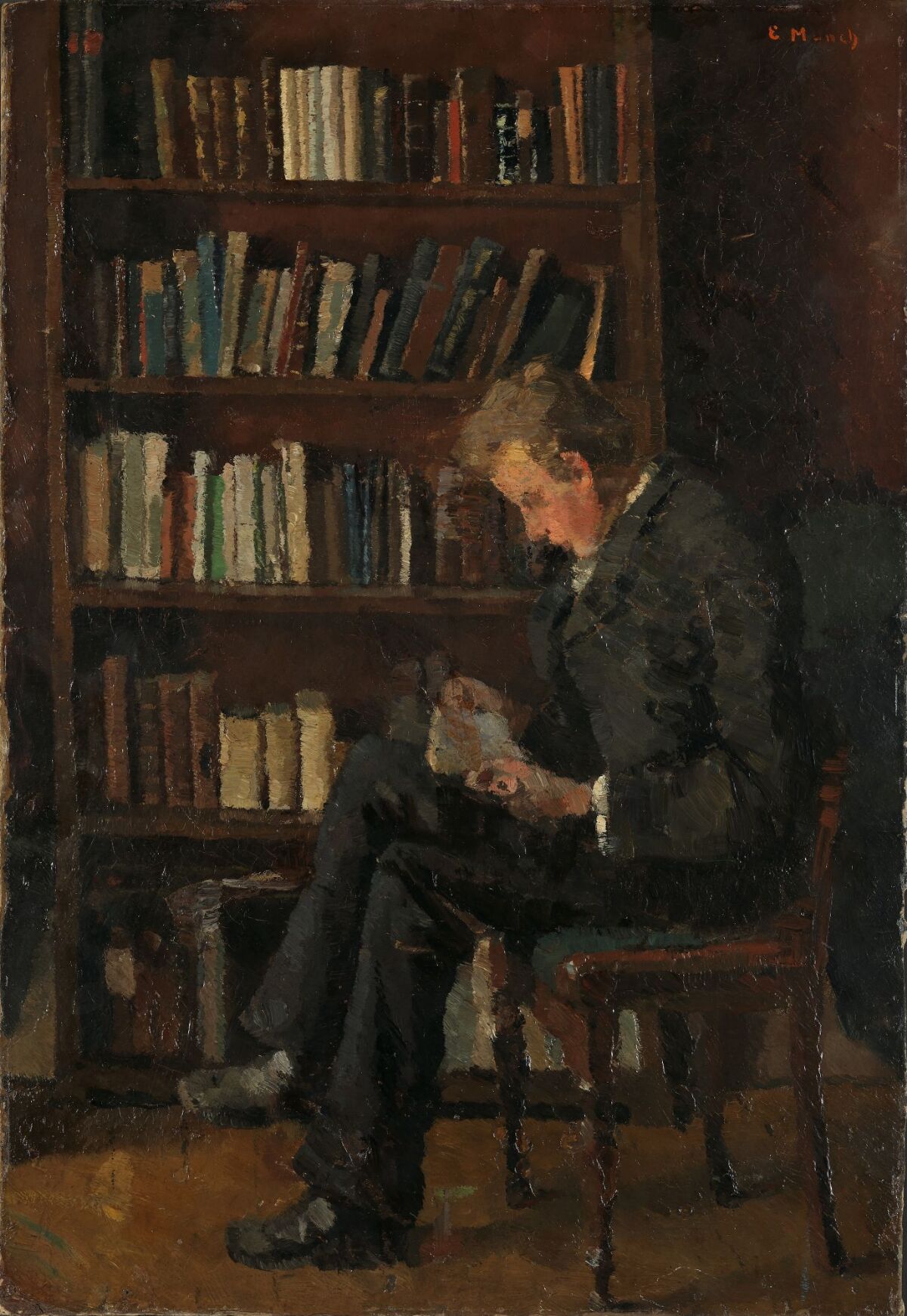
Room 059, together with By the Paraffin Lamp (1883) and Inger Munch in Black (1884). He could do this. Hold it up against everything in the next room.

Room 060, the full time on each picture. Gigapixel image; the back carries a sketch that was begun. Gift from Olaf Schou 1910.
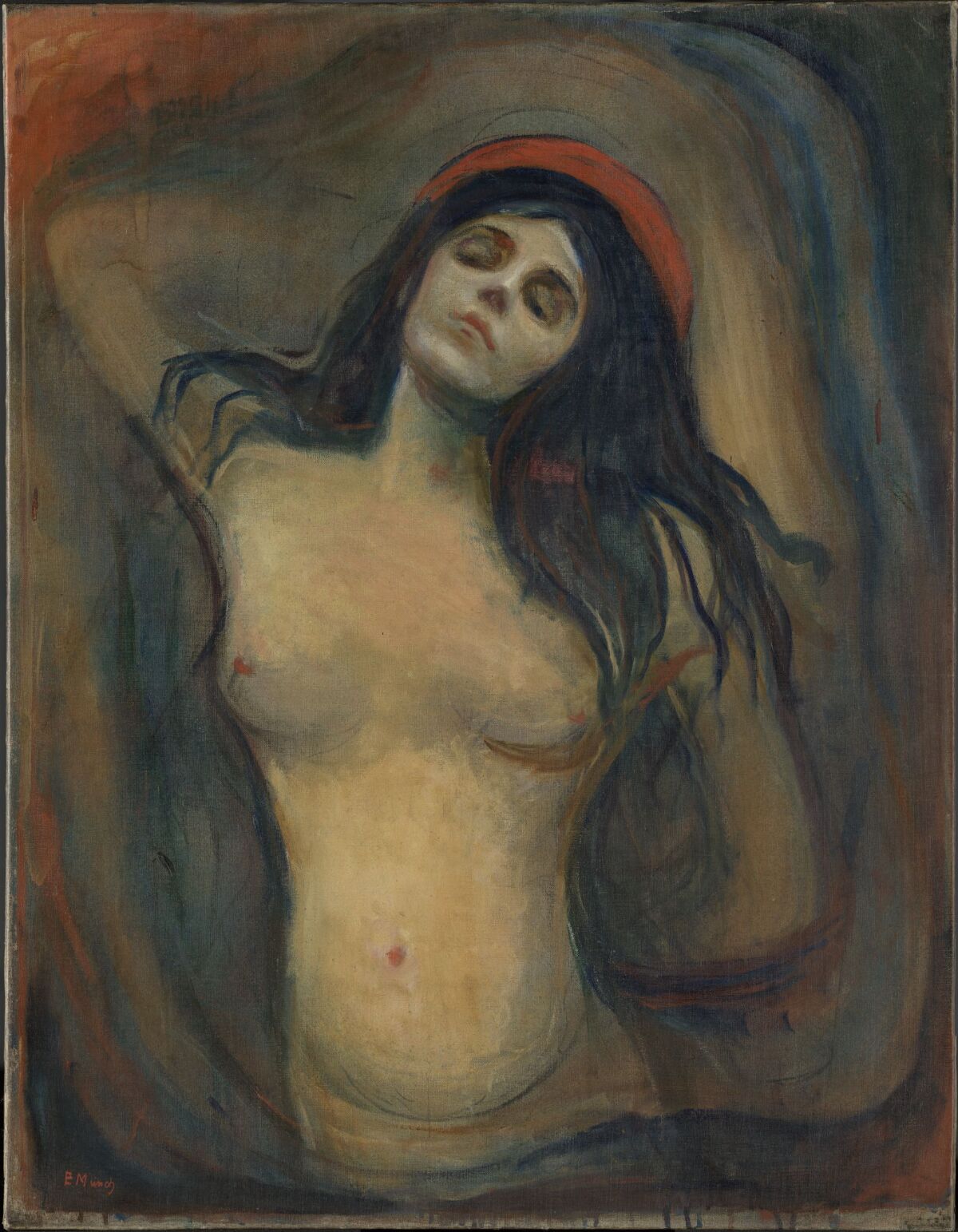
Room 060. Gift from Olaf Schou 1909. The motif was originally called Woman Who Loves (Kvinne som elsker), according to the museum's text.

Room 060. The family around Sophie's deathbed in 1877, painted sixteen years later. The museum's text points out that there is no contact between the figures, except for aunt Karen's hand on the back of the chair.
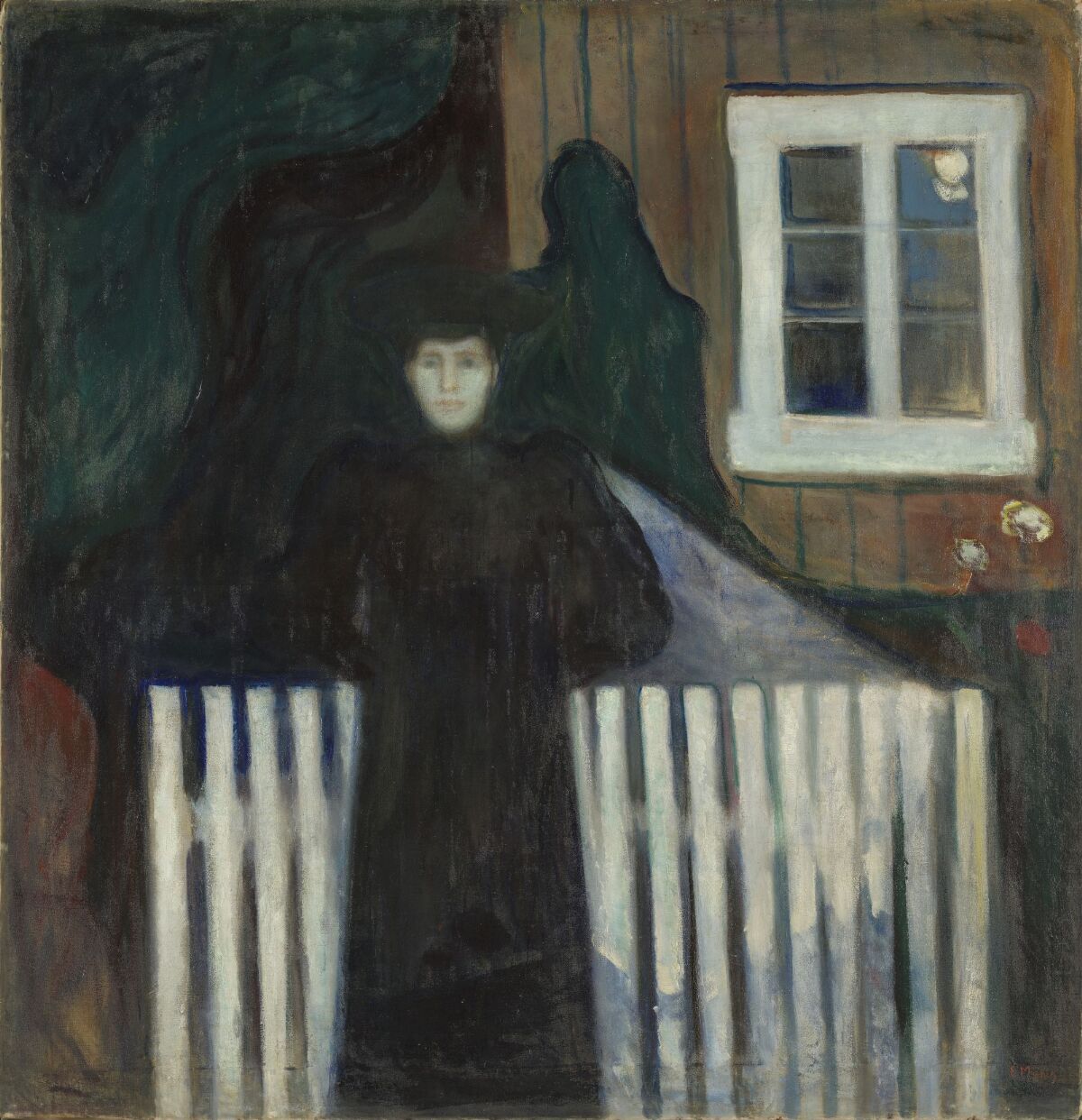
Room 060. Bought in 1938 with funds donated by Olaf Schou, "with a contribution from Marit Nørregaard".
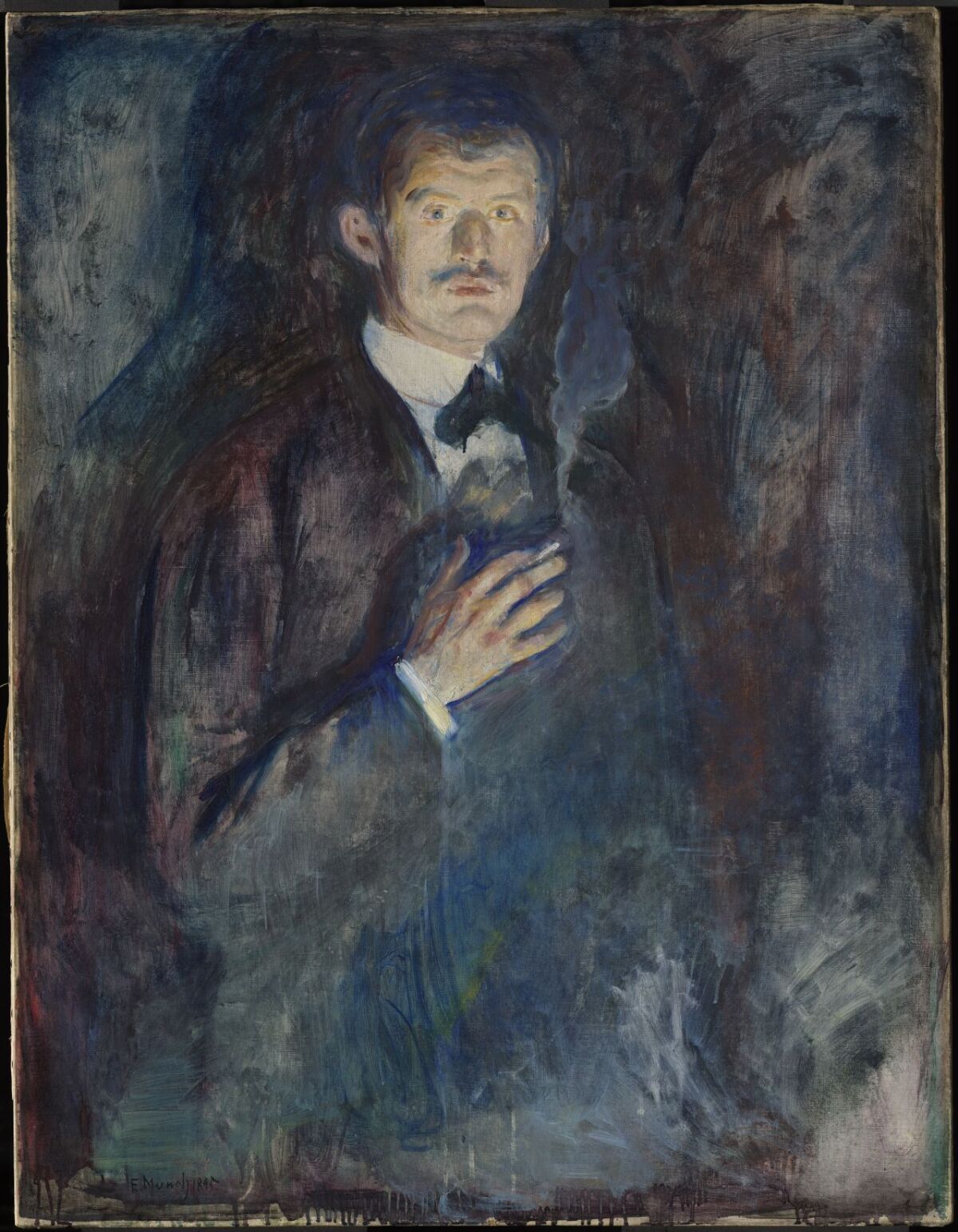
Room 060. Gigapixel image. Bought in 1895, the year it was painted.
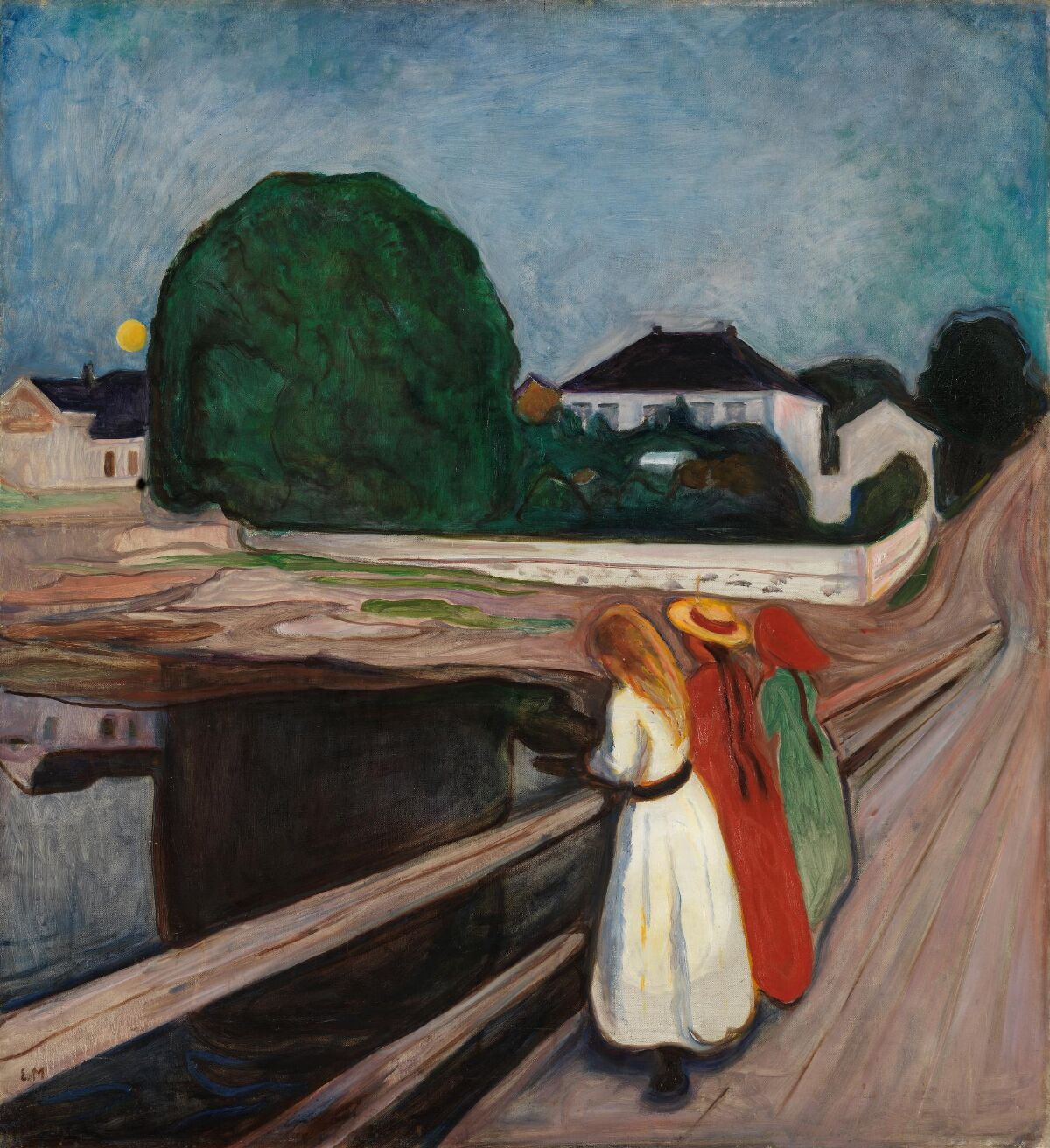
Room 060. Gift from Olaf Schou 1909.
Do not do this visit before Light and faith and The circle.
Death in the Sickroom: What had happened to the deathbed as a subject between Tidemand's The Lonely Old People (1849, room 045) and this? Who was the audience in Berlin in 1893?
The Scream: What did Kristiania (as Oslo was then called) look like from Ekeberg in 1893, and what was Munch reading? You do not need to know, but you should ask.
Who paid? Olaf Schou gave The Scream, Madonna, The Dance of Life and The Girls on the Bridge in 1909–10. One collector's decision made the Munch room. Compare Langaard's El Grecos.
The defence you read first: Here a human defender beats a book. The research on contemporary art says that a guided tour raises understanding and evaluation more than any wall text. If Et øyeblikk (one work in ten minutes, Thursdays and Saturdays) or MUNCH's free Museum Mondays tour takes on Munch, take it before this visit.
Permitted endings: "I see what they see, and I do not share it." "Nothing yet; again in six months." Both are written down with a date. A quick glance is not an ending.
Describe the pictures from memory, without looking at them, and record a voice note.